

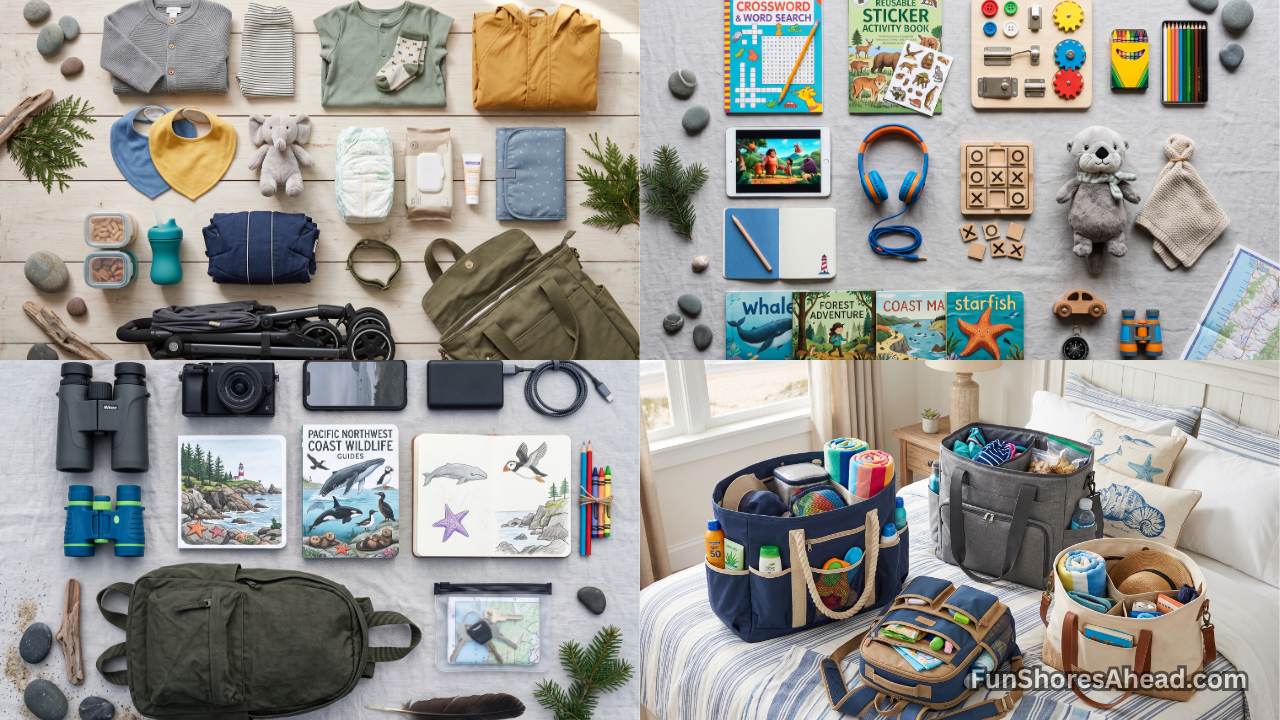

Packing for Oregon Coast vacations with kids requires a slightly different strategy than packing for a typical summer beach trip. You still need sunscreen, comfortable clothes, and plenty of things to keep the kids happy, but you’ll also want to prepare for cooler temperatures, coastal wind, rain, tide pool adventures, hiking, and weather that can change throughout the day.
Since putting Cannon Beach on my family’s bucket list, I’ve spent a lot more time learning what an Oregon Coast family vacation actually involves. One thing became clear pretty quickly: I wouldn’t pack for this trip the same way I pack for our beach vacations farther south.
The Oregon Coast is less about spending every day in a swimsuit and more about exploring the coastline. Your family might spend the morning searching tide pools, the afternoon walking through a coastal town, and the evening watching for wildlife along the shore.
That means layers matter. Shoes matter. Rain gear deserves space in the suitcase. And when you’re traveling with kids, backup clothing becomes even more useful when someone discovers a tide pool a little more enthusiastically than expected.
I like packing in categories because it keeps me from forgetting things and makes it much easier to see what everyone needs. At home, I usually lay our clothing across the bed in a grid, with one row for each family member and columns for everyday clothes, swimwear, sleepwear, and outerwear. I can immediately see if one of my kids is missing something before anything goes into the suitcase.
If you’re planning your own Oregon Coast family vacation, use this packing list as your starting point and adjust it for the season, destinations, and activities you have planned. The goal isn’t to pack everything you might need. It’s to pack for the Oregon Coast your family is actually going to explore.
Oregon Coast Safety Note: Oregon’s coastline is beautiful, but conditions can change quickly. Before exploring beaches, tide pools, or coastal trails, check current weather and tide conditions, watch for posted warnings, and follow local safety guidance. Always keep an eye on the ocean, especially with children, since unexpectedly powerful waves can travel farther up the beach than you might expect.
TL;DR: Oregon Coast Vacations Packing List For Families
Packing for Oregon Coast vacations with kids is all about preparing for exploration and changing coastal conditions. Prioritize removable layers, rain and wind protection, comfortable walking shoes, tide pooling footwear, extra clothes for kids, and a well-stocked day bag. Add snacks, water, first aid supplies, toddler essentials, and a few road trip activities, and your family will be ready for everything from tide pools and hiking trails to coastal towns and wildlife watching.
Quick Oregon Coast Vacations Packing List
Before you start filling the suitcase, these are the main essentials I would prioritize for Oregon Coast vacations with kids:
- Layered clothing
- Lightweight waterproof jackets
- Wind-resistant outer layers
- Two extra outfits per child
- Extra socks
- Comfortable walking shoes
- Tide pooling shoes with good traction
- Beach towels and simple sand toys
- Broad-spectrum, water-resistant SPF 30+ sunscreen
- Hats and sunglasses
- Baby or toddler essentials
- Supportive baby or toddler carrier if needed
- Family first aid kit
- Prescription and family-specific medications
- Reusable water bottles
- Snacks and a small cooler
- Day backpack
- Waterproof bags or pouches
- Portable chargers
- Road trip activities
- Binoculars
- Camera or phone
✅Fun Shores Ahead Tip
Don’t pack every backup item into your main luggage. Keep one change of clothes per child, rain protection, snacks, water, and a few essentials somewhere you can easily reach during day trips.
What to Pack for an Oregon Coast Family Vacation
| Packing Category | What to Pack | Why You’ll Need It |
|---|---|---|
| Everyday Clothing & Layers | T-shirts, long sleeves, sweatshirts, fleece, pants, lightweight jackets, extra outfits and socks | Coastal temperatures, wind, and weather can change throughout the day, making removable layers especially useful. |
| Rain & Wind Gear | Waterproof jackets, hooded raincoats, lightweight ponchos, waterproof bags | Rain doesn’t necessarily have to end your plans when everyone has lightweight protection available. |
| Shoes | Walking shoes, hiking shoes when needed, water-resistant footwear, tide pooling shoes, sandals | Oregon Coast vacations can include rocky shorelines, tide pools, trails, towns, and plenty of walking. |
| Beach & Tide Pool Gear | Towels, sand toys, bucket and shovel, blanket, waterproof phone pouch | Beaches here offer plenty of opportunities for sand play and shoreline exploration beyond swimming. |
| Sun & Skin Protection | Broad-spectrum, water-resistant SPF 30+ sunscreen, SPF lip balm, hats, sunglasses, familiar skin-care products | Cooler or cloudy weather doesn’t eliminate UV exposure during long days outdoors. |
| Baby & Toddler Essentials | Diapers, wipes, changing supplies, snacks, backup outfits, stroller and supportive carrier | Having essential supplies readily accessible makes driving, viewpoints, trails, and beach stops easier with little ones. |
| First Aid & Health | Bandages, antiseptic, gauze, tweezers, thermometer and necessary medications | A compact kit helps you manage common minor injuries and family needs while exploring away from your accommodations. |
| Food & Hydration | Water bottles, snacks, fruit, sandwiches, cooler and ice packs | Driving between beaches, parks, viewpoints, and coastal towns can mean spending significant time away from convenient food stops. |
| Road Trip Entertainment | Coloring books, busy boards, crosswords, travel games, books, small toys and downloaded movies | Screen-free activities help kids enjoy the journey and scenery, while a downloaded movie gives you a backup for longer drives or downtime. |
| Wildlife & Exploration Gear | Binoculars, camera, nature guide or app, notebook, day backpack and portable charger | Binoculars and simple exploration gear make wildlife watching, tide pooling, and nature stops more engaging for kids without requiring much extra luggage. |
Everyday Clothing And Layers
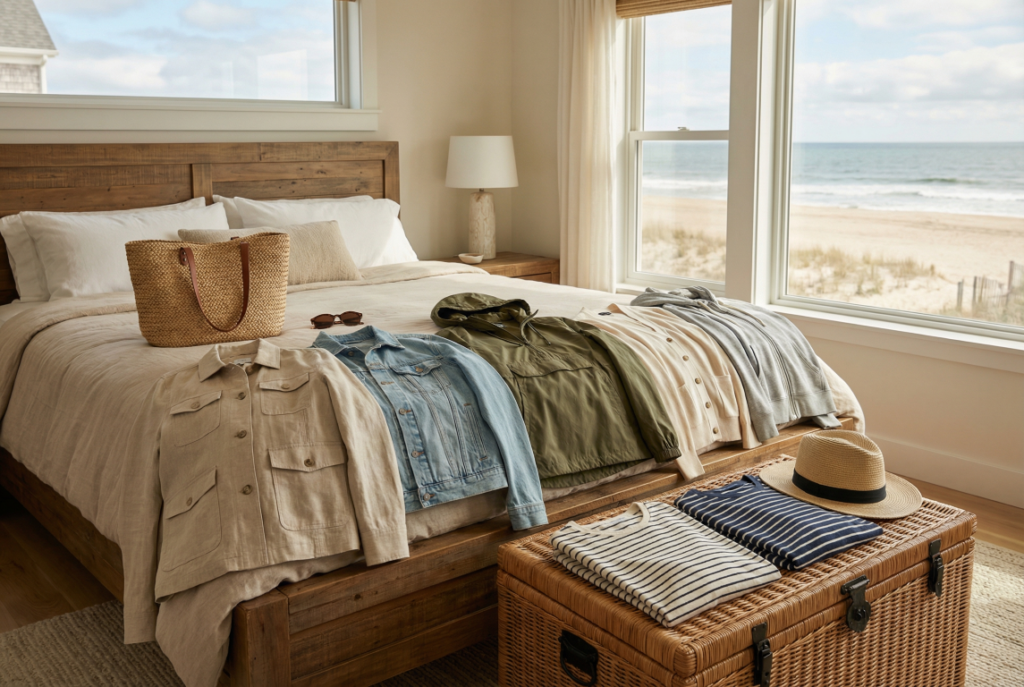
Packing layers for an Oregon Coast vacation gives your family the flexibility to adjust as temperatures, wind, and weather change throughout the day. Pack T-shirts, long sleeves, sweatshirts or fleece, lightweight jackets, comfortable pants, and extra clothing for kids.
What clothes should I pack for kids on an Oregon Coast vacation?
Pack comfortable clothing that can be layered, including short and long-sleeve shirts, sweatshirts or fleece, lightweight jackets, pants, extra socks, and a few warmer-weather options. I also recommend bringing two extra outfits per child and keeping at least one complete change of clothes easily accessible during day trips.
Layers should be one of the first things you think about when packing for the Oregon Coast. According to Travel Oregon, coastal weather can vary considerably, and wind can pick up at any time of year. That makes clothing you can easily add or remove much more practical than packing one heavy coat.
I would start with a T-shirt or long-sleeve shirt, add a sweatshirt or fleece when needed, and keep a lightweight jacket available as an outer layer. This gives you flexibility for cool mornings, windy beaches, warmer afternoons, and evenings along the coast without constantly changing entire outfits.
For my kids, I typically pack two additional outfits per child whenever we travel. Spills, wet clothes, and unexpected messes are simply part of traveling with children. On the Oregon Coast, those extras become even more useful when you’re exploring wet beaches, tide pools, trails, and other outdoor areas.
I would also keep at least one complete change of clothes for each child somewhere you can easily reach during day trips. If somebody ends up with soaked pants or wet socks after exploring the shoreline, you don’t want their dry clothes sitting back at your hotel.
Clothing Packing List
- T-shirts
- Long-sleeve shirts
- Sweatshirts or hoodies
- Fleece layers
- Lightweight pants
- Leggings
- Shorts for warmer days
- Two extra outfits per child
- Undergarments
- Extra socks
- Pajamas
- Lightweight jacket
Why You’ll Need It
Oregon Coast vacations often involve moving between beaches, coastal towns, trails, viewpoints, and other outdoor attractions. Layers allow everyone to adjust as conditions change, while extra clothing prevents wet or dirty clothes from derailing the rest of your family’s plans.
Keep It Simple
Build outfits around pieces that work together instead of packing completely different wardrobes for every possible temperature. Start with comfortable basics, add removable layers, and bring two extra outfits per child.
✅Fun Shores Ahead Tip
Put one complete change of clothes for each child in your day bag or vehicle, including socks and underwear. Wet socks have an impressive ability to become the most important problem in a child’s entire universe, and they’re easy to forget when packing backup clothes.
Rain And Wind Gear
Rain and wind gear are essential for Oregon Coast vacations because coastal weather can change throughout the day. Lightweight waterproof jackets, hooded raincoats, extra socks, and waterproof storage help families stay comfortable without letting a little drizzle interrupt their plans.

What rain gear should I pack for the Oregon Coast with kids?
Pack a lightweight waterproof jacket for each family member, preferably with a hood for children. Extra socks, waterproof bags for wet clothing, and a compact umbrella can also be useful, although jackets are often more practical when exploring windy beaches with kids.
Rain does not necessarily mean your Oregon Coast plans need to stop. According to Travel Oregon, coastal weather can vary considerably throughout the year, so having lightweight rain protection available gives your family more flexibility when you’re out exploring.
I would choose waterproof jackets that are light enough to fold into a backpack rather than relying on bulky coats. You can pull them out when the weather changes and tuck them away again when they’re no longer needed.
For younger children, I especially like hooded rain jackets. They keep their hands free and eliminate the struggle of trying to hold an umbrella over a toddler who has absolutely no intention of walking in a straight line.
Wind protection matters too. Coastal wind can make an otherwise comfortable day feel much colder, particularly when you’re walking along an exposed beach or viewpoint. A waterproof outer layer that also provides some protection from the wind can serve double duty.
And don’t underestimate the importance of dry socks. Wet feet can turn a perfectly happy child into someone who is completely finished with the day’s adventures.
Rain and Wind Packing List
- Lightweight waterproof jackets
- Hooded raincoats for kids
- Lightweight ponchos
- Compact umbrella
- Waterproof backpack cover
- Extra socks
- Waterproof bags for wet clothing
Why You’ll Need It
Rain and wind don’t necessarily have to cancel an Oregon Coast outing. Having lightweight protection readily available makes it easier to adapt to changing conditions while keeping everyone warmer and more comfortable.
Keep It Simple
Give everyone a lightweight waterproof outer layer and keep it accessible during day trips instead of buried underneath everything else. Add extra socks and a waterproof bag for anything that gets wet.
✅Fun Shores Ahead Tip
Keep a dedicated “wet stuff” bag in your vehicle or day bag. Wet socks, jackets, and clothes can go straight inside instead of joining the dry clothes, snacks, and everything else you’re carrying for the day.
Shoes For Beaches, Tide Pools And Walking
The best shoes for an Oregon Coast vacation depend on what your family plans to explore. Pack supportive walking shoes for everyday sightseeing and footwear with good traction for tide pools, rocky shorelines, and wet surfaces. A second practical pair is especially useful for kids in case their shoes get soaked.

What shoes should kids wear on the Oregon Coast?
Kids should have comfortable, supportive shoes for walking and footwear with good traction for exploring tide pools and rocky beaches. If possible, bring at least two practical pairs so they have dry shoes available when one pair gets wet.
This is one trip where I would think carefully about footwear.
Flip flops and sandals may work around your accommodations or for quick stops, but Oregon Coast vacations can involve rocky beaches, tide pools, hiking trails, coastal towns, viewpoints, and plenty of walking. Your family’s shoes need to match the activities you actually have planned.
For tide pooling, traction is especially important. Wet rocks, seaweed, and uneven surfaces can become slippery, so I would choose secure shoes with grippy soles rather than flip flops or anything that slides around easily on your child’s feet.
This is also where a little tide pool etiquette comes into play. When exploring, encourage kids to walk carefully and use sandy or bare areas when possible rather than stepping on marine life attached to rocks. In protected areas, always follow posted rules about where visitors are allowed to walk and explore.
For trails, coastal towns, and longer walks, supportive sneakers or hiking shoes will make the day much more comfortable. Hiking shoes aren’t necessary for every family, though. I would only dedicate suitcase space to them if your itinerary actually includes trails where you’ll benefit from the additional support and traction.
Whenever possible, I would bring two practical footwear options for each child. If one pair gets soaked during a morning of exploring, you won’t have to wait for it to dry before heading out again.
Footwear Packing List
- Comfortable walking shoes
- Hiking shoes if trails are planned
- Water-resistant shoes
- Tide pooling shoes with good traction
- Sandals or easy slip-on shoes
Why You’ll Need It
An Oregon Coast vacation can take your family across several different surfaces in the same day, from sidewalks and trails to sand, wet rocks, and tide pools. Appropriate footwear provides better traction, support, and comfort while giving kids more freedom to explore safely.
Keep It Simple
Don’t pack a shoe for every possible occasion. Bring one comfortable pair for everyday walking, one option suitable for wet or rocky exploration, and sandals or easy slip-on shoes if your family will use them.
✅Fun Shores Ahead Tip
Before packing brand-new walking or hiking shoes for your kids, let them wear them at home first. A beautiful coastal hike becomes considerably less magical when someone announces five minutes in that their new shoes hurt.
Beach And Tide Pool Essentials
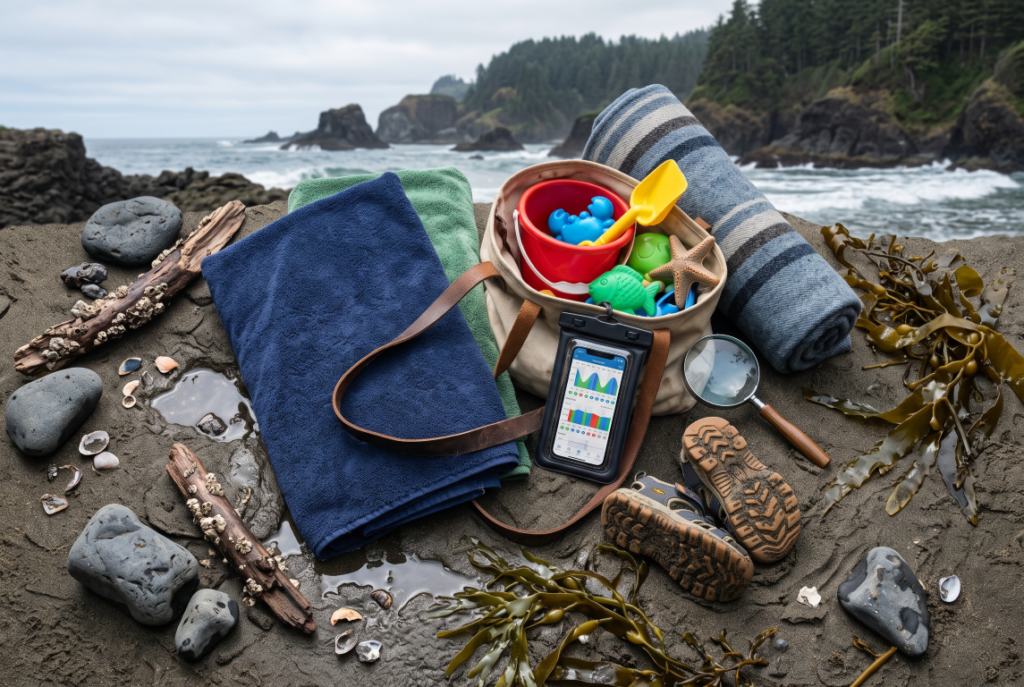
Packing for Oregon Coast beaches is less about bringing a mountain of traditional beach gear and more about preparing for shoreline exploration. Bring a few sand toys, towels, waterproof storage, and tide information so your family can enjoy both beach play and tide pooling without overpacking.
What should I pack for tide pooling on the Oregon Coast with kids?
Bring sturdy footwear with good traction, a small bucket for sand play, a magnifying glass, waterproof protection for your phone, and current tide information. Teach children to observe tide pool creatures without collecting, touching, or disturbing them, and always follow posted rules in protected areas.
The Oregon Coast may not provide the traditional warm-water beach vacation many families picture, but that certainly doesn’t make the beaches less interesting.
For my family, tide pooling would be one of the biggest reasons to visit. We really enjoyed exploring tide pools at Wrightsville Beach in North Carolina, so seeing the marine life around places such as Haystack Rock is one of the experiences that originally made Cannon Beach so appealing to me. Discover more Things To Do At Cannon Beach With Kids.
I wouldn’t bring a huge collection of beach toys for this trip. A bucket, shovel, and a few simple sand toys give kids plenty to work with while leaving room for the gear you’ll use while exploring. Kids can build sandcastles, investigate the shoreline, watch wildlife, and see what they can discover when the tide goes out.
Tide pools are living habitats, though, so this is also a good opportunity to teach kids how to explore responsibly. Around Haystack Rock, for example, local guidance asks visitors to avoid touching, collecting, or disturbing tide pool creatures and to walk carefully around marine life. Whenever possible, walk on sand or bare surfaces rather than stepping on organisms attached to the rocks.
If exploring the tide pools is high on your family’s list too, my Family Guide to Haystack Rock covers what kids can see, the best time to visit, tide pool etiquette, and tips for visiting with younger children.
Check the Tides Before You Explore
Timing matters when you’re planning a tide pool adventure. Check current tide information before leaving for the beach rather than assuming you’ll be able to explore the tide pools whenever you arrive.
There is another Oregon-specific safety consideration families should know about: sneaker waves. According to Oregon State Parks, sneaker waves are unexpectedly powerful waves that can travel much farther up the beach than anticipated.
Keep an eye on the ocean while you’re exploring, even when the water appears calm. Follow posted warnings and local guidance, and don’t assume your family is safe from the water simply because you’re standing above the normal waterline.
Beach and Tide Pool Packing List
- Beach towels
- Simple sand toys
- Bucket and shovel
- Beach blanket
- Small magnifying glass
- Waterproof phone pouch
- Current tide information saved to your phone
- Reusable bag for carrying gear
Why You’ll Need It
Oregon Coast beaches give families opportunities to do much more than swim. Packing a few carefully chosen items lets kids move between sand play, tide pooling, wildlife watching, and shoreline exploration without requiring you to haul a beach bag stuffed with gear.
Keep It Simple
Bring a few versatile beach items and check tide and beach conditions before heading out. Tide pools are best treated as places to look and discover rather than collect, so you don’t need a lot of equipment to make the experience exciting for kids.
✅Fun Shores Ahead Tip
Before packing brand-new walking or hiking shoes for your kids, let them wear them at home first. A beautiful coastal hike becomes considerably less magical when someone announces five minutes in that their new shoes hurt.
Sun And Skin Protection
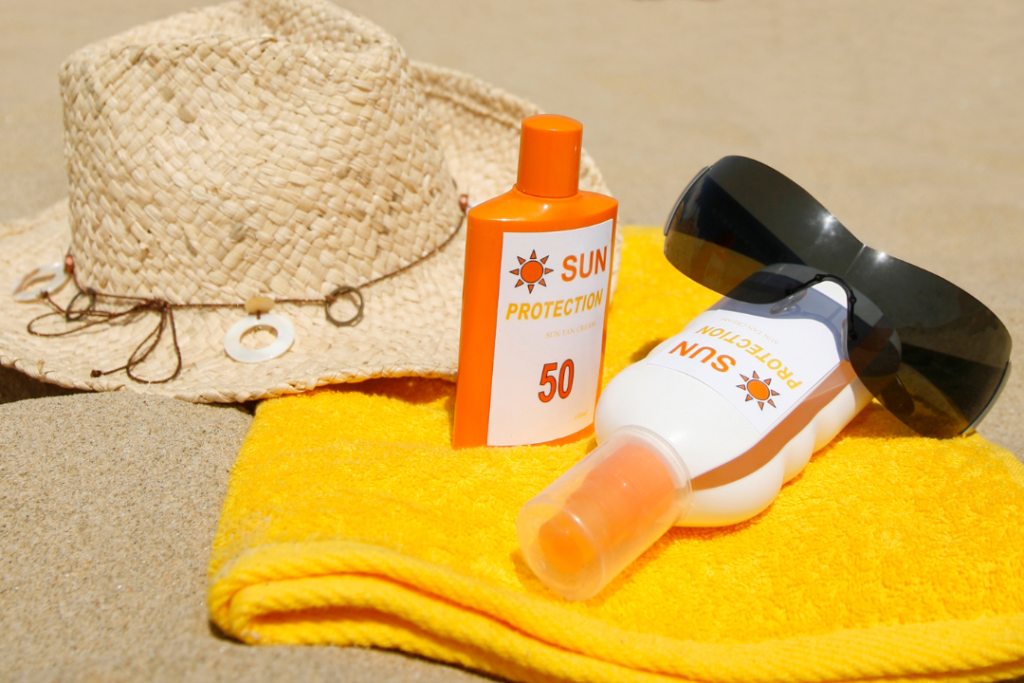
Sun protection still matters during Oregon Coast vacations, even when temperatures are cool or the sky is cloudy. Pack broad-spectrum, water-resistant SPF 30 or higher sunscreen, SPF lip balm, sunglasses, hats, and familiar skin-care products your family already knows work well.
Do you need sunscreen on the Oregon Coast?
Yes. UV exposure can still occur on cool and cloudy days, so families should use sun protection when spending extended time outdoors. The American Academy of Dermatology recommends broad-spectrum, water-resistant sunscreen with SPF 30 or higher and reapplying approximately every two hours, or after swimming or sweating.
Cooler temperatures can make it surprisingly easy to underestimate how much sun exposure your family is getting. When you’re walking along the beach, hiking, exploring tide pools, or spending hours sightseeing outdoors, sun protection still belongs in your day bag.
For this trip, I would pack a broad-spectrum, water-resistant sunscreen with SPF 30 or higher rather than specifically looking for products labeled “reef-safe.” Terms such as reef-safe or reef-friendly aren’t the performance standards I would use to choose sunscreen. Broad-spectrum protection, SPF, water resistance, and finding a product that works well for your family’s skin are more useful considerations.
The FDA also notes that sunscreen isn’t waterproof. Products labeled water resistant are tested for either 40 or 80 minutes in water, so always follow the specific product’s directions when swimming or sweating.
We also have skin sensitivities in our household, so I’m particularly careful about ingredient labels and prefer bringing products we already know work well for us. If someone in your family has sensitive skin, allergies, or particular products they rely on, I wouldn’t assume you’ll easily find the same thing while traveling.
And sunscreen shouldn’t do all the work. Hats, sunglasses, protective clothing, and shade provide additional layers of protection during long days outdoors.
Sun and Skin Packing List
- Broad-spectrum, water-resistant SPF 30+ sunscreen
- SPF lip balm
- Sunglasses with UV protection
- Sun hats
- Gentle moisturizer
- After-sun care
- Your family’s usual sensitive-skin toiletries
Why You’ll Need It
Clouds and cooler temperatures can make the Oregon Coast feel less sunny than a traditional summer beach destination, but that doesn’t eliminate UV exposure. Sun protection is particularly important when your family will be outdoors for hours exploring beaches, trails, tide pools, and coastal attractions.
Keep It Simple
Choose a sunscreen your family already likes and will actually use, keep it in your day bag, and follow the product directions for reapplication. Pair it with hats, sunglasses, protective clothing, and shade rather than relying on sunscreen alone.
✅Fun Shores Ahead Tip
Don’t test a completely new sunscreen or skin-care routine for the first time on vacation, especially if someone in your family has sensitive skin. Bring the products you already know work so an exciting day of exploring doesn’t unexpectedly become a skin-care experiment.
If you want more tips on protecting your family in the sun, checkout this guide.
Toddler And Baby Essentials
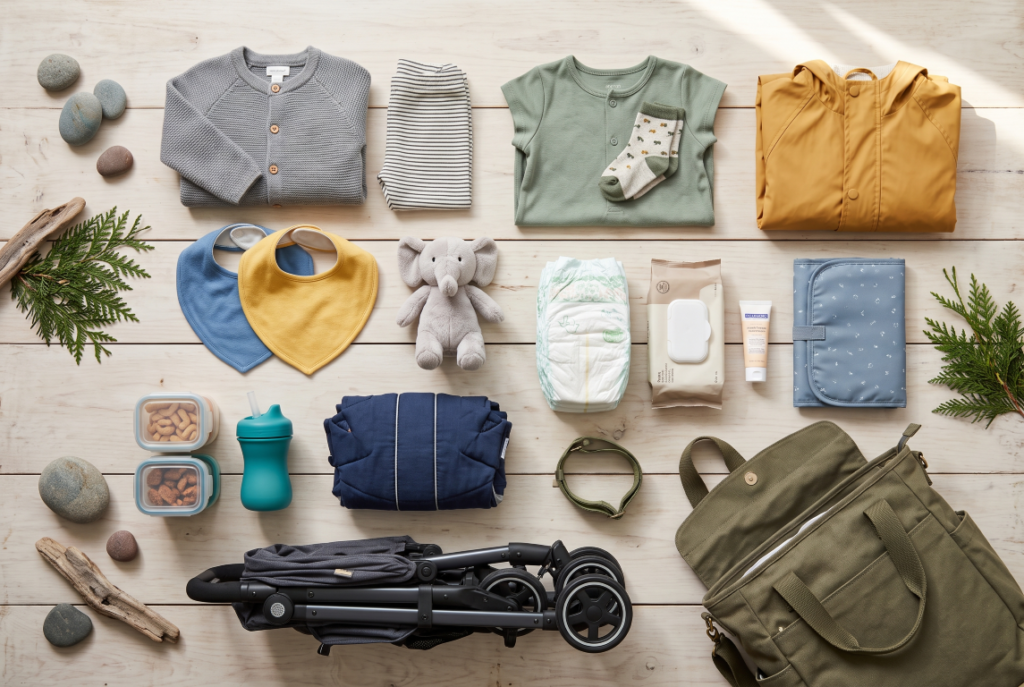
Packing for a baby or toddler is easier when you keep everyday essentials accessible instead of buried in your luggage. Pack diapers, wipes, snacks, backup clothing, comfort items, and drinking supplies in a smaller grab-and-go kit, and consider bringing both a lightweight stroller and supportive carrier depending on your plans.
What should I pack for an Oregon Coast vacation with a baby or toddler?
Pack your usual diapering and feeding supplies, at least two backup outfits, snacks, a spill-resistant cup or water bottle, a favorite comfort item, and any other essentials your child uses daily. A lightweight stroller can be useful in towns and on paved paths, while a supportive carrier may work better for beaches, trails, viewpoints, and uneven terrain.
Traveling the Oregon Coast with a baby or toddler makes accessibility just as important as how much you pack.
Your family may spend significant time driving between coastal towns, stopping at viewpoints, visiting beaches, and exploring outdoor areas where running back to your accommodations isn’t convenient. I would keep a smaller toddler kit accessible in the car or day bag rather than burying everything inside the main luggage.
For my toddler, that would include diapers, wipes, snacks, a complete change of clothing, and whatever comfort item we’re relying on at that stage. I typically pack two additional outfits per child for trips, but at least one of those outfits needs to be somewhere I can actually reach when we’re away from our accommodations.
I’d also think about your itinerary before deciding whether you’ll need a stroller, carrier, or both.
A lightweight stroller can be incredibly helpful when you’re walking through coastal towns, paved attractions, or other stroller-friendly areas. Once you reach sand, rocky shorelines, stairs, or uneven trails, however, a supportive baby or toddler carrier may be much more practical.
I particularly like having a carrier that provides good back support because it keeps my hands available for carrying gear, navigating uneven terrain, or helping my older child when needed.
Baby and Toddler Packing List
- Diapers
- Wipes
- Diaper cream
- Portable changing pad
- Two backup outfits
- Bibs
- Toddler snacks
- Spill-resistant cup or water bottle
- Favorite comfort item
- Lightweight stroller
- Supportive baby or toddler carrier
- Any feeding supplies your child regularly uses
Why You’ll Need It
Oregon Coast vacations can involve road trips, spontaneous viewpoints, beaches, trails, and stops where supplies aren’t immediately available. Keeping your toddler’s everyday necessities together means you can handle diaper changes, hunger, wet clothes, and tired moments without unpacking half the car.
Keep It Simple
Don’t carry your child’s entire suitcase everywhere you go. Create one smaller grab-and-go toddler kit with enough diapers, wipes, snacks, water, a change of clothes, and other necessities to get through your outing, then restock it when you return to your accommodations.
✅Fun Shores Ahead Tip
Before each day’s adventure, think about the terrain rather than automatically reaching for the stroller. If you’re exploring a town or paved area, the stroller may be perfect. If your plans involve sand, rocky shoreline, stairs, or uneven trails, a supportive carrier could save you from discovering halfway there that your stroller has unexpectedly become very expensive luggage.
Family Health And First Aid Supplies
A compact family first aid kit is worth packing for Oregon Coast vacations that include beaches, trails, parks, and other outdoor adventures. Bring basic wound-care supplies, necessary medications, and the health items your family regularly uses so you can handle minor problems while away from your accommodations.

What should I put in a family first aid kit for an Oregon Coast vacation?
Pack assorted bandages, antiseptic, gauze, medical tape, tweezers, a thermometer, and any medications your family normally needs. Bring enough prescription medication for your trip, plus a little extra in case your travel plans are unexpectedly delayed.
When your vacation involves hiking, beaches, parks, and wildlife areas, a small first aid kit deserves a permanent spot in your day bag.
You don’t need to bring your entire medicine cabinet. I would focus on supplies that can help with common minor problems such as cuts, scrapes, and splinters, along with the medications your family already uses.
I especially like having several sizes and types of bandages because children’s scrapes rarely seem interested in occurring in convenient shapes. Tweezers are another small item worth including when you’re spending a lot of time outdoors.
Medications deserve a little more planning. According to the Centers for Disease Control and Prevention, travelers should bring the prescription and over-the-counter medications they may need during their trip, with extra medication in case of unexpected travel delays.
I would rather bring our usual medications from home than spend vacation time searching for a particular product in an unfamiliar coastal town.
If you’re traveling with young children, keep medications securely stored in child-resistant containers and somewhere kids cannot access them. The CDC specifically recommends retaining child-resistant packaging rather than transferring medicines into convenient little travel containers that may not provide the same protection.
Family First Aid Packing List
- Assorted bandages
- Antiseptic wipes or solution
- Sterile gauze
- Medical tape
- Tweezers
- Thermometer
- Allergy medication your family normally uses
- Children’s pain reliever your family normally uses
- Adult pain reliever
- Prescription medications
- Any family-specific medications or medical supplies
Why You’ll Need It
Oregon Coast vacations can take your family away from your accommodations for hours at a time. Having basic first aid supplies available lets you deal with minor cuts, scrapes, splinters, and other everyday mishaps without immediately abandoning your plans to search for supplies.
Keep It Simple
Pack a compact kit rather than trying to prepare for every possible medical situation. Check expiration dates before leaving, bring the medications and supplies your family actually uses, and make sure prescriptions will last for the entire trip with some extra for unexpected delays.
✅Fun Shores Ahead Tip
Keep your first aid kit somewhere easy for adults to reach but inaccessible to young children. Before leaving home, take five minutes to check what’s actually inside. Finding three empty bandage wrappers and an expired ointment when someone scrapes a knee is not the moment you want to discover your “fully stocked” first aid kit wasn’t quite as stocked as you thought.
Food, Snacks And Hydration
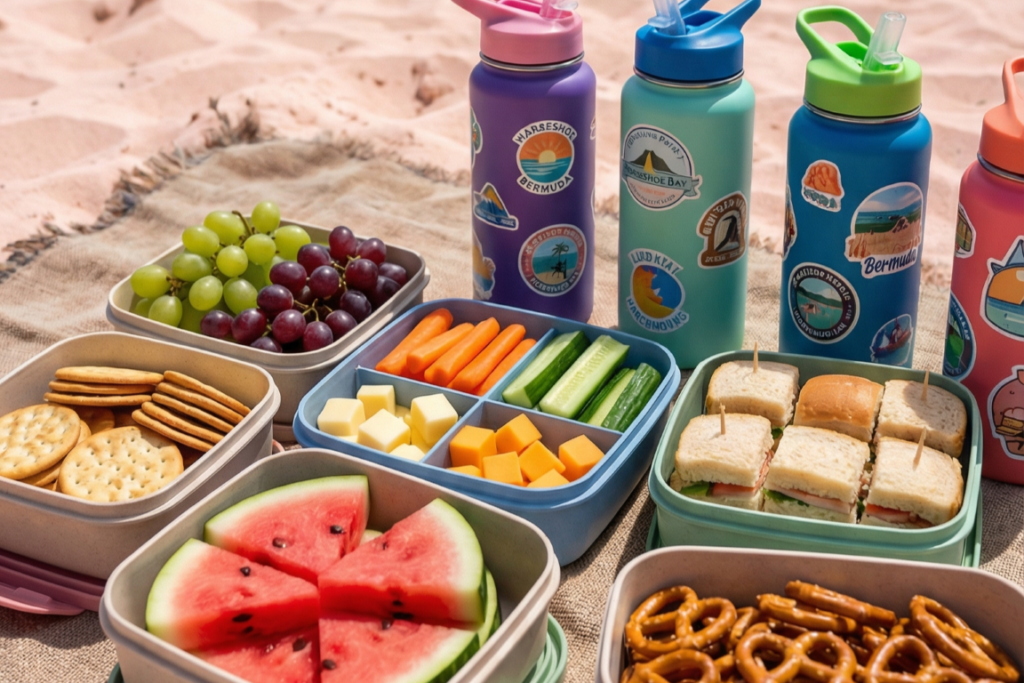
Pack enough food and water for Oregon Coast day trips so your family isn’t dependent on finding a restaurant or store at every stop. Reusable water bottles, easy-to-eat snacks, simple lunches, and a small cooler make it easier to spend the day exploring beaches, parks, viewpoints, and coastal towns.
What food and drinks should I pack for an Oregon Coast family vacation?
Bring reusable water bottles, familiar kid-friendly snacks, fruit, sandwiches or wraps, and snack bars for day trips. A small cooler with ice packs is useful for foods that need to stay cold and for longer days when you may be exploring away from your accommodations.
One thing I never want to discover halfway through a family outing is that we’re down to one snack and both kids have suddenly decided it is the only snack they want.
When exploring the Oregon Coast, your family may spend time driving between beaches, parks, viewpoints, attractions, and small coastal towns. Keeping food and drinks readily available gives you more freedom to stop when something interesting catches your attention instead of planning the entire day around where you’ll eat next.
For kids, I prefer snacks that are familiar, easy to eat, and don’t create a major cleanup project in the car. Fruit, crackers, snack bars, and other simple options work well alongside sandwiches or wraps when we need something more substantial.
Reusable water bottles are another must for me. Even though the Oregon Coast may feel cooler than the beach destinations your family is used to, everyone still needs to stay hydrated while hiking, walking, playing on the beach, and spending long periods outdoors.
A small cooler can be particularly useful on longer day trips. Use ice packs and keep perishable foods properly chilled until you’re ready to eat them.
Food and Hydration Packing List
- Reusable water bottles
- Easy toddler and kid snacks
- Crackers
- Fruit
- Sandwiches or wraps
- Snack bars
- Small cooler
- Ice packs
- Napkins
- Wet wipes
- Reusable food containers
Why You’ll Need It
Oregon Coast vacations often involve exploring several places in one day. Keeping food and water available gives your family more flexibility, helps prevent hungry and thirsty kids from dictating the itinerary, and makes spontaneous stops much easier.
Keep It Simple
You don’t need to pack an elaborate picnic every morning. Bring water, a few snacks each child reliably eats, and something more filling for longer excursions. Restock your day bag and water bottles each evening so they’re ready for the next day’s adventures.
✅Fun Shores Ahead Tip
Pack a little more food and water than you think you’ll need for a day trip. If you find an unexpected viewpoint, beach, or trail your family wants to explore, having extra supplies means you don’t have to choose between “let’s go see what’s over there” and “we need to find somewhere to eat right now.”
Road Trip And Screen-Free Entertainment Essentials
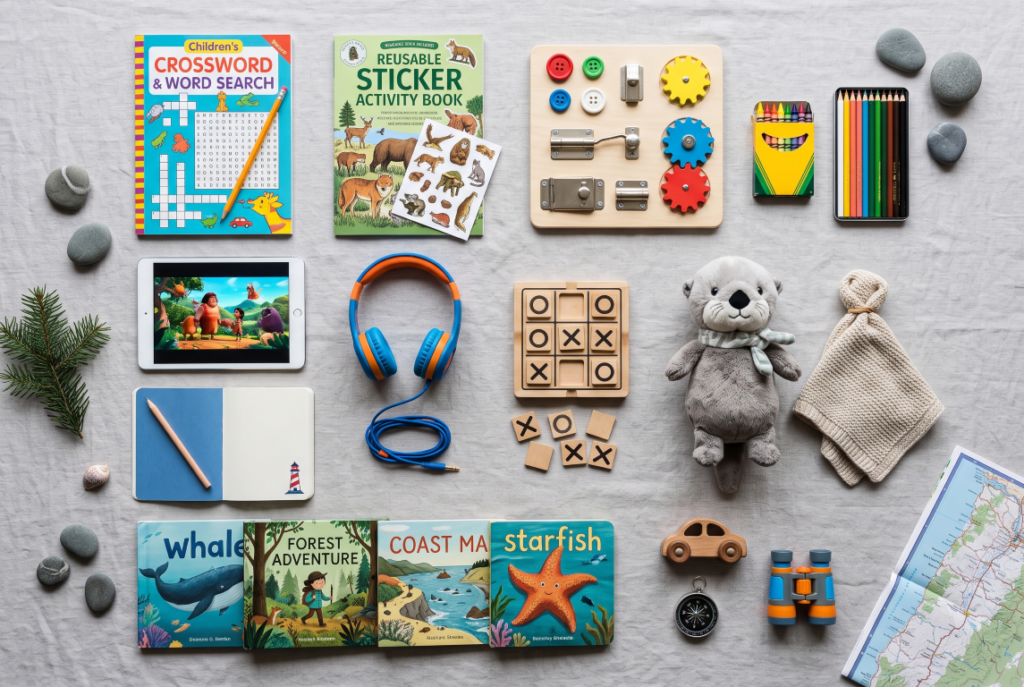
Road trip activities can help make the drive part of your Oregon Coast vacation rather than simply time spent getting from one destination to another. Pack a mix of screen-free activities such as coloring books, busy boards, travel games, journals, and books, while keeping downloaded movies or shows available for longer drives and downtime.
How do you keep kids entertained on an Oregon Coast road trip?
Bring several age-appropriate activities that kids can easily use in the car, including busy boards for toddlers, coloring and activity books, travel games, books, and journals for older kids. Encourage them to watch for coastal scenery and landmarks along the way, with downloaded entertainment available when everyone needs some quiet time.
An Oregon Coast family vacation can include a fair amount of driving, especially if you plan to explore several towns, beaches, viewpoints, and parks. I like to think of the drive as part of the vacation instead of something we simply have to get through.
That means I would bring activities that keep my kids engaged without automatically handing over a screen.
For younger children, busy boards, reusable activity books, sticker books, coloring supplies, and a few favorite toys give their hands something to do. Older kids may enjoy crosswords, word searches, travel journals, books, or simple travel games.
I also like activities that bring their attention back to the trip itself. Turn the scenery into a game by having kids watch for ocean views, bridges, lighthouses, boats, wildlife, evergreen forests, or other interesting things along the route. They can keep a list or draw pictures in a travel journal of what they spot.
Make the Drive Part of the Adventure
Want to get the kids looking out the window along the way? Print our free Oregon Coast Road Trip Spotting Challenge and see how many lighthouses, ocean views, bridges, wildlife, rocky coastlines, and other Oregon Coast sights your family can find during the drive.
And I’m not anti-screen.
A downloaded movie or favorite show can be incredibly useful during a long stretch of driving, on a rainy afternoon, or when everyone simply needs some quiet time. I just wouldn’t make screens the center of an Oregon Coast road trip when there is so much happening outside the window.
For my family, I’d mix the two. Enjoy the scenery and activities while everyone is interested, then pull out the movie when it’s actually useful. Back at your accommodations after a full day of exploring is another perfect time to let everyone unwind with a little screen time.
If Cannon Beach will be your family’s home base, my 5-Day Cannon Beach Oregon Itinerary for Families can help you plan your days without trying to squeeze everything into one afternoon.
Road Trip Packing List
- Crosswords or word searches
- Coloring books
- Crayons or colored pencils
- Busy boards for toddlers
- Sticker or reusable activity books
- Travel journals
- Simple travel games
- Books
- Favorite small toys
- Child-friendly headphones
- Tablet with downloaded movies or shows
- Comfort blanket or stuffed animal
Why You’ll Need It
Driving between Oregon Coast destinations gives kids downtime between adventures, but it can also become part of the experience. Having several entertainment options helps with longer stretches in the car while giving children opportunities to notice the scenery and become more involved in the places they’re visiting.
Keep It Simple
You don’t need a giant bag of activities. Choose a few options for each child’s age and interests, rotate them throughout the trip, and download any movies or shows before leaving reliable Wi-Fi.
✅Fun Shores Ahead Tip
Create a simple Oregon Coast spotting challenge for the drive. Have your kids watch for things like a lighthouse, bridge, ocean view, boat, interesting rock formation, or wildlife. You don’t even need a formal game sheet. Just start calling things out and see who notices them first. It gets everyone looking out the window, and you might discover that getting there becomes one of the parts they remember.
Wildlife And Family Exploration Gear
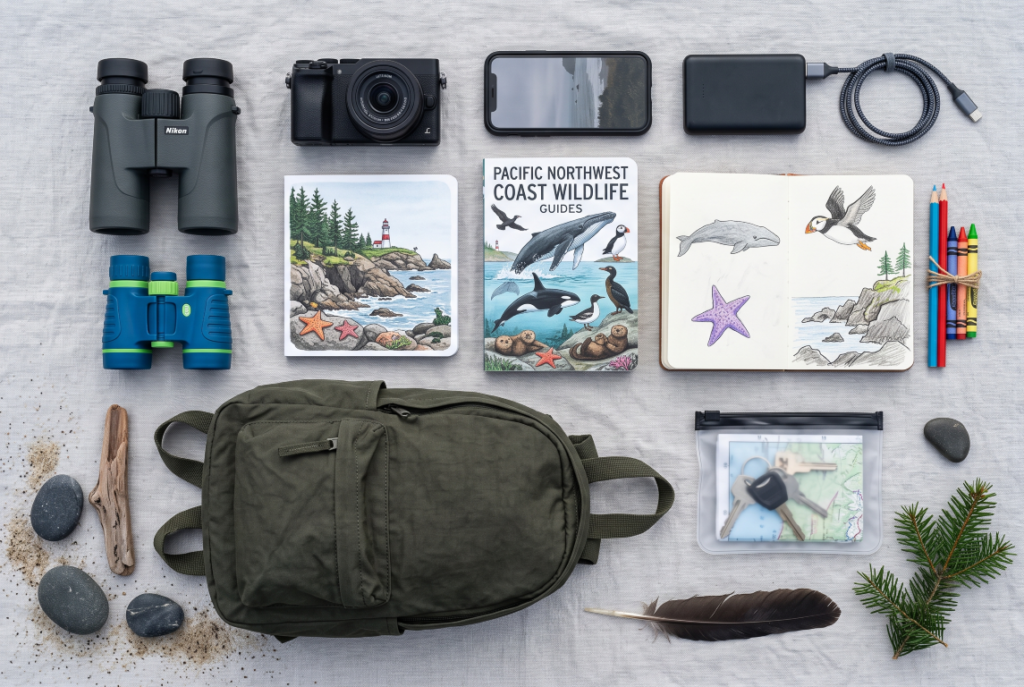
Wildlife and exploration gear for an Oregon Coast vacation can be surprisingly simple. Binoculars, a camera, nature identification resources, a small journal, and a day backpack can help kids become active participants in exploring the coastline while allowing wildlife to remain undisturbed.
What wildlife can families look for on the Oregon Coast?
Depending on the location and season, families may have opportunities to spot whales, seals, sea lions, seabirds, and a variety of tide pool creatures along the Oregon Coast. Keep your distance, use binoculars for closer views, and follow posted wildlife viewing guidelines.
One of the biggest reasons the Oregon Coast interests me is that there is so much for kids to discover beyond the beach itself.
Depending on where you visit and the time of year, your family may have opportunities to watch whales offshore, spot seals or sea lions, look for seabirds, and discover all kinds of creatures in tide pools. You don’t need much equipment to make those experiences exciting.
Binoculars are one of the first things I would pack. They allow kids to get a better look at wildlife without needing to move closer. If you have an extra child-friendly pair, let older kids take turns being the family’s official wildlife spotter.
This is also where responsible wildlife viewing matters. Keep your distance, never feed or approach wild animals, and follow any posted restrictions at the location you’re visiting. If you encounter a stranded marine mammal, NOAA Fisheries recommends keeping people and pets at least 50 yards away and contacting the appropriate local stranding network rather than approaching or attempting to help the animal yourself.
Turn Exploring Into a Family Activity
A small notebook can easily become an Oregon Coast nature journal. Kids can record the animals they spotted, draw Haystack Rock or another favorite view, keep track of places they visited, or simply document their favorite part of each day.
A nature identification book or app can make discoveries even more interesting. Instead of simply saying, “Look, a bird!” kids can try to figure out what kind they saw.
Your phone or camera will probably get plenty of use too, so I would keep a portable charger in the day backpack. Between taking photos, checking maps, looking at tide information, and identifying wildlife, a phone battery can disappear surprisingly quickly.
Just remember that photographs and journal entries make much better souvenirs than taking things from natural areas. Leave wildlife, tide pool creatures, plants, rocks, shells, and other natural objects where you find them whenever local rules require it or you’re unsure whether collecting is permitted.
Exploration Packing List
- Binoculars
- Camera or phone
- Portable charger
- Nature identification book or app
- Small notebook or nature journal
- Pencils or crayons
- Day backpack
- Reusable waterproof pouch
Why You’ll Need It
Simple exploration gear gives kids something to do with what they’re seeing. Instead of simply walking past wildlife, viewpoints, and interesting coastal features, they can observe, identify, photograph, draw, and record their discoveries.
Keep It Simple
You don’t need to turn your child into a fully equipped junior naturalist before leaving home. A pair of binoculars, a notebook, something to write with, and a way to take photos are plenty. The Oregon Coast provides most of the entertainment itself.
✅Fun Shores Ahead Tip
Give each child a small nature-journal challenge for the trip. Ask them to record their favorite animal, favorite coastal view, favorite beach, and the most unexpected thing they discovered. By the end of your vacation, they’ll have a keepsake built from their own experiences rather than another souvenir-shop trinket.
What I Would Not Overpack For An Oregon Coast Vacation
One thing I would avoid is packing as though your family is heading to a tropical resort.
You probably do not need a suitcase filled primarily with swimsuits, sandals, and hot-weather clothing. I would rather use that space for layers, comfortable shoes, rain protection, and clothing that can handle outdoor adventures.
I also would not overload the family with beach equipment. When I travel with my family, I prefer bags and chairs with comfortable carrying straps instead of hauling a wagon through the sand. Wagons are popular with families, but once they are loaded down, pulling them through soft sand can become more work than simply carrying thoughtfully packed gear.
My rule is that everyone who is able helps. Older kids can carry a backpack or beach item, and even an older toddler can begin by carrying their own lightweight water bottle. Babies and younger toddlers can be carried when necessary, which is another reason I value supportive carriers and gear that leaves my hands available.
Packing efficiently is not about seeing how much you can bring. It is about making sure the things you do bring actually make the vacation easier.
Frequently Asked Questions About Packing for Oregon Coast Vacations
What should I pack for an Oregon Coast vacation?
Pack removable layers, lightweight waterproof outerwear, comfortable walking shoes, tide pooling footwear, sun protection, extra clothing, snacks, water bottles, and a small day bag. Adjust your packing list for the season and the activities your family has planned. Things To Do In Cannon Beach With Kids
What should kids wear on the Oregon Coast?
Dress kids in comfortable layers such as T-shirts, long sleeves, sweatshirts or fleece, and a lightweight waterproof jacket. I would also pack two extra outfits per child and keep at least one complete change of clothes accessible during day trips.
Do you need rain gear for the Oregon Coast in summer?
Yes. According to Travel Oregon, coastal weather can vary considerably, so lightweight rain gear is worth packing even during summer. A waterproof hooded jacket is especially practical for kids because you can easily keep it in your day bag.
Do kids need swimsuits on the Oregon Coast?
Yes, I would pack swimsuits, but I wouldn’t make them the focus of your child’s wardrobe. Oregon Coast vacations often include tide pooling, hiking, wildlife watching, sightseeing, and exploring coastal towns, making comfortable layers more useful for much of the trip.
What shoes should kids wear for Oregon Coast tide pools?
Choose secure shoes with good traction for tide pooling because wet rocks, seaweed, and uneven surfaces can be slippery. I would avoid relying on flip flops and choose footwear that stays securely on your child’s feet while exploring.
How many layers should I pack for the Oregon Coast?
Instead of packing several heavy layers, bring lightweight pieces that work together. A T-shirt or long-sleeve shirt, sweatshirt or fleece, and lightweight waterproof outer layer gives kids plenty of flexibility as conditions change.
What should I pack for Cannon Beach with kids?
For Cannon Beach, pack layers, rain jackets, comfortable shoes, tide pooling footwear, extra clothes and socks, sunscreen, snacks, water bottles, and a day backpack. Binoculars and a nature journal are also great additions for exploring Haystack Rock and watching wildlife. And if you need it, here is a family-friendly Cannon Beach itinerary
What should I pack for tide pooling on the Oregon Coast?
Bring footwear with good traction, waterproof protection for your phone, a small magnifying glass if desired, and current tide information. Check conditions before exploring, keep an eye on the ocean, and teach kids to observe tide pool creatures without touching or collecting them.
How should I prepare for changing weather on the Oregon Coast?
Check the forecast before your trip and again each morning, then keep rain protection and an extra layer accessible during outings. I would also leave dry socks and a change of clothes for each child somewhere easy to reach.
What should I keep in my family day bag on the Oregon Coast?
Keep water, snacks, sunscreen, rain protection, a compact first aid kit, waterproof storage, a portable charger, and a change of clothes for kids in your day bag. Add diapers, wipes, and other everyday necessities when traveling with babies or toddlers.
Do I need sunscreen on the Oregon Coast if it’s cloudy?
Yes. The American Academy of Dermatology recommends broad-spectrum, water-resistant SPF 30 or higher sunscreen even on cloudy days, along with protective clothing, hats, sunglasses, and shade. Here are some more tips on protecting your family in the sun
What should I avoid overpacking for an Oregon Coast vacation?
Avoid overpacking bulky beach equipment, excessive toys, too many swimsuits, specialized outdoor gear you won’t actually use, and clothing that only works for one situation. Focus on versatile clothing and gear that supports the activities on your itinerary. Essential Family Beach Packing List
Pack For The Oregon Coast You Are Actually Going To Explore
An Oregon Coast family vacation is not just about packing for the beach. You are packing for mornings exploring tide pools, afternoons walking through coastal towns, unexpected rain showers, scenic drives, wildlife sightings, hiking trails, and evenings when everyone suddenly wants another layer.
That is what makes planning this trip so interesting to me. Since Cannon Beach first landed on my family’s bucket list, I have realized how different an Oregon beach vacation can be from the warmer coastal trips we usually picture. Instead of trying to recreate a tropical beach vacation in a cooler climate, I would pack for what makes Oregon special.
Bring the layers. Bring shoes your kids can actually explore in. Keep snacks in the car. Leave some room in the schedule for unexpected stops.
Most importantly, pack for your family’s itinerary. If you are planning several hikes, your footwear will matter more. If tide pooling is at the top of your list, prioritize traction, extra clothes, and waterproof storage. If you are traveling with a toddler, keeping essentials accessible may matter more than squeezing one more outfit into the suitcase.
And if your child ends the day with wet socks, sandy pants, and an extremely detailed story about the sea star they found in a tide pool, I would consider that packing list put to good use.
Before Your Oregon Coast Vacation
Every family packs a little differently, and your kids’ ages, activities, accommodations, and travel plans can change what actually needs to go in the suitcase.
Want a packing list built around your family instead?
Take the Fun Shores Ahead Family Beach Packing Quiz and answer a few quick questions about your trip. You’ll get a personalized packing list to help you figure out what your family needs without packing half the house just in case.
Continue Planning Your Oregon Coast Family Vacation
Once the packing list is handled, these guides can help you start turning your Oregon Coast vacation into an actual family itinerary:
- 10 Things to Do in Cannon Beach With Kids: Planning time in Cannon Beach? Discover family-friendly activities beyond simply spending the day on the sand, including outdoor adventures and places kids can explore.
- Family Guide to Haystack Rock: If tide pooling is one of the reasons you’re visiting Cannon Beach, use this guide to plan your family’s Haystack Rock experience, including when to visit, what kids can discover, and how to explore responsibly.
- 10 Best Beaches for Oregon Coast Family Vacations: Compare family-friendly beaches along the Oregon Coast and find places that fit the type of beach experience you want with your kids.
- 5-Day Cannon Beach Oregon Itinerary for Families: Staying for several days? Use this family itinerary to balance Cannon Beach attractions, outdoor adventures, beach time, and a little breathing room between activities.
- Oregon Coast Family Travel Guides: Still deciding what your trip should look like? Explore more Fun Shores Ahead Oregon Coast resources to help you plan where to go, what to do, and how to make the most of your time together.