


Finding beach snacks for kids that travel well, survive the heat, and actually get eaten can take a little trial and error. I know because I’m currently packing beach food for two very different appetites: a toddler who seems ready for another snack every 30 minutes and a tween who wants something substantial enough to keep her full.
We’re also a foodie family, so food has always been part of how we enjoy our beach days. I’m not interested in packing a cooler full of snacks just to say we brought something. I want food my girls enjoy eating, that makes sense for their ages, and that I can realistically serve at the beach.
With my toddler, that might mean fruit, a pouch, a mini muffin, or something she can easily manage with little hands. My tween needs more. Wraps, snack boxes, sandwiches, and other filling options help keep her satisfied when we’re spending several hours on the sand.
And I’ve learned not to underestimate how hungry kids can get at the beach. Between walking through sand, playing, swimming, and exploring, somebody is eventually going to come looking for the cooler.
That’s why this list includes more than quick snacks. You’ll find beach snacks for toddlers, easy options for older kids, and filling beach lunch ideas for longer days, along with practical tips for keeping everything cold, organized, and as sand-free as possible.
These are the kinds of foods that have worked for us through different stages of parenting, from the toddler years to the much bigger appetite we’re feeding now.
Food Safety & Correctness Disclaimer
Every effort has been made to ensure the food safety and age-related information in this guide is accurate and helpful for families. However, food storage recommendations, health guidance, and product information can change, and every child’s developmental abilities, dietary needs, and allergies are different. Perishable foods should be kept at safe temperatures, and foods should always be prepared and served in a size, shape, and texture appropriate for your child’s age and eating abilities. Before your beach day, check current USDA, FDA, and pediatric guidance when appropriate, and follow any individualized recommendations provided by your child’s healthcare professional.
TL;DR: Beach Snacks for Kids and Toddlers
The best beach snacks for kids are easy to pack, simple to eat, age-appropriate, and able to stay fresh and safe throughout your beach day. Good options include fresh or frozen fruit, mini sandwiches, muffins, snack boxes, pouches, veggies and dips, wraps, and other familiar foods your kids already enjoy. For longer beach days, pack a mix of quick snacks and filling meals, keep perishable foods properly chilled, and bring plenty of water.
Summarize With AI
Quick List: 10 Best Beach Snacks for Kids
- Fresh & Frozen Fruit
- Mini Sandwiches, Pinwheels & Roll-Ups
- Bento Snack Boxes
- Homemade Muffins & Mini Bakes
- Fruit & Applesauce Pouches
- Veggies & Kid-Friendly Dips
- Cheese, Crackers & Mini Snack Combos
- Easy Dry Snacks & Crunchy Favorites
- Wraps, Pasta Salads & Filling Beach Lunches
- Sweet Treats for Beach Days
Quick Reference: Beach Snacks for Kids
| Food Idea | Best For | Age Range | Cooler Needed? | Mess Level | Meal or Snack | Prep Level |
|---|---|---|---|---|---|---|
| Fresh & Frozen Fruit | Hot beach days, quick breaks | Toddlers & up* | Usually | Low–Medium | Snack | Easy |
| Mini Sandwiches, Pinwheels & Roll-Ups | Easy handheld food | Toddlers & up* | Usually | Low | Snack or Light Meal | Easy |
| Bento Snack Boxes | Kids who like variety | Toddlers & up* | Depends on contents | Low | Snack or Light Meal | Easy |
| Homemade Muffins & Mini Bakes | Grab-and-go snacking | Toddlers & up* | Usually no** | Low | Snack | Easy–Moderate |
| Fruit & Applesauce Pouches | Quick, convenient snacking | Babies eating solids & up* | Usually no** | Low | Snack | Very Easy |
| Veggies & Kid-Friendly Dips | Crunchy, fresh snack breaks | Toddlers & up* | Yes | Medium | Snack | Easy |
| Cheese, Crackers & Protein Snack Combos | Filling snack breaks | Toddlers & up* | Usually | Low | Snack or Light Meal | Easy |
| Easy Dry Snacks & Crunchy Favorites | Beach bags and backup snacks | Toddlers & up* | No | Low | Snack | Very Easy |
| Wraps, Pasta Salads & Filling Beach Lunches | Long beach days and bigger appetites | Kids & up* | Yes | Low–Medium | Meal | Moderate |
| Sweet Treats for Beach Days | A fun addition to your snack stash | Varies by treat* | Depends | Low–Medium | Snack/Treat | Very Easy |
* Always prepare and serve foods in a size, shape, and texture appropriate for your child’s age and eating abilities.
** Whether a food requires refrigeration depends on its ingredients, preparation, and packaging. Follow the storage instructions for packaged foods and keep perishable homemade foods properly chilled.
Fresh & Frozen Fruit
Fresh and frozen fruit makes an easy beach snack for kids because it’s naturally refreshing, simple to portion, and easy to pack for different ages.

Is fruit a good beach snack for toddlers and kids?
Yes. Fruit gives kids something cool and refreshing to eat between beach activities and can be prepared ahead in individual containers for easy serving. Choose fruits your children already enjoy and prepare them in an age-appropriate size and texture, especially for toddlers.
Frozen fruit cups have become one of my favorite things to prep before a beach trip. I can portion everything at home, put the cups in the cooler, and by the time we’re ready for a snack, the fruit has usually started to thaw while still being cold and refreshing.
With my girls at such different ages, I can also customize what goes into each container. My toddler’s fruit can be cut and prepared specifically for her, while my tween can have larger pieces and combinations that suit her appetite. It saves me from trying to serve everyone from one big container with sandy hands hovering nearby.
You don’t have to freeze everything, either. Watermelon, oranges, berries, mango, pineapple, and peaches all work well chilled. For especially hot beach days, I like having a combination of fresh and partially thawed frozen fruit in the cooler so we have something cold to reach for when everyone comes back from the water.
Try These
- Watermelon
- Mango
- Pineapple
- Strawberries
- Blueberries
- Peach slices
- Orange slices
- Mixed frozen fruit cups
- Homemade fruit pops
Why It Works at the Beach
- Easy to portion before leaving home
- Refreshing on hot beach days
- Works for toddlers and older kids when prepared appropriately
- Individual containers help keep the rest of the fruit covered
- Easy to pair with more filling snacks or lunch
✅Food Safety & Age Tip
Keep cut fruit properly chilled in your cooler until you’re ready to serve it. Prepare fruit in a size, shape, and texture appropriate for your child’s age and eating abilities, and avoid serving young children whole grapes or hard frozen pieces of fruit that may pose a choking risk.
Mini Sandwiches, Pinwheels & Roll-Ups
Mini sandwiches, pinwheels, and roll-ups are versatile beach snacks for kids because they’re easy to portion, filling, and simple to customize with foods your family already enjoys.

Are mini sandwiches and roll-ups good beach snacks for kids?
Yes. Their smaller size makes them easy to serve during a quick beach break, while heartier fillings can turn them into a light lunch for kids with bigger appetites. You can also make different combinations for each child without packing completely separate meals.
Finger foods work especially well for our beach days because my girls rarely want the same amount of food at the same time. My younger daughter may be perfectly happy with a small sandwich she can manage herself, while my tween needs something much more substantial before she’s ready to head back out.
I usually keep the combinations simple rather than building an elaborate sandwich that falls apart after the first bite. Pinwheels and tortilla roll-ups are particularly handy because I can make them at home, slice them into individual portions, and pack them directly into the cooler.
This is also an easy category to adapt around what your kids already eat. If you know they’ll happily eat turkey and cheese at home, there’s no need to reinvent lunch just because you’re going to the beach. Familiar fillings can make packing easier, especially when you’re already carrying towels, beach gear, drinks, and everything else the family needs.
Try These
- Turkey and cheese roll-ups
- Ham and cheese pinwheels
- Peanut butter and banana sandwiches
- Sunflower seed butter and banana sandwiches
- Hummus and cucumber pita pockets
- Chicken salad mini sandwiches
- Cream cheese and cucumber pinwheels
- Quesadilla wedges
- Simple deli meat and cheese sandwiches
Why It Works at the Beach
- Easy to make ahead and portion
- Can work as either a snack or light meal
- Simple to customize for different preferences and appetites
- Easy for kids to hold
- Packs neatly into individual containers
- More filling than many grab-and-go snacks
✅Fun Shores Ahead Tip
Keep sandwiches, pinwheels, and roll-ups containing perishable ingredients such as deli meat, cheese, hummus, cream cheese, or chicken salad properly chilled until serving. For younger children, adjust the size and texture to their eating abilities, and be especially careful with thick or sticky spreads such as nut and seed butters. If your family uses peanut or other nut products, also consider individual allergies and any food restrictions where you’ll be eating.
Bento Snack Boxes
Bento snack boxes are versatile beach snacks for kids because you can pack several small foods in one container and customize each box around your child’s age, appetite, and preferences.

Are bento snack boxes good for the beach?
Yes. Bento boxes keep several snacks organized without requiring you to open multiple bags and containers every time someone gets hungry. They’re especially useful for kids who enjoy variety or prefer eating smaller amounts of different foods instead of one large snack or meal.
Bento boxes work particularly well in our family because my girls approach them completely differently. My tween can turn hers into a full snack or light lunch, while my younger daughter is perfectly content working her way through smaller portions one compartment at a time.
I also like being able to build each box around what that child will actually eat. Instead of packing one big container of snacks for everyone, I can give each girl her own combination of fruit, crackers, cheese, a mini muffin, or another favorite. That makes it easier to account for different appetites without bringing twice as much food.
They’re also useful when sand enters the equation. You can open one compartment or section at a time when your container allows it, keep the remaining food covered, and avoid having the entire family’s snack supply exposed while everyone is eating.
For longer beach days, make the box more substantial by adding a filling protein or mini sandwich. For shorter trips, a few favorite snacks are plenty.
Try These
- Strawberries + cheese + crackers + mini muffin
- Apple slices + sunflower seed butter + pretzels
- Grapes prepared appropriately for age + cheese + crackers
- Mini sandwich + fruit + cucumber + small treat
- Turkey roll-ups + crackers + berries
- Hummus + pita pieces + cucumber + fruit
- Applesauce pouch + dry cereal + fruit + mini bake
- Pinwheels + fruit + crunchy snack + small treat
Why It Works at the Beach
- Keeps different foods organized in one container
- Easy to customize for different ages and appetites
- Gives kids several choices without packing numerous snack bags
- Can serve as a snack or light lunch
- Helps keep uneaten food contained and covered
- Easy to prepare before leaving for the beach
✅Food Safety & Age Tip
If your bento box contains cheese, deli meat, hummus, yogurt, cut fruit, or other perishable foods, keep the entire box properly chilled until it’s time to eat. Prepare each item for your child’s age and eating abilities, including cutting grapes appropriately and modifying firm, round, hard, or other potential choking hazards for younger children.
Homemade Muffins & Mini Bakes
Homemade muffins and mini bakes make convenient beach snacks for kids because they’re easy to portion, simple to pack, and can be made ahead with flavors your children already enjoy.

Are homemade muffins good beach snacks for kids?
Yes. Muffins are easy to pack individually and give kids a more filling option when fruit or crackers aren’t quite enough. Mini versions work especially well for younger children and quick snack breaks, while larger muffins or bread squares can satisfy bigger appetites.
Muffins have been a favorite with both of my girls during different stages. My oldest used to hand me crumb-filled pieces of her muffin as an offering when she was little, and now I’m watching my younger daughter pull hers apart piece by piece before deciding which bite deserves to go first.
For beach days, I prefer simple muffins and mini bakes that aren’t covered in frosting, glaze, or anything else destined to become one with the sand. Banana oat muffins, blueberry muffins, and small banana bread squares are easy to portion at home and hand out when everyone needs something more substantial.
They’re also useful because you can make a batch ahead of time instead of adding another task to the morning you’re heading to the beach. Pack them individually or divide them into small containers so you don’t have to expose the entire batch every time someone wants one.
And homemade doesn’t have to mean complicated. If your family already has a favorite muffin or quick-bread recipe, that’s usually the best place to start.
Try These
- Banana oat muffins
- Blueberry mini muffins
- Applesauce muffins
- Banana bread squares
- Apple cinnamon muffins
- Zucchini mini muffins
- Carrot muffins
- Oatmeal breakfast bites
- Savory cheese muffins
Why It Works at the Beach
- Easy to make ahead
- Simple to portion for different appetites
- More filling than many small snacks
- Easy for kids to hold
- No utensils required
- Sweet and savory versions both work
- Can be packed individually to help keep the remaining batch covered
✅Fun Shores Ahead Tip
Whether homemade muffins and mini bakes need refrigeration depends on their ingredients, so don’t assume every baked snack can stay in a beach bag all day. Keep varieties containing perishable fillings, toppings, or other ingredients properly chilled, and prepare softer, appropriately sized portions for younger children based on their eating abilities.
Fruit & Applesauce Pouches
Fruit and applesauce pouches are convenient beach snacks for kids, especially younger children, because they’re portable, quick to serve, and easy to keep tucked into your beach-day food stash.

Are fruit and applesauce pouches good beach snacks for kids?
Yes. Pouches are useful when you need a familiar snack that requires almost no preparation or cleanup. They’re especially handy for younger kids who are ready for a snack immediately and aren’t particularly interested in waiting while you unpack the cooler.
As much as we enjoy packing homemade food, pouches remain undefeated with my younger daughter. If she’s hungry and we’re in the middle of a beach day, I can pull one out, twist off the cap, and have something familiar ready for her without setting up an entire snack break.
That’s one reason I always like having a few convenience foods mixed in with everything else we pack. Not every beach snack needs to be homemade or carefully arranged in a bento box. Sometimes the best option is simply the one your child likes and you can hand them quickly.
Fruit and applesauce pouches also come in plenty of combinations, so you can choose simple single-fruit options or blends based on what your child normally eats. For older kids who have outgrown traditional toddler pouches, squeezable applesauce and similar portable options can still be useful when they want something quick between activities.
Just remember that a pouch doesn’t necessarily need to replace a more filling snack. Depending on your child’s appetite, pair it with something like a muffin, sandwich, crackers, or another favorite when they need more than a quick bite.
Try These
- Unsweetened applesauce
- Apple and strawberry
- Apple and peach
- Apple and mango
- Pear blends
- Fruit and vegetable blends
- Yogurt-based pouches that can be kept properly chilled
- Reusable pouches filled at home with your child’s favorite purée or applesauce
Why It Works at the Beach
- Requires little or no preparation
- Easy to pack as a backup snack
- Quick to serve when kids are hungry
- Familiar option for many younger children
- Minimal utensils and cleanup
- Easy to pair with a more filling snack
✅Food Safety & Age Tip
Choose pouches appropriate for your child’s age and follow the manufacturer’s storage instructions, especially after opening. Keep yogurt or other refrigerated varieties properly chilled, supervise younger children while they’re eating, and discard the cap immediately or keep it securely out of reach, since pouch caps can present a choking hazard.
Veggies & Kid-Friendly Dips
Veggies and dips make versatile beach snacks for kids because they add something fresh and savory to the cooler and can be customized around the vegetables and flavors your children already enjoy.

Are veggies and dips good beach snacks for kids?
Yes. Pre-portioned vegetables are easy to pull from the cooler for a snack, while a favorite dip can make them more appealing to kids who might otherwise pass them over. The key is choosing vegetables that travel well, preparing them appropriately for your child’s age, and keeping perishable dips properly chilled.
In our family, the dip is often just as important as whatever I’m serving with it. My tween loves hummus, while my younger daughter has gone through the very toddler-specific phase of being far more interested in the act of dipping than actually eating the vegetable afterward. I still count the enthusiasm.
For the beach, I like vegetables that can be washed, cut, and portioned before we leave. Cucumbers, bell peppers, and appropriately prepared carrots are easy to divide between individual containers, and keeping the dip separate prevents everything from becoming soggy before we’re ready to eat.
Individual dip containers are especially useful with kids. Everyone can have their own portion rather than repeatedly dipping sandy fingers or half-eaten vegetables into one shared container. They’re also easier to close and return to the cooler if there’s any left.
Pair the vegetables and dip with crackers, a mini sandwich, cheese, or another filling food when you want to turn them into part of a larger beach lunch.
Try These
- Cucumber with hummus
- Bell pepper with hummus
- Appropriately prepared carrots with ranch
- Cucumber with yogurt-based dip
- Bell pepper with guacamole
- Soft-cooked vegetables with a favorite dip for younger children
- Pita pieces, cucumber, and hummus
- Veggies, crackers, and dip snack boxes
Why It Works at the Beach
- Adds a fresh, savory option to your snack selection
- Easy to wash and portion before leaving home
- Can be customized around vegetables your kids already like
- Individual dip containers make serving easier
- Pairs well with more filling snacks and lunches
- Gives kids a break from predominantly sweet beach snacks
✅Food Safety & Age Tip
Keep cut vegetables and perishable dips such as hummus, ranch, yogurt-based dips, and guacamole properly chilled. Raw, firm vegetables can be choking hazards for younger children, so prepare them in a size and texture appropriate for your child’s eating abilities, which may mean cooking certain vegetables until soft rather than serving them raw.
Cheese, Crackers & Mini Snack Combos
Cheese, crackers, and protein snack combos are filling beach snacks for kids that can bridge the gap between a small snack and a full beach lunch.

Are cheese and crackers good beach snacks for kids?
Yes. Cheese and crackers are easy to portion, familiar to many kids, and simple to build into a more substantial snack with fruit, eggs, yogurt, or another protein. They also work well for families with kids of different ages because you can adjust the portions and ingredients for each child.
This is the kind of beach snack I appreciate when I know fruit or a pouch isn’t going to hold everyone for long. My tween has a much bigger appetite now, so pairing crackers with cheese and another filling food gives her something with a little more staying power before she’s asking what’s for lunch.
For my younger daughter, I can make a much smaller version using foods prepared for her age and eating abilities. That’s one of the reasons these mini snack combinations work so well for us. Everyone can essentially eat the same thing without needing the same portion or preparation.
You can keep these incredibly simple, too. Cheese and crackers may be enough for a short beach visit, while a longer day might call for cheese, crackers, fruit, and a protein. Pack everything in a divided container or small individual containers so kids can work their way through the different foods without the entire family’s supply being open at once.
These combinations are also a good way to use foods you already have rather than buying special “beach snacks.” Open the refrigerator and pantry, choose a few foods that work together, portion them, and you’re halfway packed.
Try These
- Cheese + crackers + strawberries
- Turkey + cheese + crackers
- Hard-boiled egg + crackers + fruit
- Yogurt + berries + mini muffin
- Cheese + apple slices + crackers
- Chicken pieces + cucumber + crackers
- Cheese + crackers + applesauce pouch
- Turkey roll-ups + cheese + fruit
Why It Works at the Beach
- More filling than a single snack
- Easy to customize for different appetites
- Can combine foods already in your refrigerator and pantry
- Works as a substantial snack or light meal
- Easy to portion into individual containers
- Gives older kids more substantial options without packing a full lunch
✅Food Safety & Age Tip
Keep cheese, deli meat, eggs, yogurt, cooked chicken, and other perishable ingredients properly chilled until serving. For younger children, prepare cheese, meat, fruit, crackers, and other components in age-appropriate sizes and textures, and avoid hard, round, or otherwise difficult-to-chew foods that may pose a choking risk.
Easy Dry Snacks & Crunchy Favorites
Easy dry snacks are practical beach snacks for kids because they don’t take up cooler space, travel well, and give you something quick to grab when hunger hits between bigger meals.

What are the best dry snacks to pack for kids at the beach?
Choose dry snacks your kids already enjoy that are easy to portion and appropriate for their ages, such as crackers, pretzels, dry cereal, snack bars, or simple snack mixes. They’re especially useful as backup snacks because you can keep several options in your beach bag without filling up the cooler.
I always like having at least a few snacks that don’t depend on the cooler. Cold space disappears quickly once we’re packing water, fruit, sandwiches, and lunches, so dry snacks earn their spot simply by being easy.
They’re also useful for those “I’m hungry” moments that somehow happen shortly after everyone just ate. Instead of opening the cooler again, I can pull out a small container or individual portion and keep the day moving.
The choices look different depending on which of my girls I’m packing for. My tween can handle a wider variety of crunchy snacks and snack mixes, while I’m much more selective about the size and texture of anything I give my younger daughter.
I also prefer portioning dry snacks before we leave instead of bringing one large family-size bag. Smaller containers or reusable snack bags are easier to hand to each child, help keep the remaining food away from sandy hands, and make it much easier to see how much food we’ve actually packed.
Try These
- Whole-grain crackers
- Pretzels
- Dry cereal
- Animal crackers
- Graham crackers
- Rice cakes or rice crackers
- Age-appropriate snack bars
- Homemade snack mix for older kids
- Dried fruit appropriate for your child’s age
- Goldfish-style crackers
Why It Works at the Beach
- Doesn’t take up valuable cooler space
- Easy to portion before your beach day
- Convenient for quick snack breaks
- Travels well in a beach bag
- Gives you backup food if kids get hungry unexpectedly
- Easy to customize for different ages and preferences
✅Food Safety & Age Tip
Dry doesn’t automatically mean appropriate for every age. Popcorn, whole nuts, hard pretzels, some dried fruits, and other hard or difficult-to-chew foods can pose choking hazards for younger children. Choose snacks based on your child’s eating abilities and check packaged foods for allergen information when needed. Keep dry snacks sealed and protected from heat, moisture, and sand until you’re ready to serve them.
Wraps, Pasta Salads & Filling Beach Lunches
Wraps, pasta salads, and other filling lunches are great for longer beach days when beach snacks for kids aren’t enough to satisfy bigger appetites.

What are some easy beach lunch ideas for kids?
Good beach lunches are filling, easy to portion, and simple to eat without requiring much setup. Wraps, pasta salads, quinoa bowls, cold chicken, and other familiar meals can work well when packed in individual containers and kept properly chilled.
There comes a point in our beach day when snacks aren’t going to cut it anymore, especially with my tween. If we’re planning to stay for several hours, I would much rather pack an actual lunch than spend the afternoon handing out snack after snack while everyone is still hungry.
Wraps are one of the easiest options because I can make them before we leave, cut them into manageable portions, and customize the fillings for each person. They also take up relatively little cooler space compared with packing several separate ingredients.
Cold pasta salads work well when we want something different from sandwiches. I like that they can be prepared the night before and adjusted around what my family enjoys, whether that’s chicken and vegetables, cheese and cucumber, or a simpler pasta combination for the kids.
This is also where leftovers can occasionally become tomorrow’s beach lunch. Cold chicken, cooked pasta, or other foods from dinner may work beautifully the next day when they’re stored and transported safely. It saves prep time and gives us something more substantial without making an entirely separate meal.
For kids who don’t like their foods mixed together, you don’t have to force the “bowl” concept. Pack the same ingredients separately in a divided container and let them eat everything individually. Beach lunch does not need to be fancy. It needs to be something your kids will eat when they’re genuinely hungry.
Try These
- Turkey and cheese wraps
- Chicken and cucumber wraps
- Chicken Caesar wraps
- Pasta salad with chicken and vegetables
- Pasta with cheese, cucumber, and tomatoes
- Quinoa and chicken bowls
- Cold chicken with fruit and crackers
- Quesadilla wedges with fruit
- Hummus and veggie wraps
- Deconstructed lunch boxes with meat, cheese, fruit, and crackers
Why It Works at the Beach
- Provides a more filling option for long beach days
- Works especially well for older kids with bigger appetites
- Many options can be prepared the night before
- Easy to customize for different preferences
- Can turn suitable leftovers into an easy next-day lunch
- Individual portions make serving at the beach simpler
✅Food Safety & Age Tip
Wraps, pasta salads, cooked chicken, cheese, hummus, and similar lunch foods are perishable and should be kept properly chilled until you’re ready to eat. Pack cold foods directly from the refrigerator into a well-insulated cooler with enough ice or frozen gel packs, keep the cooler out of direct sun, and discard perishable food that has been left at unsafe temperatures rather than saving it for later. Prepare individual ingredients in sizes and textures appropriate for your child’s age and eating abilities.
Sweet Treats for Beach Days
Sweet treats can be part of your beach snacks for kids when you choose options that are easy to portion, travel well, and won’t turn into a melted mess before anyone gets to enjoy them.

What sweet treats are easy to pack for kids at the beach?
Simple treats such as mini cookies, fruit leather, granola bites, or homemade snack bars are easier to manage at the beach than foods covered in chocolate, frosting, or sticky coatings. Pack small portions alongside your family’s other snacks rather than relying on sweets to keep kids full throughout the day.
We’re a foodie family, so I’m certainly not packing a beach cooler where every single thing has to qualify as a sensible snack. Sometimes it’s fun to pull out a little treat after lunch or when everyone comes back to the umbrella ready for a break.
The beach does make me more selective about what I bring, though. Anything that melts instantly, gets extremely sticky, or requires a cleanup operation isn’t high on my list. I prefer treats I can portion at home and hand out without watching half of them liquefy in the container.
This is also an easy place to bring something your kids already consider special. Maybe that’s a favorite mini cookie, a homemade granola bite, or fruit leather they don’t get every day. It doesn’t need to be elaborate to feel like a treat.
For longer beach days, I like packing sweets alongside more filling foods rather than treating them as another meal replacement. My girls can enjoy something fun, and I still have sandwiches, fruit, snack boxes, or lunch waiting when actual hunger shows up.
Try These
- Mini cookies
- Fruit leather
- Homemade granola bites
- Mini oat bars
- Banana oat bites
- Graham crackers
- Mini rice cereal treats
- Homemade snack bars
- Dried fruit appropriate for your child’s age
- A favorite family treat that travels well
Why It Works at the Beach
- Adds something fun to the beach-day food selection
- Easy to portion into small servings
- Many options can travel without taking up cooler space
- Simple treats require little or no preparation
- Easy to pair with fruit or more filling snacks
- Gives families plenty of options beyond melt-prone desserts
✅Food Safety & Age Tip
Choose treats that are appropriate for your child’s age and eating abilities, and check packaged or homemade foods for allergens when necessary. Avoid giving younger children treats containing choking hazards such as whole nuts, hard candies, popcorn, or large pieces of dried fruit, and store anything containing perishable ingredients according to its refrigeration requirements.
How to Pack Snacks and Meals Safely for the Beach

Packing beach snacks for kids isn’t only about deciding what everyone will eat. You also need a plan for keeping cold foods cold, dry snacks away from melting ice, and as much sand as possible out of everyone’s lunch.
Use a Cooler for Perishable Foods
Anything that normally belongs in the refrigerator should stay properly chilled at the beach. This includes foods such as deli meat, cheese, yogurt, hummus, eggs, cooked chicken, pasta salads, cut fruit, and sandwiches or wraps made with perishable ingredients.
Pack these foods directly from the refrigerator into an insulated cooler with plenty of ice or frozen gel packs. Frozen water bottles can also help keep the cooler cold and give your family extra cold water as they thaw.
Keep Dry Snacks Separate
Crackers, dry cereal, pretzels, unopened pouches, shelf-stable snack bars, and similar foods don’t need to compete for cooler space. I prefer keeping these in a separate beach bag or insulated dry snack bag where they won’t end up floating around in melted ice.
Check package instructions before assuming something is shelf-stable, particularly if you’ve opened or repackaged it.
Consider Separate Food and Drink Coolers
If you have room to carry two coolers, keeping drinks separate from food can be surprisingly helpful. Kids tend to reach for water frequently, which means a shared cooler can be opened over and over throughout the day.
A separate food cooler can stay closed longer, helping it maintain a safe temperature. If you’re only bringing one cooler, organize it so frequently grabbed drinks are easy to reach without digging through all the food.
Pack Individual Portions
I like individual containers at the beach because they solve several problems at once. Everyone gets an appropriate portion, I don’t have to repeatedly open a large container, and one pair of sandy hands doesn’t get access to the entire family’s lunch.
Divided containers, reusable snack bags, and small leak-resistant containers work especially well for fruit, snack combinations, sandwiches, dips, and lunches.
Keep the Cooler Out of Direct Sun
Once you reach the beach, place your cooler in the shade whenever possible rather than leaving it baking in direct sunlight. Keep the lid closed between uses and avoid opening it just to browse for what everyone wants next.
It helps to know roughly where everything is before you leave home. When someone asks for a sandwich, you want to retrieve the sandwich, not conduct an archaeological dig through three layers of ice packs and juice boxes.
Clean Hands Before Eating
Beach hands have touched sand, toys, shells, railings, sunscreen, and probably several things you’d rather not think about right before lunch. Pack what your family normally uses to clean hands before handling and eating food, especially when running water and soap aren’t readily available.
This is also another reason individual portions work so well. Kids can eat from their own containers instead of reaching repeatedly into shared bags of food.
Keep Sand Out of the Food
Sand is remarkably talented at getting everywhere, but keeping food covered makes a difference. Only open what you’re ready to serve, reseal containers immediately, and avoid setting uncovered food directly on towels or blankets where sandy feet are constantly passing.
A small tray, container lid, or other clean surface can also give you somewhere to set food while everyone eats.
Bring a Bag for Trash
Pack at least one bag specifically for food wrappers, used napkins, empty pouches, peels, and other trash. If your beach doesn’t have nearby garbage cans, you’ll already have an easy way to carry everything back out with you.
I also like having somewhere to put dirty reusable containers so they aren’t mixed back in with unopened food.
Know What Needs to Stay Cold
As a simple rule, if you normally store it in the refrigerator, plan to keep it cold at the beach. Perishable foods shouldn’t sit out for more than two hours, or more than one hour when the temperature is above 90°F, according to USDA food-safety guidance.
Don’t return food that has been sitting out too long to the cooler and assume chilling it again makes it safe. When in doubt about how long a perishable food has been warm, throw it away.
What Can Stay in Your Beach Bag?
Shelf-stable foods such as unopened fruit or applesauce pouches, crackers, pretzels, dry cereal, and certain packaged snack bars can usually stay outside the cooler when their packaging doesn’t require refrigeration. Homemade foods and repackaged snacks may have different storage needs, so consider their ingredients and storage requirements before deciding where to pack them.
A simple system works well for us: cold foods in the cooler, shelf-stable foods in the snack bag, individual portions whenever possible, and the cooler stays closed until we actually need something. It makes feeding everyone at the beach considerably easier and helps keep the food we packed safe to eat.
How Much Food Should You Pack for a Family Beach Day?
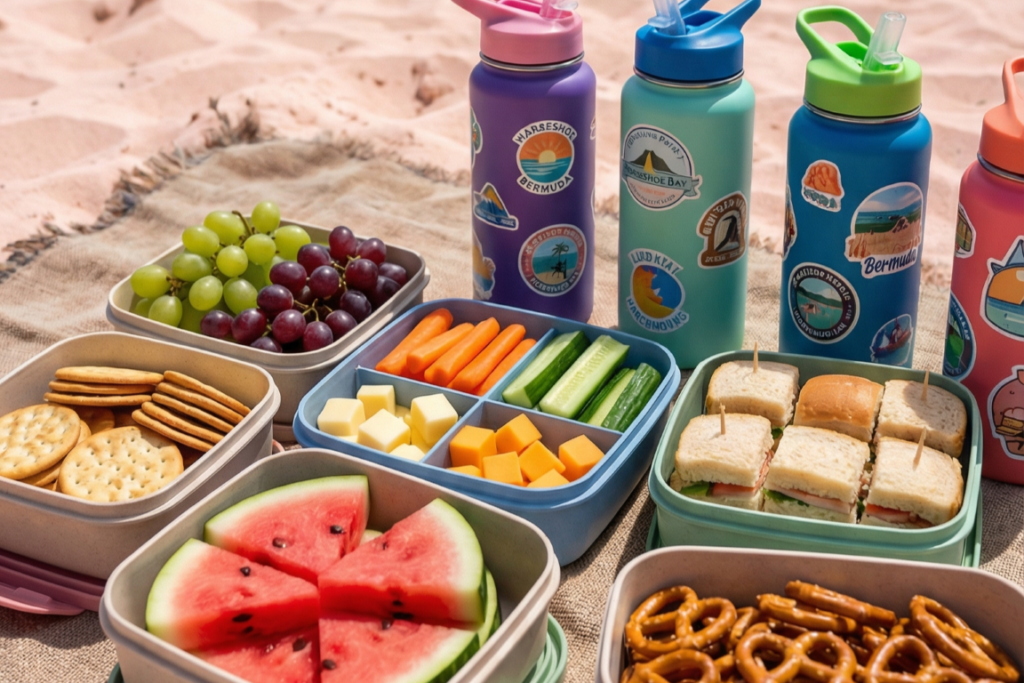
There isn’t one perfect amount of food to pack for every family beach day. A two-hour morning at the beach requires a very different food plan than arriving after breakfast and staying through the afternoon, so I find it more useful to think about how long we’ll be there, which meals we’ll eat, and how much my kids typically eat during an active day.
Start With the Length of Your Beach Day
For a shorter beach visit, a couple of beach snacks for kids plus plenty of water may be all you need. If you’ll be there for several hours or through lunchtime, plan for an actual meal along with snacks instead of trying to keep everyone full on crackers and fruit all day.
Pack for Each Child’s Age and Appetite
My toddler and tween definitely don’t need the same amount of food. Younger children may eat smaller portions more frequently, while older kids can work up a surprisingly big appetite after swimming, walking through sand, and being active for several hours.
Rather than packing identical portions, think about what each child normally eats and adjust from there.
Decide Which Meals You’ll Eat at the Beach
Before filling the cooler, decide whether you’re packing:
- Snacks only
- Morning snack + lunch
- Lunch + afternoon snacks
- Food for most of the day
Once you know which meals you’re covering, it’s much easier to tell whether you have enough without stuffing the cooler with food that will come home untouched.
Bring a Little More Than the Bare Minimum
Beach days have a way of making kids hungry at unexpected times. I like having an extra snack or two available, particularly something shelf-stable that won’t go to waste if nobody eats it.
That doesn’t mean packing enough food for a small expedition. A few backup options can be enough to handle an unexpectedly hungry child or a beach day that lasts longer than planned.
Keep a Familiar Backup for Younger Kids
If you’re traveling with a toddler or picky eater, bring at least one familiar food you know they’ll usually accept. A pouch, crackers, favorite snack bar, mini muffin, or another reliable option can be extremely useful when the carefully packed lunch suddenly receives a firm “no.”
Don’t Forget the Water
Food is only part of the plan. Bring enough drinking water for everyone and make it easy for kids to take regular drink breaks throughout the day. Hot weather and physical activity can increase fluid needs, so don’t base your supply solely on what everyone drinks during a typical afternoon at home.
The goal isn’t to calculate the perfect number of snacks per child. Pack enough to cover the meals you’ll miss at home, account for your children’s usual appetites, add a couple of reliable backup snacks, and make sure you have plenty to drink. That gives you flexibility without hauling half the pantry onto the sand.
Beach Food Ideas by Age
The best beach snacks for kids change as children grow. What works beautifully for a toddler may not come close to satisfying a tween or teen, so consider your child’s eating abilities, appetite, and how long you’ll be at the beach when deciding what to pack.
Babies Starting Solids
If your baby has started solids, stick with familiar foods they already eat safely at home rather than introducing something new at the beach. Depending on their stage, that might include appropriately prepared soft fruit, unsweetened applesauce or fruit purées, soft vegetables, or other foods that fit their usual feeding routine.
Beach days with babies also require extra attention to safe food temperatures, clean hands and utensils, and age-appropriate preparation. Follow your child’s established feeding guidance and supervise them closely while eating.
Toddlers
Toddlers often do well with small portions and familiar foods that are easy for little hands to manage. Fruit prepared appropriately for their age, mini muffins, pouches, soft sandwich pieces, pinwheels, and simple snack boxes can all work well.
This is also an age when I like having a reliable backup snack. A toddler can enthusiastically eat something on Tuesday and regard the exact same food as a personal betrayal by Friday, so having one familiar favorite tucked away can save the day.
Elementary-Aged Kids
Elementary-aged kids can usually handle more variety and may need more substantial snacks as their beach activity increases. Bento boxes, sandwiches, cheese and crackers, fruit, muffins, vegetables and dip, and dry snacks give them plenty of choices without requiring a complicated meal.
For a longer beach day, add a real lunch rather than expecting snacks to do all the heavy lifting. A wrap, pasta salad, quesadilla wedges, or a picnic-style lunch box can help keep them satisfied through an afternoon of swimming and playing.
Tweens & Teens
Tweens and teens can develop serious beach-day appetites, so this is where I’d shift the emphasis from little snacks toward filling combinations and actual meals. Wraps, pasta salads, sandwiches, protein snack boxes, fruit, cheese and crackers, and other substantial foods can give them enough fuel for several active hours.
I’m already seeing this difference between my own girls. What counts as a perfectly respectable snack for my younger daughter wouldn’t make much of a dent in my tween’s appetite. I still pack easy snacks for her to grab throughout the day, but if we’re staying through lunch, I’m making sure there’s something substantial waiting in that cooler too.
No matter the age, pack foods your child already enjoys and prepare them according to their individual eating abilities. The beach is a great place to enjoy food together, but it isn’t the ideal setting for experimenting with unfamiliar foods or figuring out whether your child can safely manage a new texture.
Build a Beach Snack Box
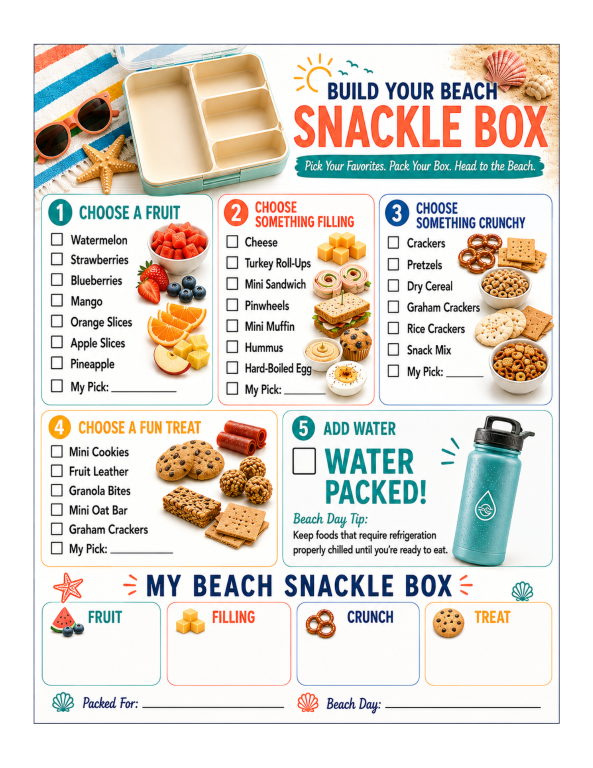
You don’t need a new recipe for every beach day. One of the easiest ways to pack beach snacks for kids is to use a simple mix-and-match formula: choose something fresh, something filling, something crunchy, a small treat, and water.
This works particularly well when you’re packing for kids with different appetites. My younger daughter can have smaller portions prepared for her age, while my tween can get a larger snack box with more substantial choices. The basic formula stays the same, but what’s inside doesn’t have to.
Choose 1 Fruit
Start with a fruit your child already enjoys. Fresh fruit adds something cool and refreshing to the box, especially when it’s packed in the cooler.
Try:
- Watermelon
- Strawberries
- Blueberries
- Mango
- Orange slices
- Apple slices
- Peaches
- Pineapple
Choose 1 Protein or Filling Food
This is the part I wouldn’t skip, especially for older kids or longer beach days. Adding something more substantial can turn a collection of little snacks into something that actually holds them over.
Try:
- Cheese
- Turkey roll-ups
- Mini sandwich
- Pinwheels
- Hard-boiled egg
- Hummus
- Yogurt
- Mini muffin
Choose 1 Crunchy Snack
Add something easy to grab between the other foods. Dry snacks are also useful because many don’t need valuable cooler space.
Try:
- Crackers
- Pretzels
- Dry cereal
- Graham crackers
- Rice crackers
- Age-appropriate snack mix
Choose 1 Fun Treat
A little something fun rounds out the box without turning the whole thing into dessert.
Try:
- Mini cookies
- Fruit leather
- Granola bites
- Mini oat bar
- Graham crackers
- A favorite treat from home
Add Water
Don’t let the snack box distract you from the most important beach-day drink. Pack water for each child and make it easily accessible so everyone can drink regularly throughout the day.
Mix and Match Based on Your Kids
The beauty of this formula is that everyone’s beach snack box can look different. One child might choose strawberries, cheese, crackers, and a mini cookie, while another wants mango, turkey roll-ups, pretzels, and fruit leather.
You can also scale it up. For a short beach visit, the basic formula may be plenty. For a long beach day, use it as the snack box and pack one of the filling beach lunches separately.
An easy formula to remember: 1 Fruit + 1 Filling Food + 1 Crunchy Snack + 1 Fun Treat + Water
Just remember to keep any perishable ingredients properly chilled and prepare each food in a size, shape, and texture appropriate for your child’s age and eating abilities.
Build Your Own Beach Snackle Box
Want to let your kids help choose what goes into their beach snacks? Our Beach Snackle Box Builder turns the mix-and-match formula above into a simple printable your family can use before your next beach day.
Kids can choose a fruit, something filling, a crunchy snack, and a fun treat, then make sure water is packed too. There’s also space to write or draw their choices, making it an easy way to involve younger kids while still letting you decide which foods are appropriate for their ages and appetites.
Download the Free Beach Snackle Box Builder
FAQ: Beach Snacks for Kids
What snacks are easiest for toddlers to eat at the beach?
Easy toddler beach snacks include soft fruit prepared appropriately for their age, mini muffins, pouches, small sandwich pieces, and simple snack boxes with familiar foods. Choose foods your toddler can safely manage, keep portions small, and bring at least one reliable favorite you know they usually eat.
How do I keep food from getting sandy at the beach?
Pack food in individual containers or divided snack boxes, keep everything closed until you’re ready to serve it, and clean sandy hands before eating. A cooler lid, small tray, or other clean surface also gives you somewhere to place food instead of setting containers directly on a sandy towel or blanket.
What meals are best for long beach days with kids?
Wraps, sandwiches, pasta salads, quesadilla wedges, protein snack boxes, and other filling foods that are easy to portion make practical beach lunches for kids. Pack perishable meals in a well-insulated cooler with plenty of ice or frozen gel packs and keep them properly chilled until you’re ready to eat.
How do I keep food cold at the beach?
Pack cold food directly from the refrigerator into an insulated cooler with plenty of ice or frozen gel packs, keep the cooler out of direct sunlight, and open it as little as possible. Frozen water bottles can provide additional cooling as they thaw, and using a separate cooler for frequently accessed drinks can help the food cooler stay closed longer.
What drinks should I bring for kids at the beach?
Water should be the main drink you pack for a family beach day, with enough available for everyone to drink regularly while they’re active in the heat. Individual needs vary with age, weather, activity level, and other factors, so offer children regular opportunities to drink rather than waiting until they’re noticeably thirsty.
What should I pack for a picky eater at the beach?
Pack several familiar foods your child reliably eats rather than making the beach the testing ground for an entirely new menu. You can include other choices for variety, but having at least one dependable snack or meal gives you a backup if everything else receives an immediate no.
How do I pack beach snacks for kids with food allergies?
Choose foods you already know are safe for your child’s specific allergies rather than relying on foods broadly described as “allergy-friendly.” Check ingredient and allergen labels, consider cross-contact when preparing and sharing food, and bring familiar backup snacks in case appropriate options aren’t available during your beach day.
How much food should I pack for a beach day with kids?
Base the amount on how long you’ll be at the beach, how many children you’re feeding, their ages and appetites, and whether you’ll be there during a regular mealtime. Pack enough to cover the meals and snacks your kids would normally eat during that period, add a couple of reliable backup snacks, and bring plenty of water.
Things to Know Before You Go
Packing beach snacks for kids gets easier when you handle a few food-safety and practical details before leaving home. A little preparation can help keep food safe, sand where it belongs, and snack breaks much easier once you’re on the beach.
- Check allergies and food restrictions. Pack foods you know are safe for your children, read ingredient labels when necessary, and consider cross-contact if family members are sharing snacks.
- Prepare food for your child’s age. Cut, soften, or otherwise modify foods based on your child’s eating abilities, particularly foods that may present choking hazards for younger children.
- Keep perishable foods properly chilled. Cheese, deli meat, yogurt, hummus, eggs, cooked meats, cut fruit, pasta salads, and similar foods belong in a well-insulated cooler with plenty of ice or frozen gel packs.
- Bring plenty of water. Beach days can mean hours of heat and activity, so make sure everyone has easy access to drinking water and regular opportunities to drink.
- Clean hands before eating. Pack what your family needs to clean hands when soap and running water aren’t readily available, especially before handling shared food.
- Keep food covered until you’re ready to eat. Individual containers, reusable snack bags, and divided boxes help protect food from sand while keeping the rest of your snacks closed.
- Bring bags for trash and dirty containers. You’ll have somewhere to collect wrappers, empty pouches, food scraps, and used containers even if a trash can isn’t nearby.
- Stick with familiar foods when it matters. A beach day isn’t always the easiest place to discover that your child strongly objects to the new lunch you packed. Bring at least one familiar option, particularly for younger children and picky eaters.
- Check the beach rules before packing special equipment. Regulations for glass containers, grills, alcohol, fires, and other items vary by beach. Verify the rules for the specific beach you’re visiting rather than assuming something you brought on a previous vacation will be allowed.
Once the safety basics are covered, keep the food plan simple. Pack what your kids genuinely eat, keep cold food cold, bring plenty to drink, and leave enough flexibility for appetites that seem to grow the minute everyone’s feet hit the sand.
Pack What Your Kids Will Actually Eat
Beach food doesn’t need to be elaborate to make a family beach day better. Some of the foods that have worked best for us have been the simplest: cold fruit after playing in the sun, mini sandwiches that are easy to grab, muffins tucked into the beach bag, and something more filling waiting in the cooler when my tween is officially done with snack-sized portions.
Having kids at two very different stages has also taught me that there isn’t one perfect beach snack box for every child. My younger daughter needs smaller portions and foods prepared for her age, while my tween needs enough food to keep up with a much bigger appetite. What matters is packing foods your kids genuinely enjoy and enough variety to get everyone through the kind of beach day you have planned.
And those snack and lunch breaks do become part of the experience. They give everyone a chance to come back under the umbrella, drink some water, eat, cool down, and recharge before heading toward the sand and water again.
Over the years, I’ve learned that what we pack matters less than whether it works for the family we’re feeding. When everyone has something they enjoy, those little breaks become another part of the beach day we get to enjoy together.
Continue Planning Your Family Beach Day
Once the snacks are handled, these guides can help with the rest of your beach-day planning:
- Beach Trip Packing Checklist
Make sure snacks, water, towels, sun protection, kids’ gear, and the other family beach essentials make it out the door with you. - Best Beach Toys and Activities for Kids Ages 1–5
Find beach toys and activities that give younger children plenty to do once snack time is over. - How to Protect Your Family From the Sun at the Beach
Plan ahead for sunscreen, shade, clothing, and other ways to protect your family during a long day outside. - How to Keep Kids Safe While Enjoying the Beach
Review practical water-safety and supervision tips before taking kids to the shoreline. - Teach Kids Simple Ocean Awareness
Help kids begin understanding waves, tides, currents, and why changing ocean conditions deserve their attention. - Family Beach Travel Hub
Explore more family beach destinations, activities, packing resources, planning guides, and tips for traveling to the beach with kids.
Planning More Family Beach Adventures?
From choosing the right destination to packing for the kids, finding family-friendly activities, and planning smoother days at the shore, the Fun Shores Ahead Family Beach Travel Hub brings our family beach planning resources together in one place.