



Taking kids on an international beach vacation can feel like a much bigger decision than choosing a beach closer to home. You are not only comparing sand and water. Flight time, transportation, food, activities, beach conditions, accommodations, and how easily everyone can settle into the trip all matter.
That is why I wanted this list of international family beach destinations to focus on more than beautiful coastlines. Each destination offers something that can make a beach vacation work particularly well for families, whether that is a protected cove for younger children, a walkable resort area, plenty of activities for older kids, or opportunities to combine the beach with culture and adventure.
Horseshoe Bay in Bermuda is the one destination on this list we have experienced firsthand as a family. Bermuda is also where I grew up, so I can bring a different level of personal perspective to that recommendation. The other destinations are researched places on our family travel wish list, chosen because of their beach experience, family amenities, activities, and practical features we would consider when planning an international trip with our own kids.
Some are relatively easy Caribbean escapes from the United States. Others are European beach towns or bigger bucket-list adventures that require more travel. The right choice depends less on which beach is considered the “best” and more on what works for your children, your travel style, and the kind of vacation you want to have together.
Travel Information & Beach Conditions Note
Every effort has been made to provide accurate, current information about these destinations. Beach conditions, weather, transportation, amenities, seasonal services, entry requirements, and local rules can change, so check official destination and government sources before booking or traveling.
Ocean conditions can also vary from day to day. Descriptions such as shallow, protected, gentle, or typically calm refer to common conditions or particular areas of a beach and should never replace checking current conditions when you arrive.
TL;DR: What Are the Best International Family Beach Destinations?
The best international family beach destinations combine beautiful beaches with family-friendly places to stay, nearby food, activities for different ages, and transportation that does not make the trip harder than it needs to be. Horseshoe Bay, Grace Bay, Seven Mile Beach, Palm Beach, Playa Norte, Enterprise Beach, Cala Galdana, Quarteira Beach, Playa Flamingo, and Natadola Beach each offer a different kind of family vacation.
For younger kids, Playa Norte and Cala Galdana stand out. Seven Mile Beach is especially strong for families who want plenty to do beyond the beach, while Playa Flamingo and Natadola Beach are better suited to families looking for more adventure.
Summarize With AI
Quick List: 10 International Family Beach Destinations
- Horseshoe Bay, Bermuda – Best firsthand FSH family recommendation
- Grace Bay, Turks & Caicos – Best for a polished Caribbean resort vacation
- Seven Mile Beach, Grand Cayman – Best for beach time plus family activities
- Palm Beach, Aruba – Best for active families who want convenience
- Playa Norte, Isla Mujeres, Mexico – Best for younger kids and relaxed island days
- Enterprise Beach, Barbados – Best for beach time plus local food and culture
- Cala Galdana, Menorca, Spain – Best for a sheltered European cove experience
- Quarteira Beach, Portugal – Best for a walkable European beach town
- Playa Flamingo, Costa Rica – Best for families who want nature and adventure
- Natadola Beach, Fiji – Best for a bigger bucket-list family trip
Quick Comparison: Which International Beach Destination Fits Your Family?
| Destination | Best For | Beach Experience | Kid Fit | Beyond the Beach | Important Planning Note |
|---|---|---|---|---|---|
| Horseshoe Bay, Bermuda | A first international family beach trip | Iconic pink-sand South Shore beach with the more protected Port Royal Cove | Strong across ages, with the cove especially useful for younger kids | Coastal trails, caves, aquarium and island exploring | Main-beach conditions can differ from the shallower cove |
| Grace Bay, Turks & Caicos | Resort-focused Caribbean vacations | Wide white-sand beach with typically gentler conditions helped by the offshore reef | All ages | Sailing, paddling, boat trips, resorts and dining | No lifeguards, so families still need to assess conditions carefully |
| Seven Mile Beach, Grand Cayman | Beach time plus lots of family activities | Long, clear-water beach with generally gradual entry | Strong across ages | Stingray City, Turtle Centre, caves, snorkeling and Camana Bay | Great choice for families who do not want every day to revolve around the beach |
| Palm Beach, Aruba | Convenience, resorts and watersports | Generally calm resort beach with plenty of activity | Especially good for elementary-aged kids through teens | Watersports, restaurants, shopping, Butterfly Farm and island attractions | Busier and more active than a quiet family cove |
| Playa Norte, Isla Mujeres | Younger kids and relaxed island days | Typically shallow with low wave action | One of the strongest younger-child options | Golf-cart exploring, snorkeling, Punta Sur and island dining | Requires a ferry trip from the Cancún area |
| Enterprise Beach, Barbados | Beach plus local culture | Protected cove on the northern side, stronger surf farther south | Families who choose the section that fits current conditions | Oistins, local food, caves, wildlife and island exploring | Do not treat the entire beach as having the same water conditions |
| Cala Galdana, Menorca | A European beach vacation with younger kids | Sheltered cove with shallow water and family services | Particularly appealing for younger children | Kayaking, paddleboarding, coastal trails and Menorca exploring | Peak summer can be crowded |
| Quarteira Beach, Portugal | Walkability and practical conveniences | Atlantic beach with a promenade and extensive services | Broad family appeal | Restaurants, town exploring and Aquashow Family Park | Atlantic water is cooler than the Caribbean and conditions can vary |
| Playa Flamingo, Costa Rica | Beach plus nature and adventure | Scenic beach with moderate waves | Better for families comfortable with more active beach conditions | Wildlife, sailing, snorkeling, horseback riding and Guanacaste adventures | Not our pick for consistently shallow toddler water |
| Natadola Beach, Fiji | A bucket-list family adventure | Tropical beach with conditions influenced by tide and swell | Particularly appealing to active families and older kids | Snorkeling, SUP, tide pools, surfing and Coral Coast experiences | Long-haul travel and changing water conditions require more planning |
How to Choose the Best International Family Beach Destination
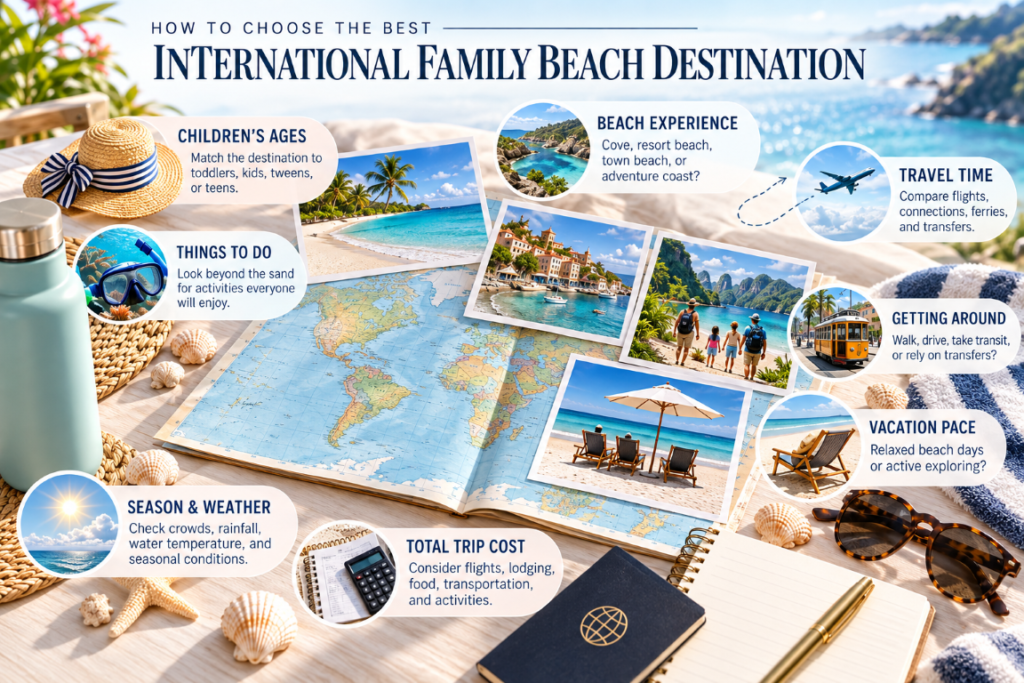
Choosing the best international family beach destination means comparing your children’s ages, beach preferences, travel tolerance, activities, transportation, season, and overall vacation style rather than choosing based on the beach alone.
What should families consider first when choosing an international beach vacation?
Start with your children’s ages and the kind of trip your family actually enjoys. Then compare the beach experience, travel effort, activities, transportation, season, and cost to narrow down the destinations that fit your family best.
A beautiful beach can catch your attention, but that does not automatically make it the right destination for your family. One family may want shallow water and a slower pace, while another would rather have snorkeling, wildlife, shopping, or plenty of activities for older kids.
Before choosing, think about how the entire trip will feel, not just the few hours you spend on the sand.
Consider Your Children’s Ages
Age can completely change what makes a destination work.
Families with toddlers and younger children may care more about shallow entry areas, nearby restrooms, shorter transfers, easy food options, and places where they can take breaks without a lot of extra travel.
Older kids and teens may be more excited by:
- Snorkeling
- Paddleboarding
- Boat excursions
- Wildlife experiences
- Surfing
- Shopping
- Hiking
- Cultural activities
If you are traveling with a wide age range, look for destinations that offer enough variety that no one spends the entire trip waiting for someone else to have fun.
Think About the Beach Experience You Want
Not every family is looking for the same kind of beach.
You may prefer:
- A sheltered cove
- A long resort beach
- A walkable town beach
- A more active watersports area
- A tropical island beach
- A beach that can be combined with nature and adventure
Also pay attention to how the water is described. A beach that is typically shallow or more protected may be easier for a family with younger children than one known for moderate waves or changing swell.
No matter which destination you choose, current water conditions should always be checked once you arrive.
Compare Travel Time and Effort
A Caribbean trip from the United States can feel very different from traveling to Europe or Fiji.
Think about:
- Flight length
- Connections
- Ferry transfers
- Airport-to-hotel transportation
- Time-zone changes
- How your children handle long travel days
A destination can be amazing and still not be the right choice for your family at this stage.
If you are planning your first international trip with younger children, you may prefer somewhere with a shorter flight and fewer transportation steps. Families with older kids may be more comfortable tackling a longer bucket-list journey.
Look Beyond the Beach
Even families who love the beach may not want to spend every day doing exactly the same thing.
Check what else the destination offers, especially for longer stays.
That might include:
- Wildlife
- Caves
- Boat trips
- Snorkeling
- Waterparks
- Cultural attractions
- Hiking
- Shopping
- Historic areas
- Food experiences
This becomes even more important when traveling with kids of different ages or interests.
Consider How You Will Get Around
Some destinations make it easy to stay close to the beach, restaurants, and accommodations. Others require taxis, buses, rental cars, ferries, or organized tours.
Think about whether your family prefers to:
- Walk most places
- Stay within a resort area
- Rent a car and explore
- Use public transportation
- Take taxis or transfers
- Move between islands or beaches
Transportation can shape the rhythm of the entire vacation, especially when you are carrying beach gear or traveling with younger children.
Decide What Vacation Pace Fits Your Family
Some families want a slow beach vacation with very little scheduled.
Others want to explore from breakfast until dinner.
A relaxed trip might look like:
Beach → lunch → pool → dinner
An active trip might look like:
Beach → wildlife excursion → snorkeling → town → dinner
Neither approach is better. The right destination is the one that matches how your family actually likes to travel.
Check the Season Before You Book
Weather and seasonal conditions can change the experience considerably.
Depending on the destination, travel dates can affect:
- Rainfall
- Hurricane exposure
- Water temperature
- Crowds
- Seasonal transportation
- Activity availability
- Resort pricing
- Beach conditions
This is especially important when comparing destinations in different parts of the world because their best travel seasons may not line up.
Keep the Full Trip Cost in Mind
The beach itself may be free, but the destination can still vary widely in overall cost.
Compare:
- Airfare
- Accommodations
- Food
- Local transportation
- Activities
- Resort fees
- Excursions
- Travel insurance
A destination that seems expensive at first may include more amenities, while another may look affordable until transportation and activities are added.
The best choice is not necessarily the destination with the lowest starting price. It is the one that fits your budget without forcing you to cut out the experiences your family actually wants.
Once you know what matters most to your family, it becomes much easier to compare the destinations below and see which ones deserve a place on your own travel wish list.
Horseshoe Bay, Bermuda
Horseshoe Bay earns the first spot because it combines Bermuda’s famous pink sand with family amenities, easy access, room to explore, and Port Royal Cove, a more protected area that can work especially well for younger children.

Is Horseshoe Bay a good choice for families with younger kids?
Yes, especially if you use Port Royal Cove at the eastern end of the beach. It is shallower and more protected than the main shoreline, while older kids can enjoy the wider beach, swimming, exploring the rocks, and spotting fish.
Horseshoe Bay is the one destination on this list we have experienced firsthand as a family, and it is also the place where I can bring the most local perspective because I grew up in Bermuda.
What makes it stand out for families is the variety within one beach day. The main beach gives you the wide pink-sand shoreline Bermuda is known for, while Port Royal Cove creates a very different experience for younger children. Families can move between swimming, sand play, exploring the rocks, and simply settling in for a longer beach visit without needing to leave for basic amenities.
The beach also has restrooms, changing facilities, food, rentals, and seasonal lifeguard coverage, which makes it easier to stay for several hours. Bermuda’s Route 7 bus stops at Horseshoe Bay, so families do not necessarily need their own vehicle to reach it.
The main shoreline can have stronger wave action than Port Royal Cove, so I would not describe the entire beach as calm. That distinction matters. If you are visiting with toddlers or less confident swimmers, start with the cove and check the water conditions before moving elsewhere along the beach.
Our Family Experience at Horseshoe Bay
Horseshoe Bay has been familiar to me since childhood, but visiting with my own family gave me a different perspective on why it works so well across ages.
My older daughter enjoyed swimming, exploring with her goggles, watching fish near the rocks, and playing in the waves. My toddler was much more comfortable in the shallower, more protected water around Port Royal Cove, where she could splash and play at her own pace.
My husband and daughters also noticed how soft the pink sand felt compared with many of the beaches we visit in the United States. We spent hours moving between the water, sand, and rock formations without feeling like we needed another activity to keep everyone interested.
That range is what keeps Horseshoe Bay at the top of this list for me. It feels special enough to be a bucket-list beach, but there is still enough variety and convenience for a real family day out.
If Bermuda is already on your family travel list, our Horseshoe Bay Beach Bermuda for Families guide goes much deeper into Port Royal Cove, amenities, transportation, family tips, and what we experienced during our visit.
Family Fit Snapshot
Best For: Families visiting Bermuda for the first time, mixed-age families, and parents who want an iconic beach with useful amenities nearby.
Beach Experience: Wide pink-sand South Shore beach with a more sheltered cove at the eastern end. Port Royal Cove is shallower and more protected than the main shoreline.
Younger-Kid Fit: Strong when families use Port Royal Cove and continue checking current conditions. The main beach can have more wave action.
Older-Kid & Teen Appeal: Swimming, boogie boarding, snorkeling, exploring rock formations, wildlife spotting, and walking nearby coastal trails.
Beyond the Beach: South Shore Park connects Horseshoe Bay with smaller coves and Warwick Long Bay. Elsewhere in Bermuda, families can add caves, the aquarium and zoo, historic areas, and more beaches to the trip.
Getting Around: Route 7 buses stop at Horseshoe Bay, and taxis are another easy option. Families staying elsewhere on the island do not need to base themselves directly beside the beach to visit.
Vacation Pace: Relaxed beach day with enough exploring to keep mixed ages interested.
Travel Effort: For many East Coast U.S. families, Bermuda can be a relatively straightforward international trip compared with longer-haul destinations on this list.
Planning Note: Seasonal lifeguards are typically on duty from May through October, but families should still check current ocean conditions and remember that Port Royal Cove and the main beach can feel very different on the same day.
✅Fun Shores Ahead Tip
If you are visiting with younger children, start your beach day at Port Royal Cove before settling elsewhere on Horseshoe Bay. The cove is more protected and shallower than the main shoreline, and you can still move onto the wider beach later if the day’s conditions and your children’s comfort levels make sense.
Grace Bay, Turks and Caicos
Grace Bay belongs on this list because it combines a wide white-sand beach with strong resort choices, nearby restaurants, water activities, and an easy-to-navigate vacation area that can work well for families across several age groups.
Is Grace Bay a good beach for younger kids?
Grace Bay typically has gentler water because an offshore barrier reef helps reduce Atlantic swell, but conditions can still change with wind and weather. There are no lifeguards along Grace Bay, so parents should continue supervising closely and check the water before children get in.
Grace Bay is one of the destinations on our family travel wish list that appeals to me because so much of the vacation can happen within one area.
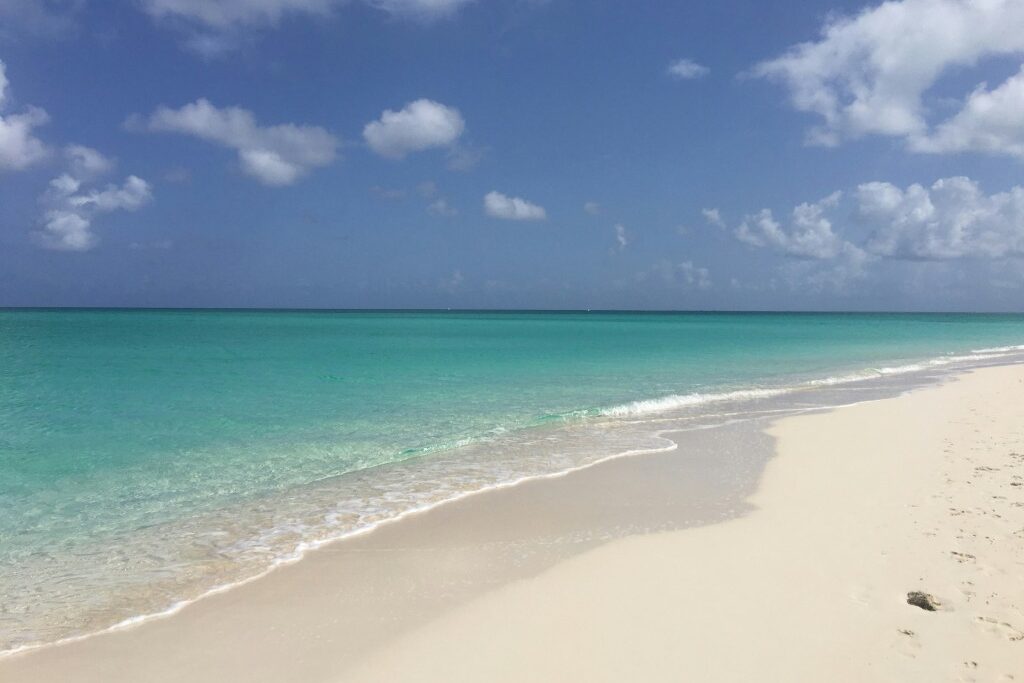
The beach itself stretches for miles with soft white sand and clear turquoise water, while the Grace Bay tourism district has a large concentration of resorts, restaurants, shops, and activities nearby. That can be especially appealing when traveling internationally with kids because you do not necessarily have to spend every day crossing the island just to find food or something to do.
The offshore barrier reef helps protect Grace Bay from much of the open Atlantic swell, which is one reason the water is often gentler than families might expect from an exposed ocean beach. I would still avoid calling it universally calm. Wind and weather can change conditions, and the lack of lifeguards makes it important for families to pay attention even when the water looks inviting.
Grace Bay is also a good example of why the beach experience and the wider destination should be considered together. Families can spend one day doing almost nothing beyond swimming and building sandcastles, then choose sailing, paddleboarding, kayaking, snorkeling excursions, or another island activity the next day.
One thing parents should know is that Grace Bay itself is not the strongest shore-snorkeling beach. Most of the reef is too far offshore to swim to safely. Families who want easier reef access can look toward nearby Bight Reef at Coral Gardens or join a guided boat excursion instead.
Family Fit Snapshot
Best For: Families who want a polished Caribbean beach vacation with plenty of resorts, restaurants, and activities nearby.
Beach Experience: Long white-sand beach with clear water that is often gentler because of the offshore barrier reef. Wind and weather can still create choppier conditions.
Younger-Kid Fit: Strong for families who like wide sandy beaches and generally gentler water, but there are no lifeguards, so close supervision and daily condition checks remain important.
Older-Kid & Teen Appeal: Sailing, kayaking, paddleboarding, parasailing, snorkeling excursions, boat trips, and other watersports provide plenty of options beyond swimming.
Beyond the Beach: Families can explore nearby reefs, take boat excursions, visit other beaches around Providenciales, try horseback riding, or spend time around Grace Bay’s restaurants and shopping areas.
Getting Around: Many resorts, restaurants, cafés, and shops are concentrated in the Grace Bay area, making parts of the district walkable depending on where you stay. Providenciales does not have a public bus system, so taxis, rental cars, private transfers, or resort transportation are needed for longer trips around the island.
Vacation Pace: Resort-centered and relaxed, with the option to add excursions and watersports whenever your family wants a more active day.
Travel Effort: Providenciales International Airport is roughly 7 miles from Grace Bay, with the drive commonly taking about 20 to 30 minutes. Direct flights are available from several U.S. cities, which can make Turks and Caicos a more approachable international option for some American families.
Planning Note: Do not choose Grace Bay because you assume every part of the water will always be calm or supervised. The beach has no lifeguards, and families should stay aware of wind, changing conditions, boats, and designated swimming areas.
✅Fun Shores Ahead Tip
If snorkeling is high on your family’s wish list, do not plan on swimming from Grace Bay out to the offshore barrier reef. Choose nearby Bight Reef for more accessible shore snorkeling or book a guided reef excursion instead.
Seven Mile Beach, Cayman Islands
Seven Mile Beach belongs on this list because families can pair long beach days and typically gentle swimming conditions with one of the strongest collections of kid-friendly activities among the destinations we are comparing.

Placeholder
Is there enough to do near Seven Mile Beach if your kids do not want to spend every day on the sand?
Yes. Families can add Stingray City, the Cayman Turtle Centre, Camana Bay, snorkeling, boat trips, Crystal Caves, and other wildlife and nature experiences, making it especially appealing for families who want variety.
Seven Mile Beach is high on our family travel wish list because it seems to offer a nice balance between an easy beach vacation and a trip with plenty to explore.
The beach runs along the western side of Grand Cayman and is known for soft white sand, clear water, and generally gentle conditions. The shoreline has a gradual entry in many areas, which can make it appealing for families with younger children, but I would still check conditions where you are staying each day rather than assuming every part of such a long beach will feel exactly the same.
What really separates Seven Mile Beach from some of the quieter destinations on this list is everything families can add around it. A beach morning could be followed by the fountains and restaurants at Camana Bay, while another day could include Stingray City, the Cayman Turtle Centre, snorkeling, or a boat trip. Older kids can also branch into paddleboarding, kayaking, and other watersports. If your kids are interested in trying more on the water, our guide to family-friendly water sports can help you compare activities before the trip.
That variety is especially useful for a family traveling with children at different ages. A younger child may be perfectly happy with sand, shallow-water play, and a trip to see turtles, while an older child or teen has snorkeling, watersports, wildlife encounters, caves, and boat excursions to choose from.
Another advantage is that families staying along the Seven Mile Beach corridor may not need a rental car for every part of the trip. Restaurants, shops, beaches, and activities are concentrated nearby, while buses and taxis can handle shorter trips. A rental car becomes more useful if you want to explore quieter parts of Grand Cayman, visit the North Side, or carry a lot of family gear.
Family Fit Snapshot
Best For: Families who want a strong balance of beach time, wildlife, watersports, and activities beyond the shoreline.
Beach Experience: Long white-sand Caribbean beach with clear water and generally gentle conditions. Many areas have a gradual entry, but families should still check conditions where they plan to swim.
Younger-Kid Fit: Strong for families looking for a beach with typically gentler water plus easy alternatives when younger kids need a break from the sand.
Older-Kid & Teen Appeal: Snorkeling, kayaking, paddleboarding, boat excursions, Stingray City, Crystal Caves, wildlife attractions, and other water adventures provide plenty of variety.
Beyond the Beach: Stingray City, Cayman Turtle Centre, Camana Bay, Queen Elizabeth II Botanic Park, Crystal Caves, Starfish Point, museums, and other family attractions.
Getting Around: Families staying along Seven Mile Beach may be able to walk to some restaurants, shops, and activities. Public buses and taxis work for shorter trips, while a rental car can make wider island exploring easier.
Vacation Pace: Flexible. You can build the trip around slow beach and pool days or add a different family activity almost every day.
Travel Effort: Grand Cayman has nonstop air service from several major U.S. cities, which can make it a manageable Caribbean international trip for many families.
Planning Note: December through April is the drier season. Summer can bring fewer crowds and better lodging value, but it also falls within the wetter Caribbean hurricane season, so families should keep travel plans flexible and monitor forecasts.
✅Fun Shores Ahead Tip
Do not schedule an excursion for every day just because Grand Cayman offers so much to do. Leave room for at least one completely open Seven Mile Beach day, then choose a few standout experiences such as Stingray City or the Cayman Turtle Centre based on your kids’ ages and interests.
Palm Beach, Aruba
Palm Beach belongs on this list because families can combine generally calmer swimming conditions with resorts, restaurants, shops, watersports, and family attractions in one lively part of Aruba.

Is Palm Beach better for younger kids or older kids?
Palm Beach can work across age groups, but I think its strongest fit is for elementary-aged kids through teens who will enjoy the activity around the beach. Families with toddlers may prefer to compare it with Aruba’s shallower beaches, such as Baby Beach, while still enjoying Palm Beach for its convenience and amenities.
Palm Beach is one of the destinations on our family travel wish list because it seems especially easy to build a full vacation around without needing to leave the area every time someone wants food, an activity, or a change of scenery.
The beach stretches for about two miles along Aruba’s high-rise hotel area and is lined with resorts, piers, restaurants, shops, and watersports operators. Aruba’s tourism authority describes the water here as generally calm, but Palm Beach is also one of the island’s busiest beach areas, so the atmosphere is more active than secluded.
That difference matters. I would not choose Palm Beach because I wanted a quiet cove where younger children could spend the entire day in very shallow water. I would choose it because the beach, dining, activities, and resort conveniences are all close together.
Older kids and teens may especially appreciate the variety. Families can add snorkeling, parasailing, boat trips, shopping, or other watersports, while the Butterfly Farm is only a short distance away. De Palm Island, animal attractions, and Arikok National Park give families even more options when they want a day away from the hotel strip.
Getting around is another reason Palm Beach can work well for families. Aruba’s public bus system runs along the hotel district, taxis are widely available, and rental cars give families more freedom if they want to explore beaches and attractions elsewhere on the island.
Family Fit Snapshot
Best For: Families who want an active Caribbean beach vacation with resorts, restaurants, watersports, and entertainment close together.
Beach Experience: White-sand resort beach with generally calm water, but a busier atmosphere because of hotels, piers, boats, and watersports activity.
Younger-Kid Fit: Good for families who value easy amenities and generally gentler water, but parents looking specifically for very shallow lagoon-style conditions may prefer another Aruba beach.
Older-Kid & Teen Appeal: Strong. Watersports, snorkeling, parasailing, shopping, boat trips, nearby entertainment, and island excursions provide plenty to do.
Beyond the Beach: Butterfly Farm, De Palm Island, Arikok National Park, animal attractions, shopping, snorkeling cruises, and other island excursions.
Getting Around: Palm Beach sits along Aruba’s hotel district, where Arubus service runs regularly. Taxis and rental cars are also easy options, especially for families planning to explore beyond the resort area.
Vacation Pace: Lively and flexible. Families can spend a full day around the beach and resort or mix in activities, shopping, and island exploring.
Travel Effort: Aruba is a relatively straightforward Caribbean destination for many U.S. families, and Palm Beach is part of the main tourism corridor once you arrive.
Planning Note: Palm Beach is not a secluded beach. Families who want quieter surroundings or very shallow water should compare it with other Aruba beaches before deciding where to spend most of their beach time.
✅Fun Shores Ahead Tip
If you stay in Palm Beach, use the area as your convenient home base, but plan at least one day to explore another side of Aruba. A visit to Baby Beach, Arikok National Park, or another quieter beach can give your family a completely different view of the island.
Playa Norte, Isla Mujeres, Mexico
Playa Norte belongs on this list because its typically shallow, low-wave water, soft white sand, nearby restaurants, and relaxed island setting make it one of the strongest options for families with younger children.
Placeholder
Is Playa Norte a good choice for toddlers and young kids?
It can be, especially because the water is typically shallow and has very little wave action compared with many open-ocean beaches. Families should still check the day’s conditions and supervise closely, but Playa Norte stands out as one of the more approachable beach experiences on this list for younger children.
Playa Norte is high on our family travel wish list because it offers a very different kind of international beach trip from the larger resort areas.
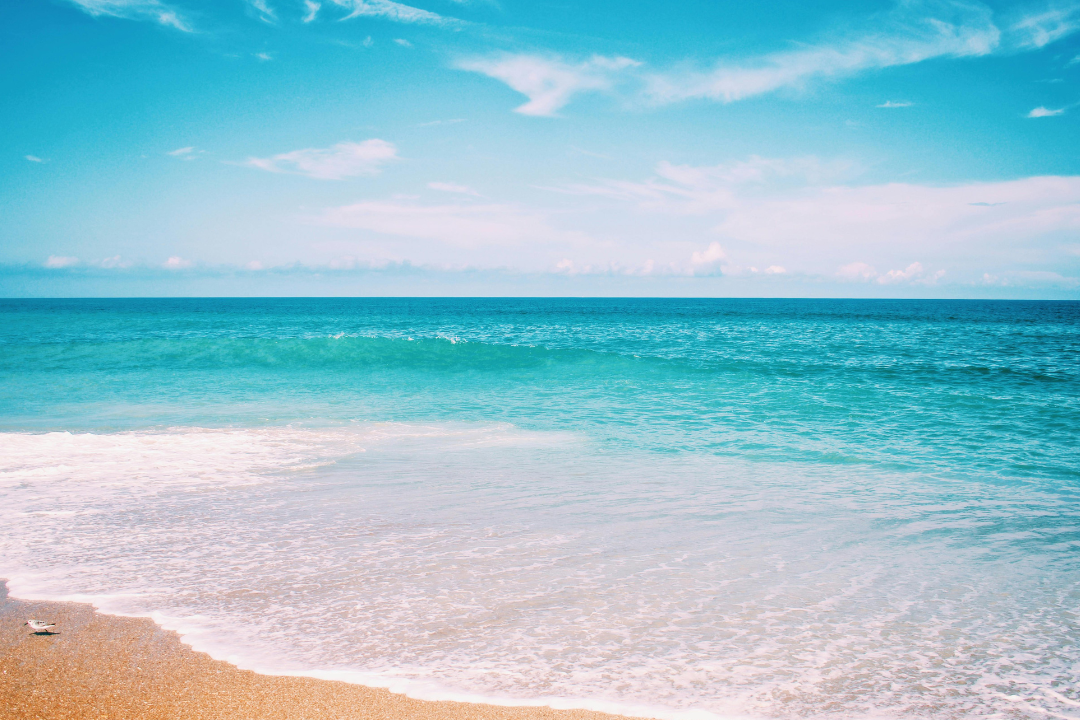
Isla Mujeres sits just off the coast of Cancún, and the island has a slower, more relaxed feel once you arrive. Playa Norte is especially appealing because the water is usually shallow for a long distance from shore, the wave action is limited, and the beach itself is lined with places to eat and relax.
That combination makes it easy to picture a family day where younger kids can spend time in the water without the whole trip revolving around strong surf or constant activity.
The island also gives families enough to do beyond the beach without feeling oversized. You can explore by golf cart, visit Punta Sur, snorkel at Garrafón, spend time around the town center, or add a boat excursion depending on your children’s ages and interests.
For us, the appeal is the balance. Playa Norte feels like the kind of place where the beach can still be the main event, but the family has enough nearby options to keep the trip from feeling repetitive.
Family Fit Snapshot
Best For: Families with younger children, relaxed island days, and parents who want a beach-focused trip without giving up restaurants and other activities.
Beach Experience: Soft white sand with clear turquoise water that is typically shallow and has very little wave action.
Younger-Kid Fit: One of the strongest options on this list for toddlers and younger kids because of the generally shallow, low-wave conditions.
Older-Kid & Teen Appeal: Snorkeling, paddleboarding, diving, golf-cart exploring, Punta Sur, boat excursions, and seasonal marine-life experiences can add more variety.
Beyond the Beach: Punta Sur, Garrafón, MUSA underwater attractions, Isla Contoy excursions, town exploring, local food, and seasonal whale-shark tours for families with children who meet tour requirements.
Getting Around: Isla Mujeres is reached by ferry from the Cancún area, and Playa Norte is close to the ferry arrival zone. Golf carts are one of the most popular ways to explore the rest of the island.
Vacation Pace: Relaxed and beach-centered, with easy opportunities to add exploring when your family wants a change.
Travel Effort: Requires an extra ferry step after arriving in the Cancún area, but once you are on Isla Mujeres, the island is compact and easy to explore.
Planning Note: Playa Norte can be busy during popular travel periods. Sargassum is often less severe here than on many east-facing mainland beaches, but conditions can still vary by season and year.
✅Fun Shores Ahead Tip
If you are visiting with younger kids, choose lodging within easy reach of Playa Norte so you can keep beach time simple. The closer you are to the beach and town, the easier it is to head back for naps, meals, or a break without turning every outing into a full-day excursion.
Enterprise Beach, Barbadods
Enterprise Beach earns its place on this list because families can combine a beach day with nearby Oistins, local Bajan food, and easy access to more of Barbados, while the beach itself offers different water experiences depending on which section you choose.
Which part of Enterprise Beach is better for families with younger kids?
The northern side has a cove protected by a barrier and is the section I would look at first with younger children. The southern side can have much stronger surf, so families should choose their spot based on the day’s conditions rather than treating the entire beach as the same.
Enterprise Beach, also known locally as Miami Beach, is one of the destinations on our family travel wish list because it offers more than a pretty Caribbean shoreline.
What immediately stands out to me is how easily a beach day here could connect with the wider Barbados experience. Enterprise Beach is only a short distance from Oistins, giving families access to local restaurants, the fish market, and the well-known food scene at Oistins Bay Gardens without having to build the entire day around a resort.
The beach itself also requires a little more awareness than some of the other destinations on this list. Its northern side includes a protected cove, while the southern side is known for much bigger waves. That difference is important for families. I would not arrive assuming one part of the beach tells you what conditions will be like everywhere else.
Enterprise Beach has picnic tables, beach facilities, and lifeguard coverage, which can make a longer family beach day easier. Its location in Christ Church also puts families within reach of other parts of southern Barbados without feeling completely removed from everyday island life.
For us, the appeal would be combining the beach with Barbados itself rather than spending the entire vacation inside one resort area.
Family Fit Snapshot
Best For: Families who want Caribbean beach time combined with local food, culture, and island exploring.
Beach Experience: Sandy south-coast beach with two noticeably different sections. The northern side has a more protected cove, while the southern side can experience larger surf.
Younger-Kid Fit: The northern cove is the section I would consider first with younger children, while still checking current conditions before getting in the water.
Older-Kid & Teen Appeal: Swimming when conditions are suitable, stronger-wave areas for more confident older beachgoers, nearby food experiences, wildlife, caves, and island exploring.
Beyond the Beach: Oistins is nearby for local food and culture. Families can also explore Harrison’s Cave, Barbados Wildlife Reserve, gardens, snorkeling excursions, and other parts of the island.
Getting Around: Enterprise Beach is close to Oistins, which has public transportation connections. Barbados also has government buses, privately operated minibuses, route taxis, taxis, and rental-car options for families who want to explore farther.
Vacation Pace: A good fit for families who want to mix slower beach time with food, culture, and sightseeing rather than staying in one resort area for the entire trip.
Travel Effort: Caribbean international trip with relatively short ground travel once you reach Barbados compared with some of the longer-haul destinations later in this list.
Planning Note: Do not assume water conditions are consistent across the entire beach. The northern cove and southern section can feel very different, so choose your swimming area based on your children’s abilities and current conditions.
✅Fun Shores Ahead Tip
Pair your beach day with a visit to Oistins rather than treating Enterprise Beach as an isolated stop. If your family prefers a quieter meal, consider going outside the busiest Friday-night period, when the area can become much more crowded.
Cala Galdana, Menorca, Spain
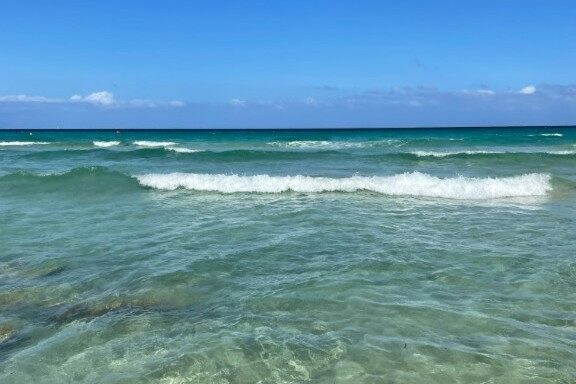
Cala Galdana belongs on this list because it combines a sheltered, shallow-water cove with family services, lifeguards, watersports, nearby restaurants, and easy access to some of Menorca’s most beautiful coastal scenery.
Is Cala Galdana a good choice for families with younger children?
Yes. The cove is known for shallow, transparent water and has lifeguards and family-friendly services, which can make it especially appealing for younger kids. It can also become crowded in summer, so families who prefer a quieter experience may want to consider the shoulder seasons.
Cala Galdana is one of the European destinations on our family travel wish list that stands out because the beach experience feels very different from a long Caribbean resort shoreline.
The cove is curved and sheltered by cliffs, with white sand, shallow water, and pine-covered surroundings that give it a more enclosed feel. That setting can be appealing for families who want a beach that feels contained without giving up nearby restaurants, lodging, and other conveniences.
The beach itself has lifeguards, accessible walkways, and a buoyed area for activities such as paddleboarding and kayaking. That makes it easy to picture a family with younger children enjoying the shallower water while older kids or teens branch out into more active options.
Cala Galdana also works well as a base for exploring more of Menorca’s coast. Nearby Cala Mitjana can be reached on foot along a section of the Camí de Cavalls, and families with older children may enjoy combining beach days with coastal walks or boat trips.
The main tradeoff is popularity. Cala Galdana is well known and can become busy during the summer months, so families who prefer more space and a slower pace may want to look at late spring or early autumn instead.
If Menorca has you considering a European beach trip, you can compare Cala Galdana with more of our best beaches in Europe for family vacations.
Family Fit Snapshot
Best For: Families who want a European beach vacation with a sheltered-cove feel, family services, and easy access to more of Menorca.
Beach Experience: White-sand cove with shallow, transparent water, cliffs, pine-covered surroundings, and a more enclosed feel than an open-ocean beach.
Younger-Kid Fit: Strong. Shallow water, lifeguards, walkways, and nearby services make Cala Galdana one of the more appealing choices on this list for younger children.
Older-Kid & Teen Appeal: Kayaking, paddleboarding, coastal walks, boat trips, snorkeling, and exploring nearby coves add variety beyond swimming.
Beyond the Beach: Camí de Cavalls trails, Cala Mitjana, nearby coves, viewpoints, boat excursions, and wider Menorca exploring.
Getting Around: Cala Galdana is reached by road from Ferreries, with parking near the beach. Seasonal bus service also connects the area with Ferreries and Ciutadella, making it possible to explore without relying entirely on a rental car.
Vacation Pace: Relaxed and scenic, with a good balance of beach time, coastal exploring, and easy access to restaurants and accommodations.
Travel Effort: Reaching Menorca from the United States usually requires a longer travel day and at least one connection, followed by ground transportation on the island. It is more involved than the Caribbean destinations on this list but still manageable for families comfortable with European travel.
Planning Note: Cala Galdana can become crowded during the summer, and some transport and tourism services are more seasonal. Families who want a quieter experience should compare late spring and early autumn travel dates.
✅Fun Shores Ahead Tip
If your kids are old enough for a short coastal walk, consider pairing a Cala Galdana beach day with the 1.5-kilometer Camí de Cavalls route toward Cala Mitjana. It gives the trip a little adventure without requiring a full-day excursion.
Quarteira Beach, Portugal
Quarteira Beach belongs on this list because it combines a long Algarve shoreline with a walkable promenade, restaurants, beach services, and family attractions nearby, making it a strong choice for families who want the beach woven into an easy coastal-town vacation.

Is Quarteira a good choice for families who do not want to rely on a car every day?
Yes, especially if you stay near the beachfront. The promenade runs between the beach and town, with restaurants and services nearby, so families can handle many everyday parts of the trip on foot and save transportation for larger Algarve outings.
Quarteira appeals to me for a completely different reason than the Caribbean beaches on this list. Rather than feeling primarily resort-centered, it gives families the chance to stay in a real Algarve beach town where the shoreline, promenade, restaurants, and everyday services are closely connected.
The beach itself is long and sandy, divided into sections by breakwaters. Portugal’s tourism authority describes the water here as generally calm, but this is still an Atlantic beach, so I would not choose it expecting Caribbean-style water temperatures or identical conditions every day.
That difference could actually work well for families who want more than a tropical-beach experience. You can spend part of the day swimming or playing on the sand, walk the waterfront when everyone needs a break, find somewhere nearby to eat, and then return to the beach without turning every transition into another drive.
Quarteira also has the kind of facilities that can make longer beach days easier, including seasonal surveillance, showers, sunshade rentals, parking, restaurants, and bars. The beach is designated as accessible as well.
For kids who eventually need something besides sand and sea, Aquashow Family Park is in Quarteira and adds both indoor and outdoor water attractions. The wider Algarve also opens up possibilities for boat trips, nature outings, waterparks, and exploring other coastal towns.
The biggest adjustment for families comparing Quarteira with places such as Aruba or Grand Cayman may be the water temperature. Average summer sea temperatures are around 20 to 23°C, or roughly 68 to 73°F, so families accustomed to warmer Caribbean water should know that before choosing Portugal primarily for swimming.
Family Fit Snapshot
Best For: Families who want a European beach town with a walkable waterfront, nearby food, useful beach services, and easy access to more of the Algarve.
Beach Experience: Long sandy Atlantic beach divided by breakwaters, with generally calmer conditions and a promenade immediately behind it. Daily conditions can still vary.
Younger-Kid Fit: Good for families who value nearby facilities, places to eat, and an easy route back into town. Parents should still check water conditions and remember that the Atlantic can feel cooler than tropical destinations.
Older-Kid & Teen Appeal: Swimming, bodyboarding, exploring the promenade, Aquashow Family Park, and wider Algarve excursions give older kids more variety than a beach-only trip.
Beyond the Beach: Aquashow Family Park, Algarve boat excursions, Ria Formosa nature experiences, nearby coastal towns, and other beaches throughout the region.
Getting Around: One of Quarteira’s strengths is the town-and-beach layout. The Avenida Marginal promenade runs between the beach and town, making restaurants and everyday services easy to reach on foot if you stay nearby. Transportation becomes more useful when exploring farther across the Algarve.
Vacation Pace: Relaxed and walkable, with an easy mix of beach time, meals, strolling, and occasional day trips.
Travel Effort: Reaching Portugal from the United States requires a longer flight than the Caribbean destinations on this list, followed by travel into the Algarve. Faro is the main air gateway for the region.
Planning Note: Quarteira is popular in summer, and the Atlantic water is noticeably cooler than most Caribbean beaches. Families who care strongly about warm swimming water should factor that into their destination choice.
✅Fun Shores Ahead Tip
If you stay near the beachfront, build some unscheduled time into the day for the promenade. Being able to leave the sand for lunch, a walk, or a break and then return without reorganizing the entire family is one of Quarteira’s biggest advantages.
Playa Flamingo, Costa Rica
Playa Flamingo belongs on this list because it combines a scenic Guanacaste beach with easy access to sailing, snorkeling, wildlife, nearby beaches, and inland adventures, making it a strong choice for families who want more than a beach-only vacation.
Is Playa Flamingo a good choice for families with younger kids?
It can be, but Playa Flamingo has moderate waves rather than consistently shallow, sheltered water. Families with younger children should check conditions each day and may also want to explore nearby beaches with gentler water when they want an easier swimming experience.
Playa Flamingo is one of the destinations on our family travel wish list because Costa Rica offers something very different from a traditional Caribbean resort vacation.
Located on the Pacific coast of Guanacaste, Playa Flamingo is known for pale sand, a scenic bay setting, and moderate waves. Families can certainly build relaxing beach days here, but I would not choose it expecting the same type of water experience as Playa Norte or Cala Galdana.
Its real strength is what surrounds the beach.
Marina Flamingo provides a starting point for sailing and boat excursions, while operators in the area offer activities such as snorkeling, kayaking, paddleboarding, fishing, and wildlife watching. Nearby Potrero Bay and other Guanacaste beaches also give families several coastal environments to explore instead of spending the entire trip in one place.
Then there is everything inland. Guanacaste opens the door to national parks, wildlife viewing, hiking, horseback riding, waterfalls, zip lining, hot springs, and other outdoor experiences. For a family with older kids or teens who would get restless after several identical beach days, that variety is a major part of Playa Flamingo’s appeal.
The destination also works well for families who want some tourism infrastructure without being confined to one resort. Flamingo is one of Guanacaste’s established tourism centers, with accommodations, restaurants, services, and the marina nearby.
Family Fit Snapshot
Best For: Families who want to combine a Pacific beach vacation with nature, wildlife, watersports, and Costa Rican adventure.
Beach Experience: Scenic Guanacaste beach set along an inlet with soft sand and moderate waves. Conditions are more active than the shallow, sheltered beaches elsewhere on this list.
Younger-Kid Fit: More dependent on the day’s conditions. Younger children can still enjoy the beach, but families specifically seeking consistently shallow, low-wave water may prefer to compare Playa Flamingo with nearby protected bays and beaches.
Older-Kid & Teen Appeal: Strong. Sailing, snorkeling, paddleboarding, kayaking, fishing, horseback riding, wildlife excursions, hiking, zip lining, and other Guanacaste adventures create plenty of variety.
Beyond the Beach: Boat excursions from the Flamingo area, nearby Potrero Bay and other beaches, wildlife experiences, national parks, waterfalls, hiking, hot springs, and adventure activities throughout Guanacaste.
Getting Around: Daniel Oduber Quirós International Airport in Liberia is the main international gateway for Guanacaste. Families can use private transfers, taxis, rental cars, or arranged transportation, with a rental car offering more flexibility for exploring beaches and inland attractions.
Vacation Pace: Active and exploratory. Families can alternate slower beach days with boat trips, wildlife experiences, and inland adventures rather than spending the entire vacation in one resort area.
Travel Effort: Moderate for U.S. families who can reach Liberia directly. Once you arrive in Guanacaste, ground transportation is still needed to reach Flamingo and explore the wider region.
Planning Note: Guanacaste has a distinct dry season and green season. December through March is typically drier, while May through November brings more rain, with September and October among the wetter months. Travel season can change the look, pace, and weather of the trip considerably.
✅Fun Shores Ahead Tip
If you are traveling with younger kids, do not feel like every beach day has to happen at Playa Flamingo. Nearby Potrero Bay is known for calmer water, so comparing conditions at more than one beach can give your family greater flexibility during the trip.
Natadola Beach, Fiji
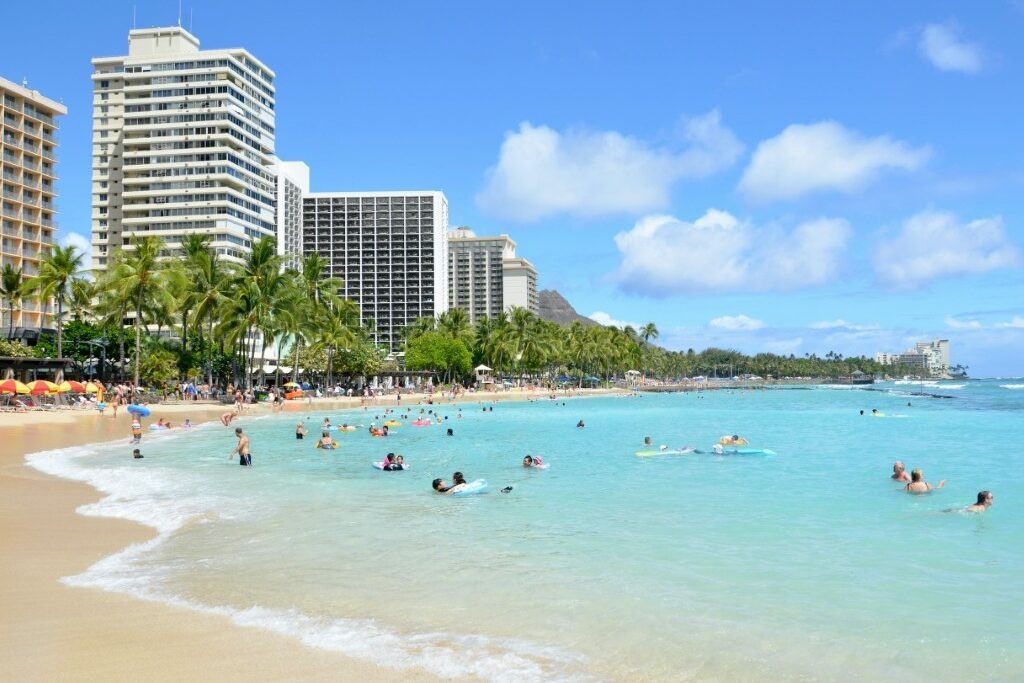
Natadola Beach belongs on this list because it combines a striking South Pacific beach with snorkeling, tide pools, paddleboarding, beginner surfing, and family resort amenities, making it especially appealing to families ready for a bigger international adventure.
Placeholder
Is Natadola Beach a good choice for families with kids?
Yes, but the experience depends on your children’s ages and the day’s ocean conditions. Younger kids may enjoy tide pools and more protected areas, while older kids can take advantage of snorkeling, paddleboarding, and beginner-friendly surfing when conditions are suitable.
Natadola Beach is one of the biggest dream trips on our family travel wish list. It is also very different from the Caribbean destinations earlier in this article because getting there requires considerably more travel for most U.S. families.
Located on Viti Levu’s Coral Coast, Natadola is known for soft white sand, turquoise water, and a mix of beach and water activities. Families can snorkel directly from shore, try stand-up paddleboarding, explore tide pools, or simply spend the day on the sand.
What makes Natadola particularly interesting is that the beach does not offer one single type of water experience. Tourism Fiji notes that snorkeling is easier around mid-to-high tide and that currents are generally gentle under normal conditions, but larger swells can change the water significantly. Other parts of the beach can produce waves suitable for beginner surfing.
That means I would approach Natadola differently from a destination such as Playa Norte. This is not the beach I would choose because I expected the same shallow, low-wave conditions every day. I would choose it because our family could experience several sides of Fiji in one place.
The nearby resort infrastructure also strengthens the family appeal. The InterContinental Fiji Golf Resort & Spa sits directly on Natadola Beach and offers family pools, a kids club, family accommodations, dining, sports, and other activities. For families who want a resort-centered trip without giving up access to a beautiful beach and outdoor adventures, that combination is compelling.
Family Fit Snapshot
Best For: Families ready for a bucket-list South Pacific vacation with beach time, snorkeling, watersports, and outdoor adventure.
Beach Experience: Wide white-sand beach with turquoise water, reef areas, tide pools, and conditions that can range from gentler snorkeling areas to surf depending on tide and swell.
Younger-Kid Fit: Tide pools at low tide and more protected areas can give younger children ways to enjoy the shoreline, but parents should ask about current tide, swell, and swimming conditions before choosing where to enter the water.
Older-Kid & Teen Appeal: Strong. Snorkeling, paddleboarding, beginner surfing, golf, watersports, cultural activities, and wider Coral Coast exploring give older children plenty to do.
Beyond the Beach: Families can add resort activities, cultural experiences, village visits, golf, nature excursions, and other Coral Coast adventures to the trip.
Getting Around: Natadola is on Viti Levu’s Coral Coast and is reached by road from the Nadi area. Families staying at a resort can arrange transfers, while a rental car or organized transportation gives more freedom for wider exploring.
Vacation Pace: Resort-centered with plenty of opportunities for adventure. Families could easily alternate slower beach and pool days with snorkeling, surfing, cultural activities, and excursions.
Travel Effort: High for most U.S. families. Reaching Fiji involves a long-haul international flight followed by ground transportation to the Coral Coast, so this is better suited to families comfortable with a bigger travel day.
Planning Note: Fiji’s drier season runs from May through October and overlaps with the busier travel season. Whenever you visit, check the tide, swell, and local guidance before planning swimming or snorkeling at Natadola.
✅Fun Shores Ahead Tip
Ask your resort or a local operator about the day’s tide and swell before deciding where your family will swim or snorkel. For younger kids, low-tide tide pools may be the better first stop, while mid-to-high tide can make snorkeling easier when conditions cooperate.
Frequently Asked Questions: International Family Beach Vacations
How can families compare the safety of international beach destinations?
Check the country’s current travel advisory, local transportation, access to medical care, lifeguard coverage, seasonal weather risks, and the beach’s actual swimming conditions. A destination can be family-friendly overall while still having beaches with changing currents, surf, or limited supervision.
Do children need passports for an international family beach vacation?
Yes. U.S. children traveling internationally by air need their own passport books. Children under 16 receive passports valid for five years, and families should also check the destination’s entry requirements, passport-validity rules, and any extra documentation needed when a child is traveling with only one parent.
How far in advance should families plan an international beach vacation?
For long-haul trips, school breaks, or popular winter travel periods, starting about 6 to 12 months ahead can make it easier to compare flights, accommodations, passport needs, and activities. Shorter Caribbean trips with flexible dates may require less lead time.
Is an all-inclusive resort better for an international family beach vacation?
It depends on your travel style. All-inclusive resorts can simplify meals, activities, pools, and kids’ programming, while independent travel gives families more flexibility to explore local restaurants, beaches, and attractions.
Is travel insurance worth considering for an international family beach trip?
Yes, especially for trips with larger prepaid costs, long flights, weather risks, or limited medical access. Compare coverage for emergency medical care, evacuation, trip interruption, delays, and any activities your family plans to do rather than assuming every policy covers the same situations.
Things to Know Before You Go
International family beach trips require a little more preparation than a beach vacation closer to home. Before you leave, check the requirements and conditions for your specific destination rather than assuming they will be the same from one country to another.
Check passports and entry requirements. Make sure every family member has the correct travel documents and enough passport validity for the destination. Check visa, electronic authorization, onward-travel, and minor-travel requirements before booking and again before departure.
Review travel insurance and medical coverage. Find out what your existing health insurance covers outside the United States, then compare travel insurance for emergency medical care, evacuation, delays, cancellations, and the activities your family plans to do.
Check destination-specific health information. Review current health guidance, recommended vaccines, and medication rules. Some medicines that are common in the United States may be restricted elsewhere, so check before packing prescriptions or over-the-counter medications.
Plan how you will pay. Know the local currency, check whether your cards charge foreign transaction fees, and bring more than one payment option. Card acceptance and cash needs can vary considerably between destinations and even between businesses within the same destination.
Figure out family transportation before arrival. Research airport transfers, ferries, taxis, public transportation, rental cars, and walking distances before you go. If you are traveling with a baby or young child, also check local child-restraint laws and whether your chosen transportation provider can supply an appropriate car seat. Our guide to packing for international travel with a toddler can help with the travel-day side of the trip as well.
Recheck beach and weather conditions. A beach described as generally calm, shallow, or protected can still change with tides, wind, swell, storms, or seasonal weather. Check local conditions during your trip instead of relying only on what was typical when you booked.
Know the season you are traveling in. Hurricane seasons, rainy periods, extreme heat, seaweed patterns, cooler water temperatures, and seasonal closures can all change the experience. Compare the destination’s weather patterns with what your family actually wants to do.
Learn the local rules. Beach regulations, protected wildlife rules, fishing restrictions, drone laws, driving requirements, medication laws, and other regulations differ between countries. A rule that feels ordinary at home may work very differently abroad.
Check official information again before departure. Entry requirements, transportation schedules, health guidance, weather conditions, and local regulations can change after you book. Revisit the destination’s official tourism site, government travel information, and transportation providers shortly before leaving.
Why These International Family Beach Destinations Work
The best international family beach destination is not necessarily the one with the prettiest water, the biggest resort, or the longest list of things to do. It is the one that fits your family.
A family traveling with a toddler may prioritize shallow water, shorter transfers, nearby food, and an easy place to return for naps. Families with older kids or teens may care more about snorkeling, watersports, wildlife, exploring, and having enough variety beyond the beach. Some families want a resort where almost everything is within reach, while others would rather rent a car, explore different beaches, and experience more of the destination.
Travel tolerance matters too. A shorter Caribbean trip may make sense when you want the international experience without a long journey, while Fiji or a European beach destination may be worth the extra travel for a family ready for a bigger adventure.
The goal is not to find one destination that works perfectly for every family. It is to choose a place that matches your children’s ages, your preferred vacation pace, how much travel you want to manage, and what you actually want to do once you arrive.
When those pieces fit, an international family beach vacation can feel much more manageable and far more rewarding.
Continue Planning Your International Family Beach Vacation
Once you have narrowed down the destination, the next step is getting your family ready for the trip itself. These Fun Shores Ahead resources can help with the planning that comes next:
- Family Beach Packing Checklist: Use it to organize the clothes, beach gear, kids’ essentials, and travel-day items you will need before leaving home.
- How to Plan the Perfect Family Beach Day: Build an easier beach-day rhythm around meals, swimming, activities, breaks, and downtime once you arrive.
- Family Beach Activities: Find ideas for toddlers, kids, tweens, and teens so the beach does not have to rely on swimming alone.
- Best Beaches for Toddlers and Young Children: If you are still comparing destinations with younger kids in mind, this guide can help you focus on the beach features that matter most at that stage.
Planning More Family Beach Adventures?
Explore the Family Beach Travel Hub for more destination guides, beach planning resources, activities, packing help, and family travel ideas as you continue building your trip.