


If you are wondering How To Pack For International Travel With Kids, the biggest thing to understand is that it is about more than what goes into your suitcase. It is about knowing what to expect before you even leave home.
Travelling internationally with kids can feel overwhelming, especially when you are trying to figure out what you can bring on the plane, what needs to be checked, and how to get through the airport without everything turning chaotic.
From my experience traveling internationally with my family, including trips to Bermuda, preparation makes all the difference. You are dealing with airline rules, TSA, customs, country-specific restrictions, and trying to manage your kids through all of it at the same time.
I have had instances where I did not know about certain fees until we were boarding the plane, like paying a child tax or realizing too late that some items were not allowed into the country. I have also been pulled aside for additional bag checks, which is not something you want to deal with solo let alone while managing kids and baggage.
Over time, I have learned that it is more about packing smarter and understanding how the process works before you get there.
I have created this guide to help you prepare for international travel with your kids in a way that feels more manageable, so you can avoid surprises and focus more on enjoying the trip itself.
TL;DR: How To Plan And Pack For International Travel With Kids
Traveling internationally with kids is much smoother when you know what to pack, what to carry on, and how to prepare for airport rules ahead of time. This guide walks you through airline-friendly packing, essential documents, and family-focused tips so you can move through the airport with less stress and more confidence.
Summarize With AI
What You Can Bring On The Plane vs What To Check
Pack essential items like documents, medications, snacks, and a change of clothes in your carry-on, and place bulkier items like clothing, shoes, and non-essential items in your checked luggage while following airline and TSA rules.
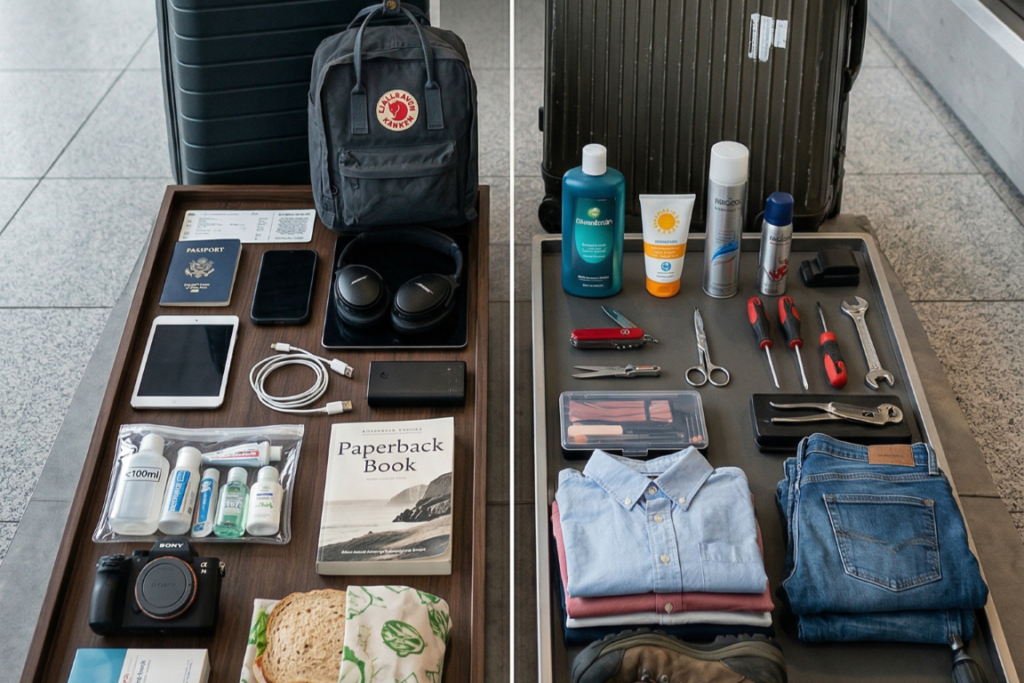
What Should You Pack In Your Carry-On vs Checked Luggage When Traveling Internationally With Kids?
From my experience, this is one of the most important parts of packing for international travel with kids because once your bags are checked, you do not have access to them until you arrive at your destination.
I always make sure anything we absolutely need stays with us. That includes documents, medications, a change of clothes and anything that would be hard to replace or stressful if we did not have it right away.
Snacks are a big one, especially with kids, but I stick to solid foods that can go through TSA without any issues. Things like crackers, granola bars, or nut mixes are easy to pack and do not slow you down at security. Anything that falls under liquids or drinks is something I either follow TSA rules for or just get after going through security.
Everything else that we can live without during the flight goes into our checked bags. That helps keep things lighter while still making sure we are covered if something unexpected happens, like delays or luggage getting held up.
This is where a little planning goes a long way. When you are traveling internationally, you are planning for more than just the flight. You are preparing for long lines, delays, and the possibility that your checked luggage may not arrive exactly when you do.
I have learned to pack our carry-on like a backup plan. Anything that would cause stress if we did not have it right away stays with us. For kids, that usually means snacks, something to keep them occupied, and an extra set of clothes in case of spills, accidents, or luggage delays.
For checked luggage, I focus on the bulk of our clothing, shoes, and anything we do not need during the flight. This keeps things more organized and avoids having to carry too much through the airport.
One thing that is important here is checking airline and TSA guidelines ahead of time. Rules can change, and different airlines have different policies, especially when it comes to carry-on sizes, liquids, and what is allowed onboard.
Taking a few minutes to check this before you pack can save you from having to throw things away at security or repack your bags at the airport.
What To Pack In Your Carry-On
- Passports and travel documents
- Medications
- Snacks and drinks for kids
- Change of clothes (especially for children)
- Diapers or/and diaper bag (if applicable)
- Wipes and hand sanitizer
- Small entertainment items (books, tablets, games)
- Valuables (phones, wallets, electronics)
- Travel-size toiletries (following liquid rules)
What To Pack In Checked Luggage
- Most clothing and outfits
- Shoes
- Toiletries (full-size items)
- Extra supplies
- Bulkier items
- Non-essential items for the flight
Why This Works So Well
- Keeps important items accessible at all times
- Reduces stress if luggage is delayed
- Helps manage kids more easily during travel
- Keeps carry-on bags lighter and more organized
- Prevents issues at security checkpoints
Keep It Simple & Pack With A Backup Plan
If you are ever unsure where something should go, ask yourself if you would need it right away if your luggage was delayed. If the answer is yes and it will be pass through TSA, keep it with you.
Traveling With Strollers, Car Seats, And Baby Gear
Check your airline’s policies before traveling and plan ahead for strollers, car seats, and baby gear since rules, fees, and allowances vary between airlines.
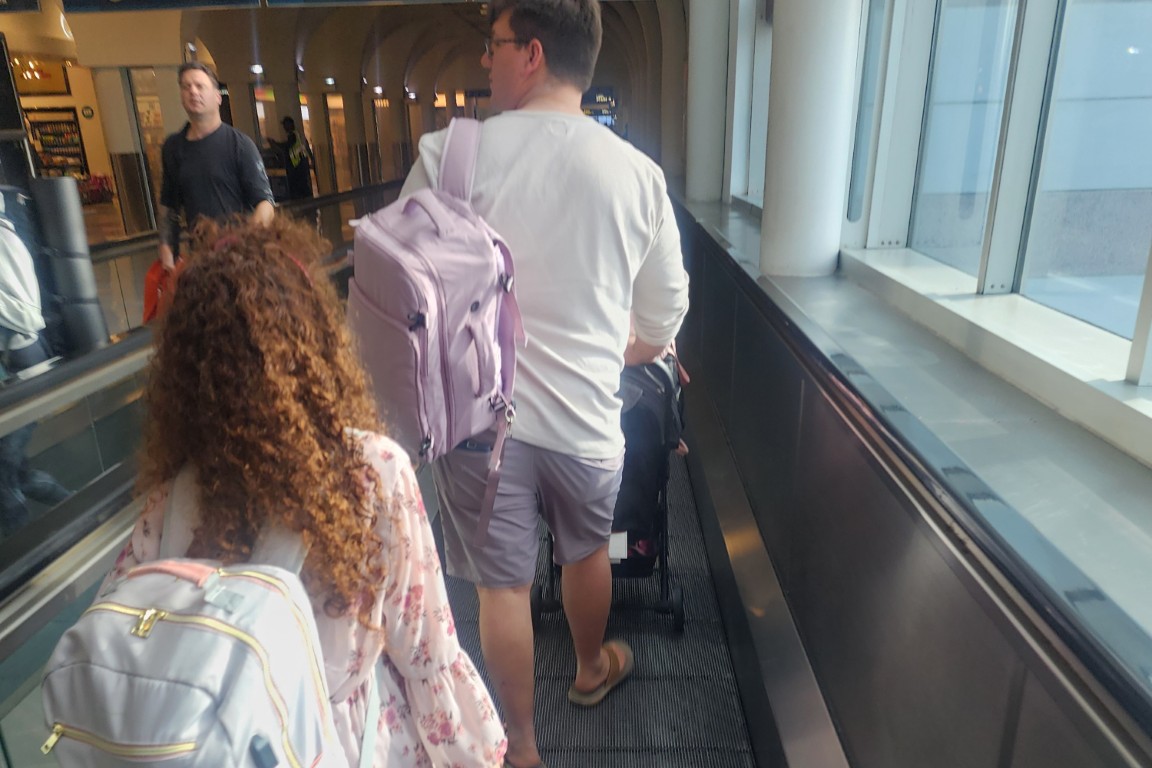
How Do You Travel With Strollers, Car Seats, And Baby Gear On An International Flight?
From my experience, this is something you really want to figure out before you get to the airport because every airline handles baby gear differently.
During my last international trip with my baby, I ended up checking her walker, but I did not have to check the stroller. That alone made a big difference because I could still move through the airport more easily.
Now, airlines have become a lot stricter with rules and fees, so I always make it a point to check their policies ahead of time. Some items can be checked for free, some count toward your baggage allowance, and others may come with extra fees depending on the airline.
Knowing that ahead of time helps you avoid surprises and plan what you actually want to bring.
Traveling with baby gear is about more than bringing the items you need for your child. It is also about planning how you are going to move through the airport with everything in your hands.
From my experience, this is something I had to learn the hard way. When I first traveled with my oldest, I tried to carry everything myself, and it quickly became overwhelming moving this way through the airport.
That changed once I started using a stroller. Even when my child did not sit in it the whole time, it helped carry bags and made it much easier to get from one place to another.
That travel stroller, which my mom got me, has lasted over 11 years, and I still use it to this day for my youngest. It has been one of the most helpful things for navigating busy airports.
For items like car seats, pack and plays, and other gear, I have also learned to check airline policies ahead of time. Some items can be checked, some can be gate-checked, and some may count toward your baggage allowance.
Planning both what you bring and how you will move with it makes the entire travel experience smoother and easier to manage.
What To Consider Before You Travel
- Airline rules for strollers, car seats, and baby gear
- Whether items can be checked for free or count as baggage
- Gate-check options for strollers
- Fees for additional or oversized items
- What you will actually use vs what you can leave behind
Why This Works So Well
- Helps you avoid unexpected fees
- Makes moving through the airport easier
- Reduces stress at check-in and boarding
- Keeps your packing more intentional
- Prevents overpacking unnecessary gear
Keep It Simple & Check Ahead
Before your trip, take a few minutes to check your airline’s policy on baby gear. It can save you time, money, and a lot of stress once you get to the airport.
Fees, Taxes, And Unexpected Costs When Traveling Internationally With Kids
Check airline fees, seat selection costs, and destination-specific taxes before your trip so you are not caught off guard at the airport.
What Fees And Taxes Should You Expect When Traveling Internationally With Kids?
From my experience, international travel comes with extra costs that are not always obvious when you first book your trip.
On one of our trips to Bermuda, we had to pay a child tax for my baby. It was not a large amount, but it was something we did not know about or plan for ahead of time.
That moment taught me to look beyond just the ticket price and check for additional fees before traveling.
Traveling internationally with kids is about more than booking your flights. It is also about understanding the extra costs that can come up before you even board the plane.
From my experience, these costs can show up in different ways. There are airline fees, seat selection charges, baggage costs, and even destination-specific taxes.
For example, some airlines charge extra just to choose your seats. For a family, that matters because you want to sit together, but those costs can add up quickly.
As a tall family, we also look at legroom options, which is another added cost that you may not think about at first but can make a big difference on longer flights.
Then there are destination-specific fees, like the child tax we had to pay when traveling to Bermuda. It was not something we expected, but it was required.
Once you start paying attention to these details ahead of time, you can plan for them instead of being surprised at the airport.
What To Check Before Your Trip
- Airline baggage fees and weight limits
- Seat selection costs for families
- Extra legroom or upgrade pricing
- Taxes or entry fees for your destination
- Fees for traveling with infants or young children
Why This Works So Well
- Helps you avoid unexpected costs at the airport
- Allows you to budget more accurately
- Reduces stress during check-in and boarding
- Keeps your travel plans more predictable
- Gives you more control over your experience
Keep It Simple & Check Ahead
Take a few extra minutes to review airline fees and destination requirements before your trip so you know exactly what to expect.
What You Can Bring On The Plane Vs What To Check
Pack essentials, valuables, and required items in your carry-on, and place bulkier items, liquids over limits, and non-essential items in checked luggage based on TSA and airline rules.
What Should You Pack In Your Carry-On Vs Checked Bag When Traveling Internationally With Kids?
From my experience, knowing what goes in your carry-on versus your checked luggage makes a huge difference once you get to the airport.
It affects how smoothly you get through TSA, how prepared you are during the flight, and how you handle delays or unexpected situations.
Packing for international travel with kids is about more than fitting everything into your bags. It is also about knowing what needs to stay with you and what can be checked.
From my experience, anything you may need during the flight or cannot afford to lose should stay in your carry-on.
That includes things like important documents, medications, baby essentials, and a change of clothes. Flights can get delayed, bags can arrive late, and kids can spill or get uncomfortable quickly.
I have also learned to pay close attention to TSA rules, especially with liquids. You cannot bring full-size liquids through security, and that includes things like drinks and certain toiletries.
Even food can be tricky depending on what it is and how it is packed, so it is important to check current guidelines before heading to the airport.
Checked bags are better for bulkier items like extra clothing, shoes, and anything you do not need immediate access to.
Thinking through this ahead of time helps you move through security faster and keeps you prepared for the flight.
What To Pack In Your Carry-On
- Passports and travel documents
- Medications and essential health items
- Baby essentials (diapers, wipes, formula if allowed)
- One change of clothes per child
- Snacks that follow TSA guidelines
- Entertainment for kids (books, tablets, small toys)
- Travel-size toiletries within TSA limits
What To Pack In Checked Luggage
- Bulk clothing and extra outfits
- Shoes and heavier items
- Full-size toiletries
- Beach gear and non-essential items
- Items restricted from carry-on
Why This Works So Well
- Helps you get through TSA faster
- Keeps essentials within reach during the flight
- Prepares you for delays or lost luggage
- Reduces stress while traveling with kids
- Keeps your bags organized and intentional
Keep It Simple & Pack With Purpose
Keep your carry-on focused on what you need for the flight and anything you cannot replace easily, and use your checked bags for everything else. If you need more tips on packing for international travel with kids and toddlers, checkout our guide below.
Country Restrictions, Customs, And What You Can Bring Into Another Country
Check your destination’s rules on medications, food, and restricted items before traveling so you do not risk confiscation, delays, or issues at customs.
What Items Are Restricted When Traveling Internationally With Kids?
From my experience, every country has its own rules about what you can and cannot bring in, and those rules are taken seriously.
It is not something you want to figure out once you land so make sure to do your research prior to leaving or even choosing your target destination.
Traveling internationally with kids is about more than packing what your family needs. It is also about making sure everything you bring is allowed into the country you are visiting.
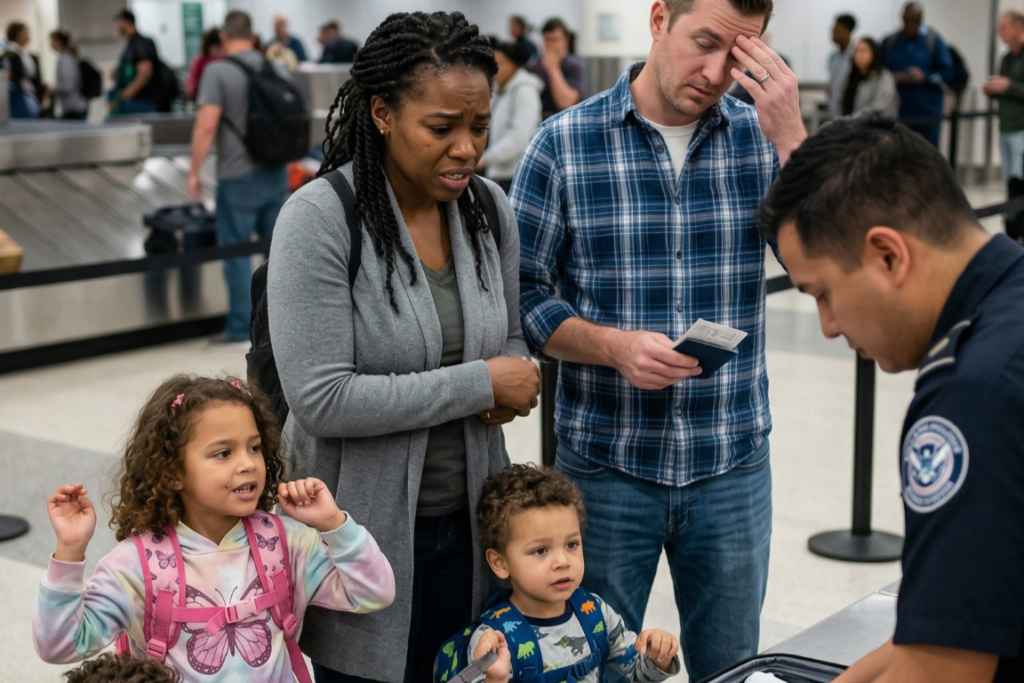
From my experience, this is one of the easiest things to overlook but one of the most important to check ahead of time. There was a time when I could not bring Aleve into Bermuda. It was confiscated, and while it was not a major issue, it showed me how strict countries can be about what comes in.
I have also been pulled into the back for additional bag checks where they go through your belongings to look for restricted or undeclared items. I was traveling solo at the time, but even then, it was not something I would want to deal with while managing kids and luggage.
That experience taught me to always check what is allowed before I travel. Different countries have restrictions on medications, food, plants, and even everyday items you would not think twice about at home.
Taking a few minutes to look this up ahead of time can save you from delays, confiscations, or more serious issues at customs.
What To Check Before You Travel
- Medication restrictions in your destination country
- Rules on bringing food or snacks into the country
- Limits on liquids, powders, or supplements
- Items that must be declared upon arrival
- Customs forms and entry requirements
Why This Works So Well
- Helps you avoid confiscation of personal items
- Reduces the chance of being delayed at customs
- Keeps your travel experience smoother with kids
- Prevents unnecessary stress after a long flight
- Helps you stay compliant with local laws
Keep It Simple & Check Before You Pack
Before your trip, take a few minutes to review your destination’s customs guidelines so you know exactly what you can bring with you.
Trying to keep track of everything for an international trip with kids can feel like a lot.
I created a simple checklist to keep it all organized in one place.
Click the button below to download The Ultimate International Travel Packing Checklist For Families With Kids and make packing easier from the start.
Getting Through Airport Security With Kids (TSA Tips That Actually Help)
Wear easy slip-on shoes, organize your carry-on for quick access, and have a plan to keep track of your kids since strollers cannot go through TSA screening.
How Do You Get Through Airport Security Smoothly With Kids?
From my experience, getting through TSA with kids is one of the most active parts of the entire travel day.
You are taking things off, putting things back on, managing bags, and keeping track of your kids all at the same time.
Getting through airport security with kids is about more than having your documents ready. It is also about preparing for how fast-paced and hands-on the process can be.
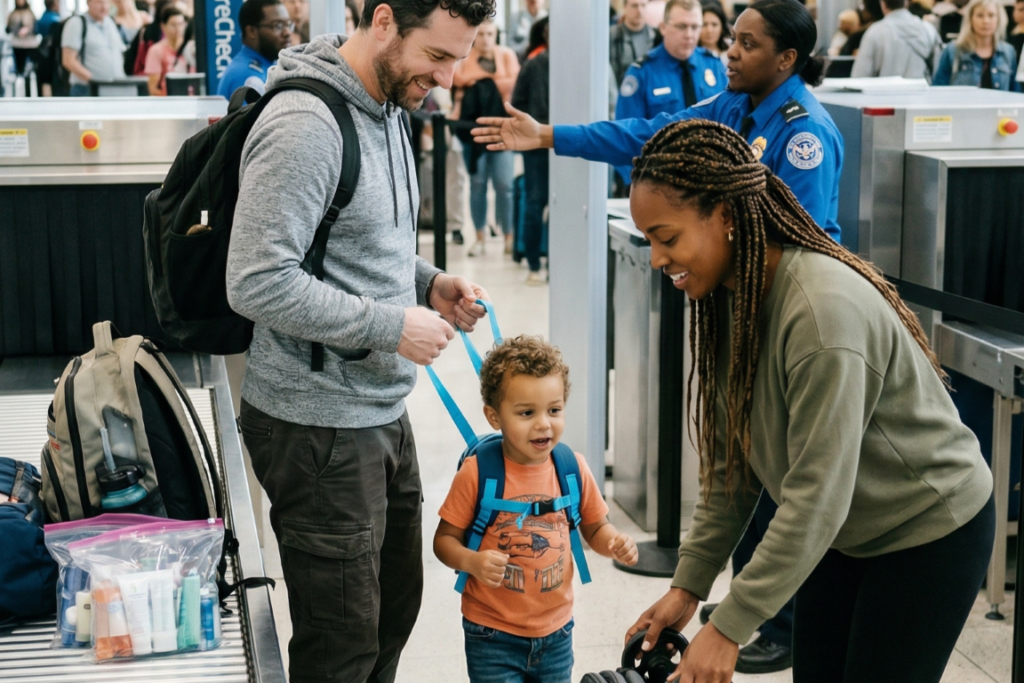
From my experience, this is where things can start to feel hectic if you are not ready for it. One of the biggest things that helps is wearing comfortable shoes that are easy to slip on and off. You may be tempted to wear sandals, but flimsy ones can slow you down or even break with all the movement.
I always recommend hands-free or slip-on walking shoes that stay secure but are easy to remove. You are constantly moving through lines, grabbing bins, and helping your kids, so the less you have to struggle with your shoes, the better.
Another thing to keep in mind is that strollers cannot go through the security checkpoint the way you might expect. You will have to collapse them and send them through screening, which means your hands are full while also keeping track of your kids.
If you have younger or more active children, this is where planning ahead really matters. A child safety harness and leash may not be your first choice, but in this specific situation, it can help you keep your child close while you are focused on getting through security.
Once you understand how active this part of the process is, you can prepare in a way that keeps everything moving smoothly.
What Helps Most At TSA With Kids
- Slip-on, secure walking shoes
- Organized carry-on with easy access to documents and liquids
- Minimal loose items to manage during screening
- A plan for holding or guiding your kids
- Stroller that can be folded quickly
Why This Works So Well
- Helps you move through security faster
- Reduces stress during a high-activity process
- Keeps your kids safe and within reach
- Prevents delays caused by disorganization
- Makes the entire experience feel more manageable
Keep It Simple & Be Ready To Move
Prepare for movement, not just the line. The more ready you are to move quickly and stay organized, the smoother this part of your trip will feel.
Power, Chargers, And Travel Adapters For International Trips
Check your destination’s outlet type and voltage, and bring the correct travel adapter and any needed converters so your devices can charge safely.
Do You Need A Travel Adapter For International Travel With Kids?
From my experience, this is something that is easy to overlook until you actually try to plug something in and realize it does not fit or work.
That is not a situation you want to deal with after a long travel day, especially with kids.
Traveling internationally with kids is about more than packing your devices. It is also about making sure you can actually use them once you arrive.
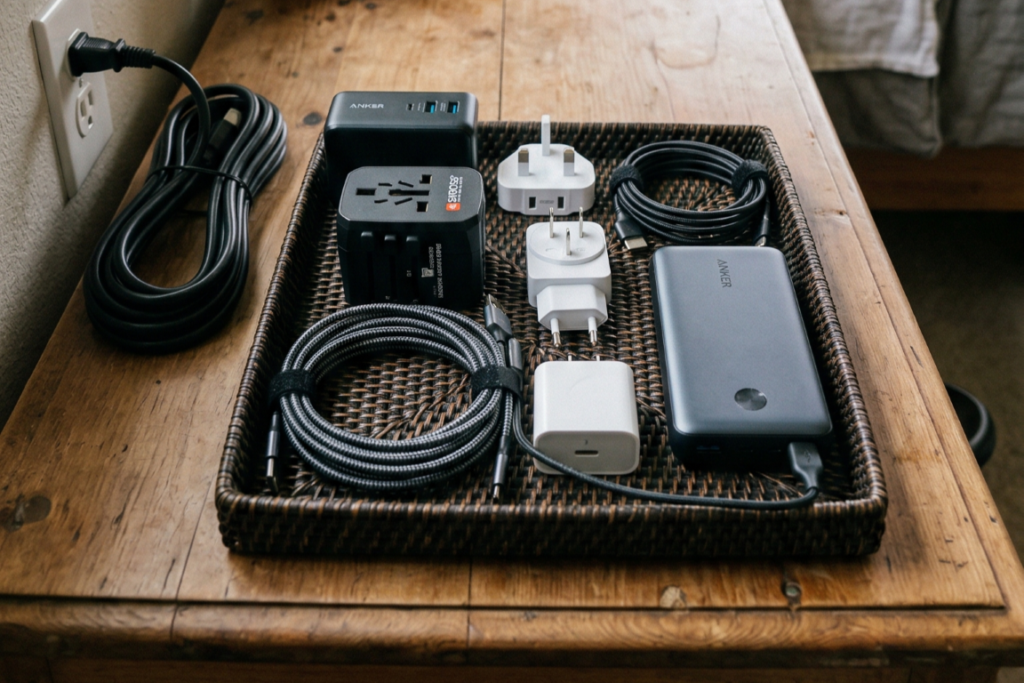
From my experience, different countries use different outlet types, and that alone means your regular plugs may not work.
That is why I always check what type of outlets the destination uses before the trip and bring the appropriate adapter.
In some cases, you may also need a converter depending on the voltage, especially for certain devices. Most phones, tablets, and laptops are designed to handle different voltages, but it is still important to double-check.
When you are traveling with kids, keeping devices charged matters more than you might think. Whether it is for entertainment, navigation, or communication, having working devices can make your trip much smoother.
What To Pack For Power And Charging
- Travel adapter for your destination country
- Voltage converter if needed
- Phone and tablet chargers
- Portable power bank
- Charging cables for all devices
Why This Works So Well
- Keeps your devices usable during your trip
- Prevents last-minute scrambling for adapters
- Supports entertainment and navigation for kids
- Helps you stay connected while traveling
- Reduces stress after arrival
Keep It Simple & Check Before You Go
Look up your destination’s outlet type before your trip and pack the right adapter so everything works when you arrive.
Comfortable Travel Clothing And Shoes For International Trips
Wear comfortable, layered clothing and secure slip-on shoes so you can move easily through the airport, adjust to temperature changes, and stay comfortable during long travel days.

What Should You Wear When Traveling Internationally With Kids?
From my experience, what you wear on travel day matters more than people expect, especially when you are managing kids, bags, and long hours in transit. Comfort and ease of movement make a big difference from the airport to your final destination.
Traveling internationally with kids is about more than choosing something comfortable. It is also about wearing clothing that helps you move easily through the airport and adjust to different environments throughout the day.
From my experience, travel days involve a lot of movement. You are walking through terminals, standing in lines, going through security, and managing your kids at the same time.
That is why I focus on clothing that is comfortable but also practical.
Light layers work best because temperatures can change throughout the day. Airports, planes, and destinations can all feel different, so having something you can add or remove easily helps you stay comfortable.
Shoes are just as important. I always recommend secure slip-on walking shoes. They are easy to take off at TSA, easy to put back on quickly, and comfortable enough for long walking distances.
Flimsy sandals may seem like a good idea, but they do not always hold up well with how active travel days can be.
Dressing this way helps you stay focused on your kids and your travel process instead of being uncomfortable or slowed down.
What To Wear For Travel Day
- Lightweight, breathable clothing
- Layers like a light jacket, hoodie, or cardigan
- Comfortable pants or leggings for movement
- Secure slip-on walking shoes
- Socks for comfort during flights
- Simple outfits that are easy to adjust
Why This Works So Well
- Keeps you comfortable during long travel days
- Helps you move easily through the airport
- Makes TSA easier with quick shoe removal
- Allows you to adjust to temperature changes
- Reduces distractions so you can focus on your kids
Keep It Simple & Dress For Movement
Choose clothing that supports movement, comfort, and flexibility so your travel day feels smoother from start to finish.
Bring A Travel Stroller If Your Child Needs It
Bring a lightweight travel stroller if your child still needs support walking long distances or if you need help carrying bags through the airport.
Should You Bring A Stroller When Traveling Internationally With Kids?
From my experience, bringing a stroller depends on how much support your child needs and how you plan to move through the airport and your destination.
Bringing a stroller is about more than whether your child can walk. It is also about how much you will be carrying and how far you will be moving throughout your travel day.
From my experience, I used to try to carry everything myself when traveling with my oldest, and that quickly became overwhelming.
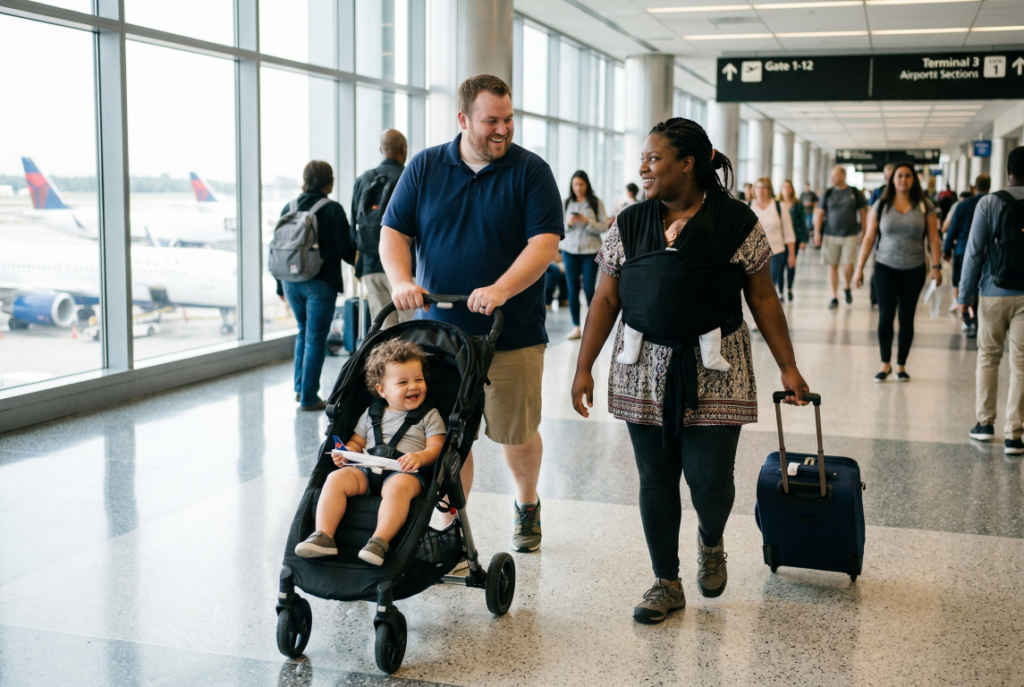
That changed once I started using a travel stroller. Even when my child did not sit in it the whole time, it helped carry bags and made it easier to move through the airport.
That same travel stroller has lasted over 11 years, and I still use it for my youngest today. It has been one of the most useful things for navigating airports and getting from place to place without feeling overloaded.
Even if your child is more active or prefers to walk, having a stroller gives you flexibility. It becomes less about whether they sit in it and more about how it helps you manage everything else.
When A Travel Stroller Makes Sense
- Younger children who tire easily
- Long airport walks or layovers
- Carrying multiple bags or items
- Busy or crowded travel environments
- Destinations where you will be walking often
Why This Works So Well
- Takes pressure off carrying everything yourself
- Makes moving through the airport easier
- Gives your child a place to rest when needed
- Helps keep your hands more manageable
- Adds flexibility during travel
Keep It Simple & Think About Movement
If it helps you move through your travel day more easily, it is worth bringing.
Use A Child Safety Harness In Busy Airports If Needed
Use a child safety harness in busy airport areas like TSA if you need help keeping your child close and secure while managing bags and movement.
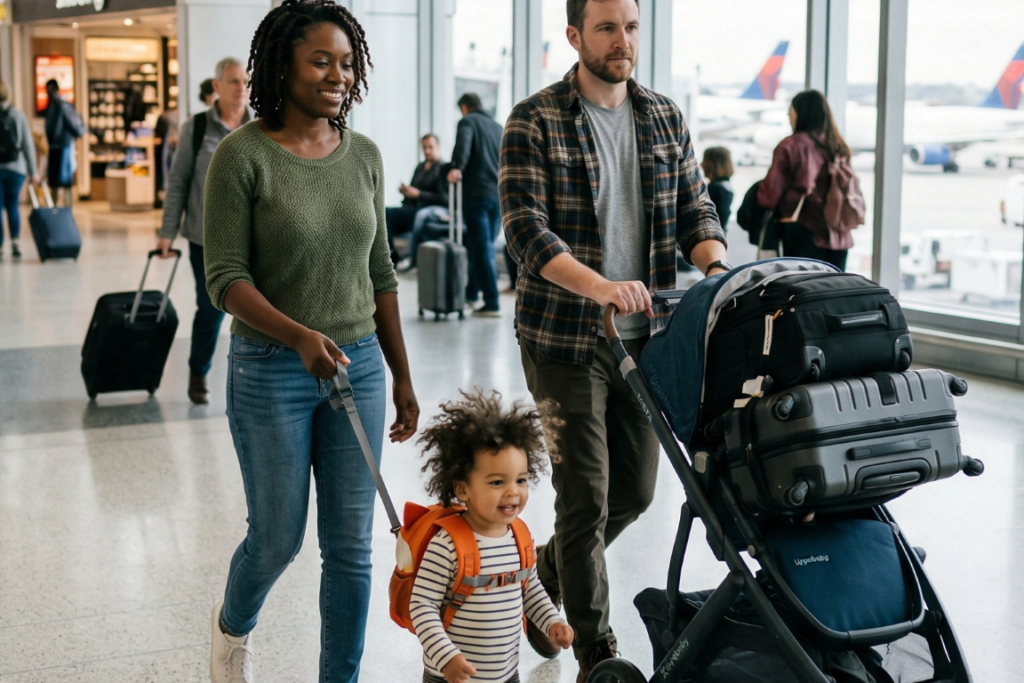
Should You Use A Child Safety Harness When Traveling With Kids?
From my experience, this is a personal decision, but there are certain moments during travel where having that extra layer of control can make things feel a lot more manageable.
Using a child safety harness is about more than preference. It is also about recognizing when you will have your hands full and need a simple way to keep your child close.
From my experience, TSA is one of those times.
You are taking off shoes, handling bags, moving bins, and keeping things organized while also making sure your kids stay with you. At the same time, you cannot push a stroller through the security checkpoint, which means you are managing everything without that extra support.
In that kind of environment, having something that helps you keep your child close can make a big difference.
It may not be something you use all the time, but for situations like this, it can help you stay focused on getting through security without worrying about losing track of your child.
When It Can Be Helpful
- Going through TSA security checkpoints
- Traveling with multiple young children
- Busy or crowded airport environments
- When your hands are full with bags and bins
- If your child is very active or likes to explore
Why This Works So Well
- Helps keep your child close in busy areas
- Reduces stress during high-activity moments
- Allows you to focus on the process at hand
- Adds an extra layer of safety without relying on a stroller
- Makes security checkpoints easier to manage
Keep It Simple & Use It When You Need It
You do not have to use it everywhere, but having it available for busy moments can make your travel experience feel more controlled and less stressful.
Keep Medications, Documents, And Essentials Easily Accessible
Keep important documents, medications, and essentials in your carry-on using a passport portfolio or organizer so everything stays secure and easy to access.
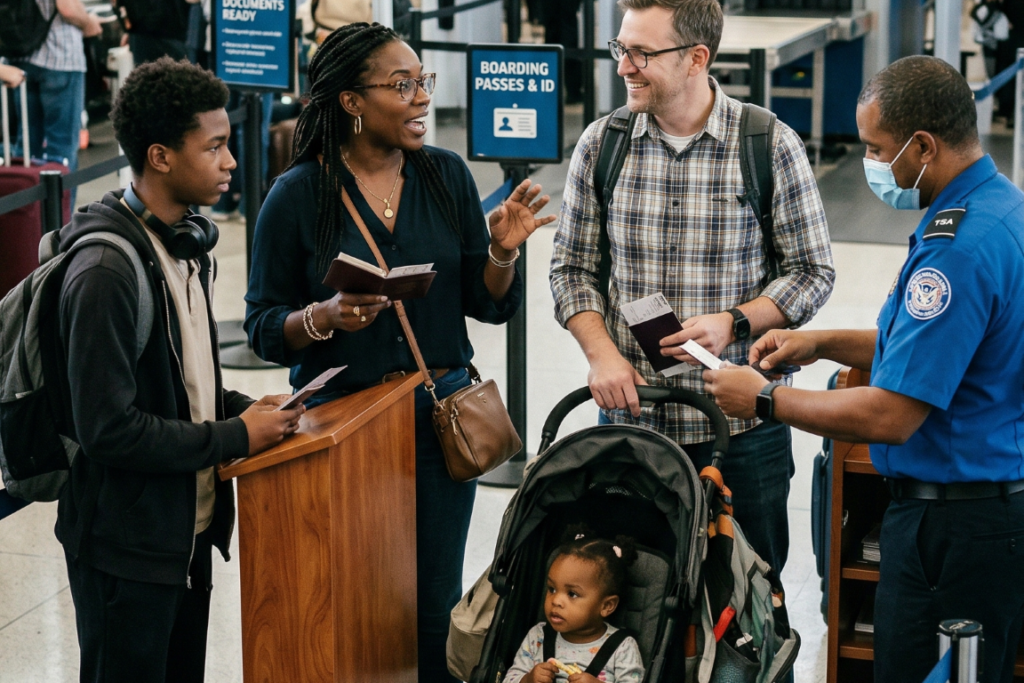
What Should You Keep With You When Traveling Internationally With Kids?
From my experience, you should keep your passports, travel documents, medications, and any essentials you may need during the flight in your carry-on so they are always within reach. Keeping these items with you makes it easier to move through the airport, handle check-ins and boarding, and stay prepared for anything during your travel day.
Keeping your important items with you is about more than making sure you have them. It is also about being able to access them quickly without digging through bags.
From my experience, traveling with kids means you are already managing a lot at once. You do not want to be searching through different bags every time you need a passport, boarding pass, or important document.
That is why I recommend using a passport portfolio or travel organizer.
It keeps everything in one place so you are not worried about papers falling out or getting misplaced. When you are going through check-in, TSA, or boarding, you can simply grab what you need without slowing things down.
This also applies to medications and essential items. These should always stay in your carry-on in case your checked bags are delayed or unavailable.
Having everything organized and within reach helps the entire process feel smoother and more manageable.
What To Keep In Your Travel Organizer
- Passports for each family member
- Boarding passes and travel confirmations
- Identification and copies of important documents
- Travel insurance information
- Emergency contact details
- Credit cards and essential payment methods
What To Keep In Your Carry-On
- Medications for both adults and children
- Baby essentials needed during travel
- A small set of important toiletries
- Any items you cannot afford to lose
Why This Works So Well
- Keeps important items secure and organized
- Makes airport processes faster and smoother
- Reduces the risk of losing documents
- Helps you stay focused while managing your kids
- Prevents unnecessary stress during travel
Keep It Simple & Keep It Together
Keep your most important items in one place so you always know where they are and can access them quickly when needed.
Pack For The First Day, Just In Case
Pack a full first-day set of essentials in your carry-on so you are prepared if your luggage is delayed or unavailable.

What Should You Pack For The First Day Of An International Trip With Kids?
From my experience, you should pack at least one full outfit per person, basic toiletries, and essential items in your carry-on so you can comfortably get through your first day if your luggage is delayed.
Packing for the first day is about more than being prepared. It is also about giving yourself a buffer in case things do not go exactly as planned.
From my experience, delays happen. Bags can arrive late, flights can change, and by the time you reach your destination, everyone is tired and ready to settle in.
Having a full change of clothes for each person makes a big difference, especially after a long travel day. Kids can spill, get uncomfortable, or simply need to change once you arrive.
I also like to keep basic toiletries and a few essentials within reach so we are not depending on checked bags right away.
This small step gives you flexibility and helps your first day feel smoother, even if things do not go perfectly.
What To Pack For Your First Day
- One full outfit per person
- Undergarments and socks
- Travel-size toiletries
- Medications
- Basic hygiene items (wipes, toothbrush, etc.)
- Comfortable sleepwear if arriving late
Why This Works So Well
- Prepares you for delayed or lost luggage
- Keeps everyone comfortable after travel
- Reduces stress on arrival
- Gives you flexibility during unexpected changes
- Helps your first day go more smoothly
Keep It Simple & Pack A Backup Plan
Having what you need for your first day in your carry-on gives you peace of mind and keeps your trip moving smoothly, no matter what happens.
Plan Snacks And Entertainment Ahead Of Time
Pack TSA-approved snacks and simple entertainment in your carry-on so your kids stay comfortable, occupied, and settled during travel.
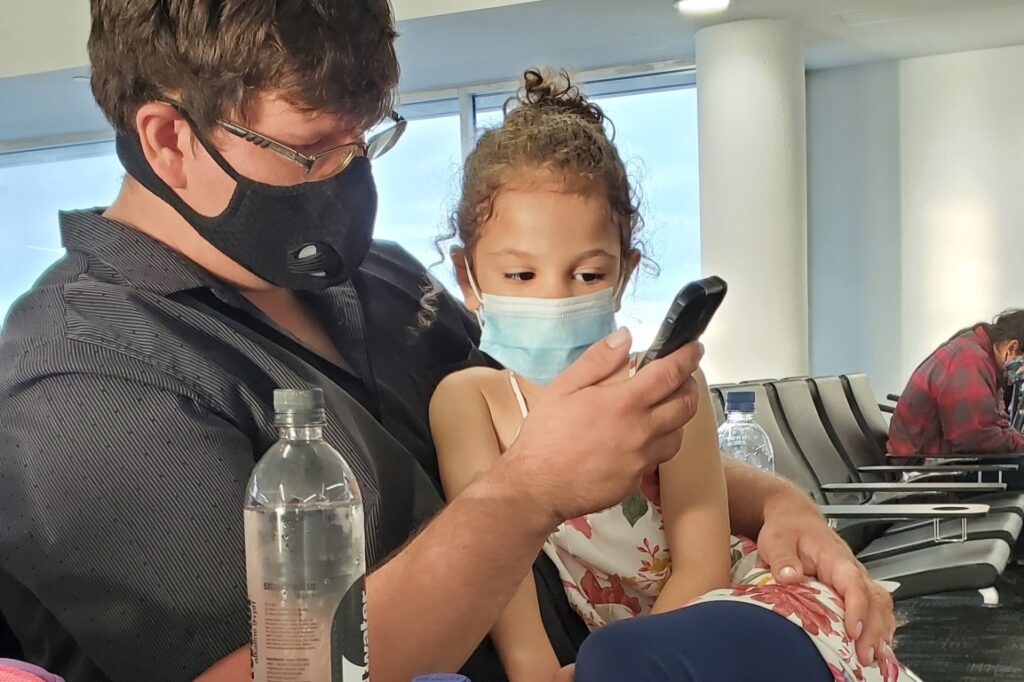
What Snacks And Entertainment Should You Bring For Kids On An International Flight?
From my experience, bringing easy snacks and simple entertainment keeps kids comfortable during long travel days and helps avoid unnecessary stress while moving through the airport and during the flight.
Planning snacks and entertainment is about more than keeping kids busy. It is also about helping the entire travel day flow more smoothly.
From my experience, long travel days come with waiting, transitions, and periods where kids need something to do or something to eat.
Snacks help prevent hunger from turning into frustration, especially when you are dealing with delays or long boarding times. I focus on simple, easy-to-pack options that travel well and follow TSA guidelines.
Entertainment matters just as much. Whether it is a tablet, small toys, or books, having something familiar keeps kids calm and occupied during flights and wait times.
When you plan this ahead of time, you are not scrambling to find something at the airport or relying on whatever is available on the plane.
What Snacks To Pack (TSA-Friendly)
- Dry snacks like crackers, granola bars, or cereal
- Pre-packaged snacks that are easy to carry
- Refillable water bottles (fill after security)
- Spill-proof snack containers for younger kids
What To Pack For Entertainment
- Tablet or phone with downloaded content
- Headphones for each child
- Small toys or quiet activities
- Books or coloring materials
- Comfort items like a favorite toy or blanket
Why This Works So Well
- Helps prevent hunger-related meltdowns
- Keeps kids occupied during long waits
- Reduces reliance on airport or airline options
- Makes the flight feel shorter and more manageable
- Helps you stay more relaxed during travel
Keep It Simple & Plan Ahead
Having snacks and entertainment ready before you leave makes your travel day easier and helps everything run more smoothly from start to finish.
Give Yourself Extra Time At The Airport
Arrive at least 3 hours early for international flights when traveling with kids so you have enough time to handle check-in, security, and settle in before boarding.

How Early Should You Arrive At The Airport When Traveling Internationally With Kids?
From my experience, while international flights typically recommend arriving 2 hours early, I suggest giving yourself at least an extra hour when traveling with kids. That extra time makes the entire process feel more manageable instead of rushed. It also allows parents and kids to have a rest between bo
Arriving early is about more than being on time for your flight. It is also about giving yourself enough space to move through each part of the airport process without feeling overwhelmed.
From my experience, traveling with kids slows things down in a very real way. You are managing bags, documents, check-in, TSA, and your kids all at the same time.
I have also experienced being redirected for additional bag checks, which takes extra time and is not something you want to deal with while rushing to make your flight.
Giving yourself that extra hour changes the entire experience.
Instead of feeling rushed, you have time to get through security, make your way to your gate, and then actually pause for a moment.
That time allows you and your kids to reset. You can grab a snack, get a drink, sit down, and let everyone breathe before boarding.
If your family is anything like mine, you might even take a few minutes to browse a shop or two, especially if you enjoy looking through gift shops before a trip.
That buffer turns the airport from a stressful checkpoint into a smoother part of the travel day.
What Extra Time Allows You To Do
- Handle longer check-in and baggage lines
- Move through TSA without rushing
- Manage unexpected delays or extra screenings
- Get settled at your gate comfortably
- Grab snacks, drinks, or essentials
- Give kids time to rest before boarding
Why This Works So Well
- Reduces stress for both you and your kids
- Gives you flexibility when things take longer than expected
- Helps everyone feel more settled before the flight
- Prevents rushing through important steps
- Creates a smoother start to your trip
Keep It Simple & Give Yourself That Extra Hour
Plan to arrive at least 3 hours early so you have the time you need to move through the airport and get settled before your flight.
FAQ: Planning And Packing For International Travel With Kids
What should I keep with me on the plane when traveling internationally with kids?
Keep essentials in your carry-on so they are always within reach. This includes passports, travel documents, snacks, medications, a change of clothes for each child, wipes, and a few comfort items. From experience, anything you might need quickly should stay with you, not in checked luggage.
How early should I arrive at the airport with kids for an international flight?
Plan to arrive at least 3 hours before your flight, and give yourself about an extra hour when traveling with kids. This extra time lets you move at a comfortable pace, handle unexpected delays like additional bag checks, and gives your family time to rest, snack, and reset before boarding.
What items can I bring on the plane for my kids?
Most airlines allow essentials like snacks, baby formula, breast milk, and child-friendly items in your carry-on. Strollers and car seats are often allowed but may need to be checked at the gate or ticket counter. Always double check your airline’s rules ahead of time since policies can vary.
Do I need to bring a stroller or car seat when traveling internationally?
It depends on your child’s age and your plans at your destination. A lightweight travel stroller can make navigating airports much easier, especially for younger kids. Car seats may be necessary if you plan to use taxis or rental cars, so it helps to plan based on your itinerary.
What is the best way to organize documents for international travel?
Use a passport holder or travel document organizer to keep everything in one place. This helps you quickly access passports, boarding passes, and other paperwork without digging through bags. Keeping documents together also reduces stress when moving through security and checkpoints.
How do I pack efficiently for international travel with kids?
Organize your packing by person and category to keep things simple. Laying everything out by family member with sections like clothing and essentials helps you avoid overpacking while still being prepared. Packing a couple of extra outfits for each child helps cover spills, delays, or unexpected changes.
What should I pack in case of delays or lost luggage?
Always prepare for the first day in your carry-on. Include a full change of clothes, basic toiletries, and anything your child needs to be comfortable. This way, if your luggage is delayed or lost, your family can still settle in without stress.
How do I keep kids entertained on a long international flight?
Bring a mix of familiar and new activities. Tablets, books, coloring items, and small toys can help pass the time, along with snacks and comfort items. Rotating activities throughout the flight helps keep kids engaged and prevents boredom.
Are there extra fees for traveling with baby gear?
Some airlines allow items like strollers and car seats at no extra cost, while others may charge depending on how they are checked. Policies have changed over time, so it is important to check your airline’s current guidelines before your trip to avoid surprises.
What is the most important thing to remember when traveling internationally with kids?
Give yourself extra time and stay flexible. Traveling with kids often comes with unexpected moments, from security checks to tired little ones. Planning ahead while leaving room to adjust helps keep the experience smoother and more enjoyable for everyone.
Bringing It All Together For A Smoother International Trip With Kids
Planning and packing for international travel with kids is about more than checking off a list. It is about understanding how the entire process works so you can move through it with more confidence and less stress.
From my experience, the biggest difference comes from thinking ahead.
When you know what to pack in your carry-on, how to move through the airport with your kids and gear, what rules to check before you travel, and how to give yourself enough time, everything starts to feel more manageable.
You are not rushing to figure things out in the moment. You are moving through each step with a plan.
That does not mean everything will go perfectly, but it does mean you are better prepared to handle whatever comes your way.
And when you are traveling with kids, that preparation makes a real difference in how the entire experience feels for everyone.
International travel with kids can feel overwhelming at first, but once you understand the process and plan ahead, it becomes something you can approach with confidence.
From my experience, it is not about packing more. It is about packing smarter, planning ahead, and giving yourself the time and flexibility to move through each part of the journey.
When you do that, you are able to focus less on the stress and more on the experience of traveling together as a family.
Ready To Make Your Next Family Trip Easier?
If you found this guide helpful, I have more resources to help you plan, pack, and enjoy your time at the beach with your family:
👉🏾 How To Plan The Perfect Family Beach Day This Summer
👉🏾 Family-Friendly Beach Activities For Summer
👉🏾 Beach-Friendly Snacks And Meals For Toddlers And Kids
Take what works for your family, plan ahead, and give yourself the space to enjoy the trip.
Because at the end of the day, it is not just about getting there. It is about how the experience feels along the way ❤️