



Finding the best beach scavenger hunt ideas for kids is one of the easiest ways to turn an ordinary beach day into an adventure. Instead of simply spending time on the sand, kids start exploring, asking questions, and noticing things they might have walked right past.
Growing up around the beach and now enjoying it as a parent, I’ve learned that beach scavenger hunts work because they naturally keep everyone involved. Kids love the excitement of searching for treasures, while adults enjoy slowing down, exploring together, and seeing the beach through a different perspective.
One of the things I love most is that you don’t need expensive toys or complicated planning. The beach becomes the game board, and every shell, feather, footprint, or piece of seaweed becomes part of the adventure.
Whether you’re visiting with toddlers, older kids, or a mix of ages, these beach scavenger hunt ideas encourage curiosity, conversation, teamwork, and plenty of memorable moments along the way.
TL;DR: 10 Best Beach Scavenger Hunt Ideas For Kids To Try This Summer
The best beach scavenger hunt ideas for kids turn an ordinary beach day into an adventure without requiring expensive toys or complicated planning. From shell hunts and color challenges to nature scavenger hunts and team games, these simple activities encourage kids to explore, stay active, and enjoy the beach in a whole new way. Whether you’re visiting with toddlers or older children, beach scavenger hunts create fun moments that naturally bring everyone together.
Summarize With AI
10 Best Beach Scavenger Hunt Ideas For Kids
- Seashell Scavenger Hunt
- Beach Color Hunt
- Beach Texture Hunt
- Nature Treasure Hunt
- Beach Animal Hunt
- Beach Shape Hunt
- Beach Alphabet Hunt
- Beach Photo Scavenger Hunt
- Family Team Beach Challenge
- Beach Sound Hunt
Beach Scavenger Hunt Ideas At A Glance
| Scavenger Hunt | Best For | Developmental Benefits | Supplies Needed |
|---|---|---|---|
| Seashell Scavenger Hunt | All ages | Fine motor skills, sensory exploration, observation | None |
| Beach Color Hunt | Toddlers & young kids | Color recognition, visual discrimination | None |
| Beach Texture Hunt | Toddlers & preschoolers | Sensory awareness, descriptive language, fine motor skills | None |
| Nature Treasure Hunt | Curious explorers | Observation, communication, critical thinking | None |
| Beach Animal Hunt | Animal lovers | Patience, focus, environmental awareness | None |
| Beach Shape Hunt | Preschool & elementary kids | Pattern recognition, early geometry, spatial awareness | None |
| Beach Alphabet Hunt | Early readers | Vocabulary, letter recognition, problem-solving | None |
| Beach Photo Scavenger Hunt | Older kids & families | Creativity, storytelling, observation | Camera or smartphone |
| Family Team Beach Challenge | Mixed-age families | Teamwork, communication, cooperation | Optional printable |
| Beach Sound Hunt | All ages | Active listening, sensory awareness, mindfulness | None |
Seashell Scavenger Hunt
A seashell scavenger hunt turns shell collecting into an interactive beach game by encouraging kids to search for shells with different colors, shapes, sizes, and textures.

How Can You Make Shell Collecting More Fun For Kids?
Turn shell collecting into a game by giving kids a list of specific shells to find instead of asking them to collect as many as they can.
One of the things I love about a seashell scavenger hunt is how naturally it transforms an ordinary beach walk into an adventure. Instead of wandering along the shoreline hoping to find something interesting, your kids suddenly have a mission.
Try creating a simple list of things to look for, such as:
- The smallest shell you can find
- A striped shell
- A smooth shell
- A shell with ridges
- Two shells that look almost the same
You’ll probably notice everyone slowing down. Kids begin paying attention to details they would normally run right past, and even adults start joining in to compare discoveries.
Beyond making your beach day more interactive, this scavenger hunt quietly supports your child’s development too. Picking up, turning over, and comparing shells helps strengthen fine motor skills and hand-eye coordination, while exploring different colors, textures, and patterns encourages sensory development and observation skills.
One of my favorite parts is that there’s no right or wrong way to play. Every beach is different, so every scavenger hunt becomes its own unique adventure.
Who Is This Beach Scavenger Hunt Best For?
- Toddlers with a little help from an adult
- Preschool and elementary-aged kids
- Families who enjoy slower beach walks
- First-time beach scavenger hunters
Highlights
- Turns a simple beach walk into an interactive adventure
- Encourages curiosity, observation, and problem-solving
- Supports sensory exploration through colors and textures
- Helps develop fine motor skills and hand-eye coordination
- Easy to set up with no extra supplies required
Beach Color Hunt
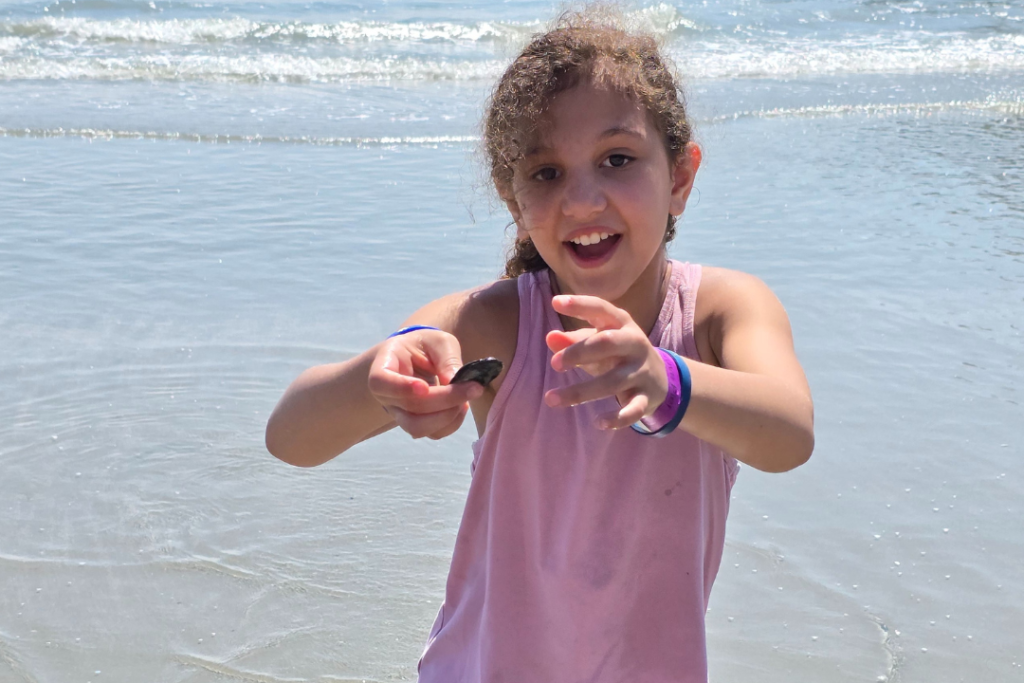
A beach color hunt encourages kids to search for naturally occurring colors around them, turning a simple beach walk into an engaging observation game.
How Do You Play A Beach Color Hunt?
Choose several colors before you head out, then challenge your kids to find something at the beach that matches each one.
If you grew up playing I Spy, this beach scavenger hunt follows the same idea but with a colorful beach twist.
Instead of searching for one specific object, encourage your kids to look for something that matches each color on your list. They might find:
- A white seashell
- Green seaweed
- Brown driftwood
- Gray rocks
- A pink shell
- Yellow beach toys
- Blue ocean water
One thing I love about this activity is that there isn’t just one correct answer. Kids naturally begin looking around more carefully and often spot things that the rest of us completely miss.
The game also grows with your child. Younger kids can simply identify basic colors, while older kids can challenge themselves to find unusual shades, compare similar colors, or explain why they chose a particular object.
Along the way, they’re developing observation skills, color recognition, visual discrimination, communication skills, and critical thinking without realizing they’re learning at all.
Who Is This Beach Scavenger Hunt Best For?
- Toddlers learning their colors
- Preschool and elementary-aged kids
- Mixed-age siblings
- Families looking for a simple activity with no setup
Why Kids Love It
- Feels like a real-life game of I Spy.
- Builds observation and color recognition skills.
- Encourages critical thinking and communication.
- Adapts easily for different ages.
- Requires no supplies and can start anywhere on the beach.
Beach Texture Hunt
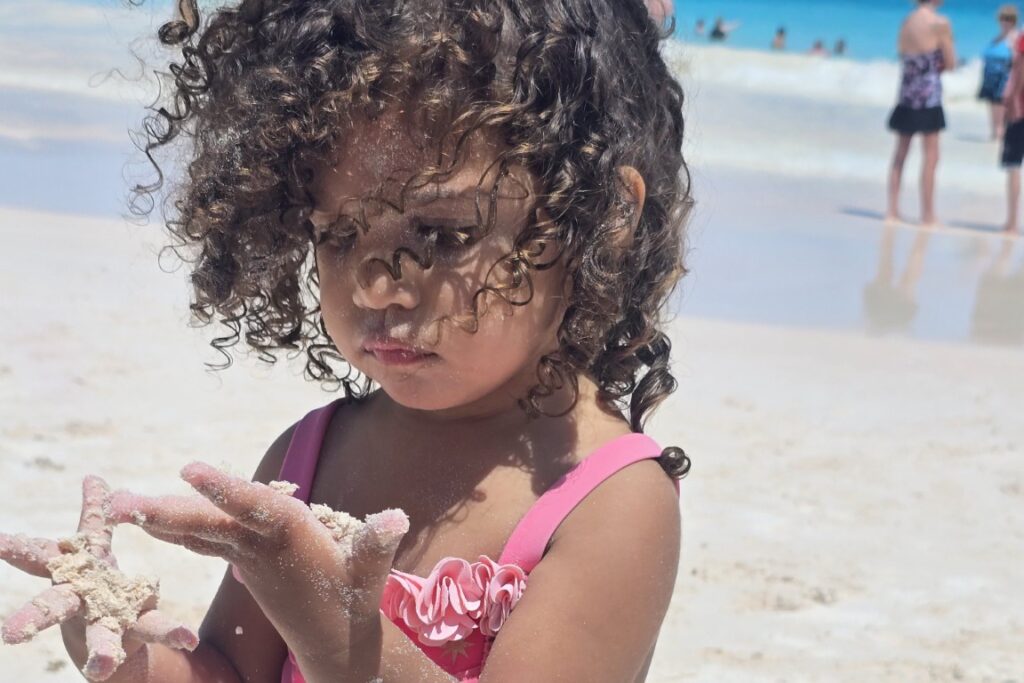
A beach texture hunt encourages kids to safely explore the beach by finding natural objects with different textures, helping them engage their sense of touch while developing observation skills.
How Do You Play A Beach Texture Hunt?
Challenge your kids to find natural beach items that feel different from one another, such as something smooth, rough, bumpy, soft, or grainy.
A beach texture hunt is one of those activities that encourages kids to slow down and experience the beach in a completely different way.
Instead of focusing on what they can see, encourage them to pay attention to what they can feel. Ask them to safely search for things like:
- A smooth shell
- A rough piece of driftwood
- Soft seaweed
- Grainy sand
- A bumpy shell or rock
As they compare each item, they’ll naturally start describing how each one feels. Before long, you’ll probably hear words like “scratchy,” “slippery,” “hard,” or “sandy” as they make their own discoveries.
One thing I appreciate about this activity is how naturally it encourages conversation. Kids begin asking questions, comparing textures, and explaining why one object feels different from another.
At the same time, they’re strengthening sensory processing, building descriptive language skills, improving fine motor skills as they handle different objects, and learning to observe the world using more than just their eyes.
Safety Tip: Encourage kids to touch only natural objects that are safe to handle, and avoid unknown marine life, sharp shells, or anything that could cause injury.
Who Is This Beach Scavenger Hunt Best For?
- Toddlers exploring different textures
- Preschool and elementary-aged kids
- Curious learners who enjoy hands-on activities
- Families looking for a calm beach activity
Why Kids Love It
- Encourages hands-on exploration.
- Builds sensory awareness through touch.
- Develops descriptive vocabulary and communication skills.
- Strengthens fine motor skills while handling natural objects.
- Helps kids slow down and notice details they might otherwise overlook.
Nature Treasure Hunt
A nature treasure hunt encourages kids to discover the different plants, animals, and natural features that make every beach unique while building curiosity and observation skills.
What Is A Nature Treasure Hunt?
A nature treasure hunt challenges kids to explore the beach by looking for a variety of natural treasures instead of focusing on just one type of item.
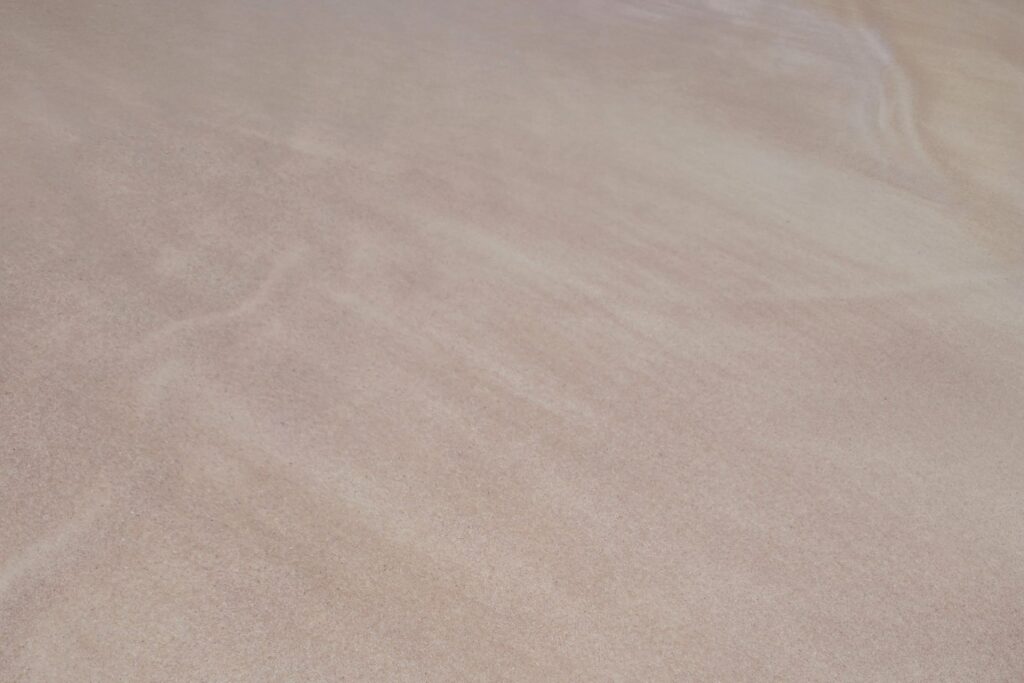
One of the things I enjoy most about a nature treasure hunt is that it encourages kids to see the beach as more than just sand and water. Before long, they’re spotting interesting things they may have walked past dozens of times without noticing like changes in sand from one beach to another.
Create a simple list of natural treasures to look for, such as:
- A feather
- A piece of driftwood
- Seaweed
- A crab hole
- Bird footprints
- A smooth stone
- A unique shell
As your kids explore, take a few moments to talk about what they find. Ask questions like, “Who do you think made these footprints?” or “Why do you think this driftwood ended up here?” Those little conversations often become just as memorable as the hunt itself while naturally encouraging kids to also ask questions of their own and become more aware of the world around them.
Along the way, they’re building observation skills, critical thinking, communication, and a greater appreciation for nature without feeling like they’re in a lesson. Just make sure to leave nature where it is. Instead take pictures as keepsakes.
Who Is This Beach Scavenger Hunt Best For?
- Curious kids who enjoy exploring
- Preschool and elementary-aged children
- Families who enjoy nature walks
- Mixed-age siblings looking for a shared activity
Why Kids Love It
- Feels like a real outdoor adventure.
- Encourages curiosity and exploration.
- Builds observation, communication, and critical thinking skills.
- Introduces kids to the beach’s natural ecosystem.
- Creates opportunities to learn together through simple conversations.
Beach Animal Hunt

What Can Kids Look For On A Beach Animal Hunt?
Kids can safely search for signs of wildlife such as shorebirds, crabs, fish, seashells with living creatures inside, animal tracks, and other marine life while keeping a respectful distance.
One of the most exciting things about a beach animal hunt is that every trip is different. You never know what you might discover, and that’s part of the fun.
Before you head out, challenge your kids to see how many different animals or signs of wildlife they can find. Depending on where you’re visiting, they might spot:
- Shorebirds
- Ghost crabs
- Small fish in the shallows
- Jellyfish washed ashore (look, don’t touch)
- Sandpiper footprints
- Hermit crabs
- Pelicans or gulls flying overhead
You’ll probably notice that kids become much quieter once they’re searching for animals. Instead of racing from place to place, they begin scanning the shoreline, watching the waves, and looking closely at the sand.
Along the way, they’re strengthening observation skills, patience, focus, and critical thinking while learning that the beach is home to many different kinds of wildlife, not just a place to swim and build sandcastles.
Safety Tip: Remind kids to observe wildlife without touching or chasing animals. Giving wildlife plenty of space helps keep both your family and the animals safe.
Who Is This Beach Scavenger Hunt Best For?
- Animal-loving kids
- Preschool and elementary-aged children
- Families who enjoy exploring nature
- Curious kids who like asking questions
Why Kids Love It
- Every beach visit becomes a new wildlife adventure.
- Encourages patience, observation, and curiosity.
- Builds respect for marine life and beach ecosystems.
- Helps develop critical thinking and attention to detail.
- Creates memorable opportunities to discover nature together.
Beach Shape Hunt
A beach shape hunt encourages kids to find natural objects that match different shapes, helping them strengthen observation, pattern recognition, and early geometry skills while exploring the shoreline.

How Do You Play A Beach Shape Hunt?
Challenge your kids to find beach objects that resemble common shapes like circles, ovals, triangles, rectangles, or hearts.
A beach shape hunt encourages kids to look at familiar beach objects in a completely different way. Instead of simply picking up shells or rocks, they begin searching for shapes hidden throughout the beach.
Create a simple list of shapes before you begin and encourage your kids to find something that matches each one. For example, they might discover:
- A round shell
- An oval rock
- A heart-shaped shell
- A triangle-shaped piece of driftwood
- A starfish (if you’re lucky enough to spot one)
One thing I enjoy about this activity is that there are no perfect answers. Kids naturally start comparing objects, explaining why they chose them, and sometimes even debating whether something looks more like one shape than another.
Those conversations help develop observation skills, critical thinking, visual discrimination, and early geometry concepts while keeping the activity fun and relaxed.
If your kids finish quickly, make it a little more challenging by asking them to find two different objects with the same shape or the largest and smallest example of each one.
Who Is This Beach Scavenger Hunt Best For?
- Preschool and elementary-aged kids
- Kids learning shapes and patterns
- Families who enjoy slower beach walks
- Mixed-age siblings looking for a shared challenge
Why Kids Love It
- Turns the beach into a real-life shape puzzle.
- Encourages observation and pattern recognition.
- Builds early geometry and spatial awareness naturally.
- Sparks conversations and creative thinking.
- Easy to adapt for different ages and skill levels.
Beach Alphabet Hunt
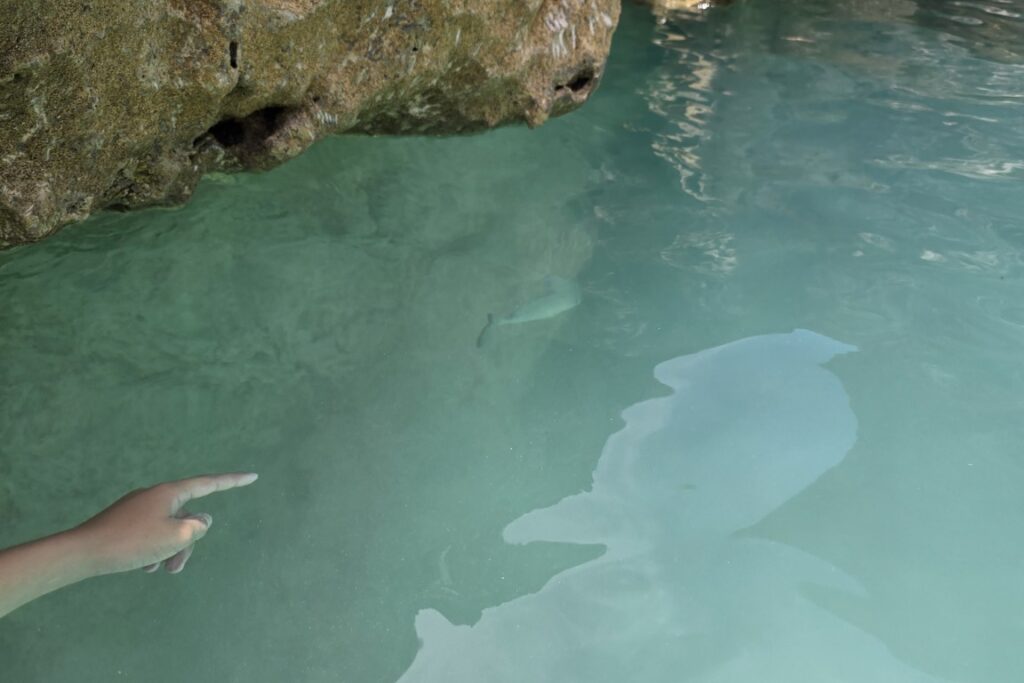
A beach alphabet hunt challenges kids to find beach objects that begin with different letters of the alphabet, helping develop observation, vocabulary, and critical thinking skills.
How Do You Play A Beach Alphabet Hunt?
Choose a few letters of the alphabet and challenge your kids to find beach objects that begin with each letter. Younger children can focus on just a handful of letters, while older kids can see how many they can complete.
A beach alphabet hunt is a fun way to turn a simple walk into an exciting word game. Instead of searching for one specific item, kids begin looking at the beach through the lens of the alphabet.
For example, they might find:
- S for Shell
- W for Wave
- C for Crab
- B for Bird
- R for Rock
- D for Driftwood
Not every letter will have an obvious answer, and that’s part of the fun. Kids naturally begin brainstorming, asking questions, and working together to think of creative solutions.
If you’re playing with younger children, stick to five or six letters to keep the game fun and achievable. Older kids can challenge themselves to complete the entire alphabet or work together as a team.
Along the way, they’re strengthening vocabulary, letter recognition, observation skills, memory, and problem-solving while exploring everything the beach has to offer.
Who Is This Beach Scavenger Hunt Best For?
- Preschool and elementary-aged kids
- Children learning letters and beginning reading skills
- Mixed-age siblings working together
- Families who enjoy educational games disguised as fun
Why Kids Love It
- Turns the alphabet into a beach adventure.
- Builds vocabulary and letter recognition naturally.
- Encourages problem-solving and creative thinking.
- Promotes teamwork as everyone searches for ideas together.
- Easy to adapt for different ages and learning levels.
Beach Photo Scavenger Hunt
A beach photo scavenger hunt encourages kids to capture special moments and interesting discoveries with a camera or phone, creating lasting memories while exploring the beach together.
How Do You Play A Beach Photo Scavenger Hunt?
Create a list of things to photograph instead of collect, then challenge your kids to see how many they can find during your beach adventure.
This is probably my favorite beach scavenger hunt because the fun doesn’t end when you leave the beach.
Instead of collecting shells or other treasures, challenge your kids to take photos of different things they discover throughout the day. Your list might include:
- A unique seashell
- A sandcastle
- A shorebird
- A wave crashing on the shore
- Something shaped like a heart
- A beautiful sunset
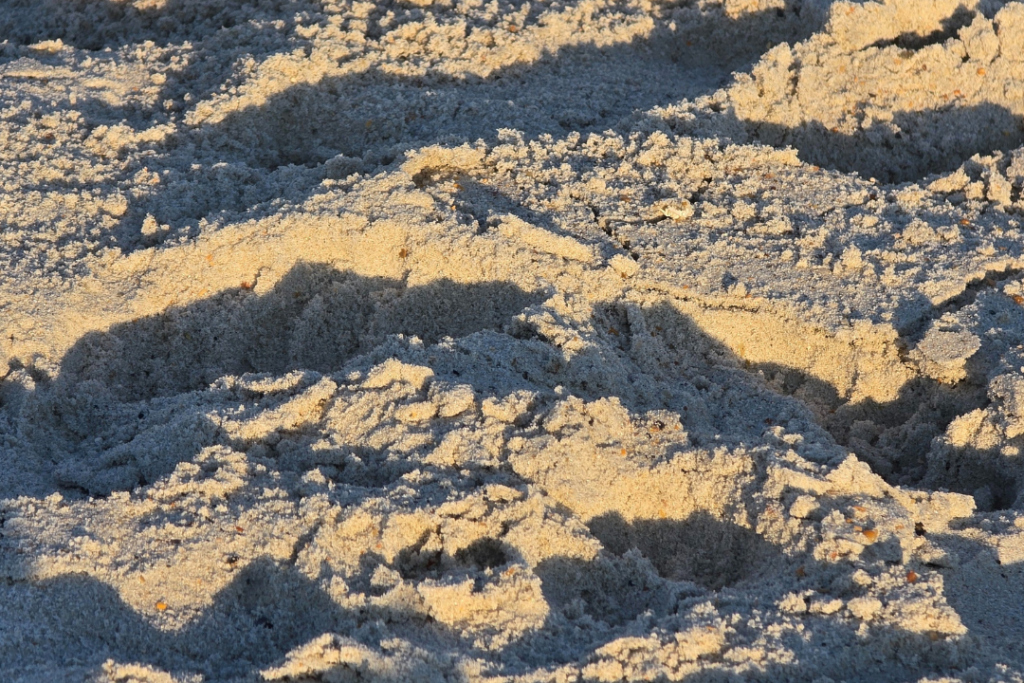
- Your family’s footprints in the sand
One thing I love most about this activity is that every photo tells part of your family’s beach story. Years from now, those pictures become more than images on a phone. They’re little reminders of the places you explored together, the things your kids noticed, and the memories you made along the way.
Some of my favorite beach photos have ended up framed around our home. They spark conversations, remind us of special trips, and give the kids something to look back on as they grow older.
Along the way, kids are also developing observation skills, creativity, visual storytelling, and decision-making as they choose what they want to capture and why it matters to them.
Who Is This Beach Scavenger Hunt Best For?
- Elementary-aged kids and teens
- Kids who enjoy photography or being creative
- Families who love preserving vacation memories
- Parents looking for a keepsake that lasts beyond the trip
Why Kids Love It
- Turns everyday beach moments into lasting memories.
- Encourages creativity and artistic expression.
- Builds observation and visual storytelling skills.
- Gives kids ownership of their vacation memories.
- Creates photos your family can enjoy for years to come.
Family Beach Team Challenge
A team beach challenge turns a beach scavenger hunt into a friendly competition by having family members work together to complete a list of beach discoveries and fun challenges.

How Do You Turn A Beach Scavenger Hunt Into A Team Game?
Divide into teams and see who can complete the scavenger hunt first, earning points for each item or challenge along the way.
If your family enjoys a little friendly competition, a team beach challenge is a fun way to make your scavenger hunt even more exciting.
Split into two teams or pair younger kids with older siblings or adults. Then give each team the same list of beach items or challenges to complete.
Your challenge list might include:
- Find three different shells.
- Spot a shorebird.
- Build a mini sandcastle.
- Find something round.
- Take a team selfie with the ocean in the background.
Instead of racing through the list, encourage everyone to work together. Younger kids might be the first to spot a shell, while older kids can help identify birds or think through some of the trickier challenges.
One of the things I enjoy most about this activity is that it naturally brings everyone together. Conversations happen without forcing them, siblings encourage one another, and parents end up joining the fun instead of simply watching from the sidelines.
Along the way, kids are building teamwork, communication, problem-solving, leadership, and cooperation skills while staying active and engaged throughout the beach day.
Who Is This Beach Scavenger Hunt Best For?
- Families with children of different ages
- Siblings who enjoy friendly competition
- Family reunions and group beach trips
- Parents who want everyone involved
Why Kids Love It
- Turns a scavenger hunt into a friendly family competition.
- Encourages teamwork and communication.
- Builds confidence through shared successes.
- Keeps everyone engaged and moving together.
- Creates laughter and memorable family moments.
Beach Sound Hunt
A beach sound hunt encourages kids to listen carefully to the natural sounds around them, helping develop active listening skills, mindfulness, and a deeper appreciation for the beach environment.

How Do You Play A Beach Sound Hunt?
Challenge your kids to close their eyes for a minute or two and identify as many different beach sounds as they can hear before opening them again.
Most scavenger hunts focus on what kids can see, but a beach sound hunt encourages them to experience the shoreline in a completely different way.
Find a comfortable spot, close your eyes together, and simply listen.
See how many different sounds your family can identify, such as:
- Waves rolling onto the shore
- Seagulls calling overhead
- Wind moving through the dunes
- Children laughing in the distance
- Footsteps in the sand
- Seashells clinking together in the surf
- Boats passing offshore
After a minute or two, compare your lists and see who noticed the most sounds. You might be surprised by how differently everyone experiences the same beach.
One thing I enjoy about this activity is how naturally it slows the pace of the day. For a few quiet moments, everyone stops looking for the next thing to do and simply enjoys being present together.
Beyond creating a calming break during your beach adventure, this scavenger hunt helps strengthen active listening, focus, sensory awareness, mindfulness, and observation skills. It also reminds kids that there is so much happening at the beach, even when they’re standing perfectly still.
Who Is This Beach Scavenger Hunt Best For?
- All ages
- Families looking for a calming activity
- Kids who enjoy nature
- Anyone needing a quiet reset during a busy beach day
Why Kids Love It
- Helps them notice sounds they normally overlook.
- Encourages mindfulness and active listening.
- Provides a peaceful break between more active games.
- Builds focus, patience, and sensory awareness.
- Creates a shared moment of calm for the whole family.
Why Beach Scavenger Hunts Work So Well For Families
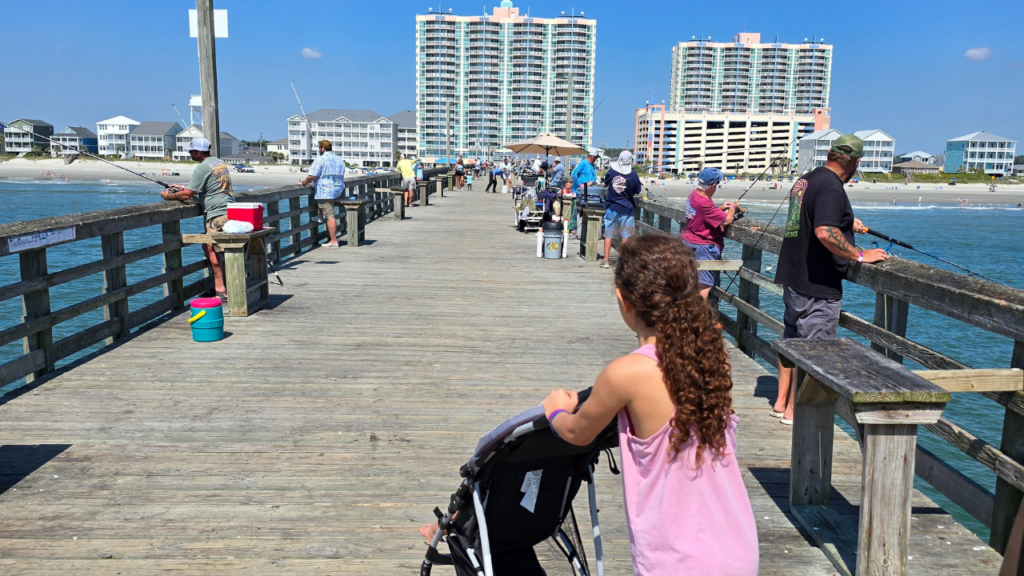
One of the reasons I keep coming back to beach scavenger hunts is because they make the beach feel different without making it more complicated.
Instead of asking, “What should we do now?” your kids already have a purpose. Every shell, footprint, feather, or interesting rock becomes another opportunity to explore together.
What I appreciate most is that everyone can participate in their own way. Toddlers enjoy finding simple objects, older kids love the challenge of completing the list, and adults naturally get involved by asking questions, celebrating discoveries, and sometimes becoming just as competitive as the kids.
Beach scavenger hunts also encourage something that’s easy to lose during busy vacations: slowing down.
Rather than rushing from one activity to the next, they give you a reason to notice the little things that often become the best memories. A perfectly shaped shell, tiny crab tracks in the sand, or a colorful feather might not seem like much at first, but those small discoveries often become the moments everyone talks about long after the trip is over.
Why Families Love Beach Scavenger Hunts
- Easy to set up with little or no preparation
- Works for toddlers, older kids, and adults
- Encourages teamwork and conversation
- Supports learning through exploration and play
- Turns an ordinary beach walk into a memorable adventure
How To Set Up A Beach Scavenger Hunt (The Easy Way)
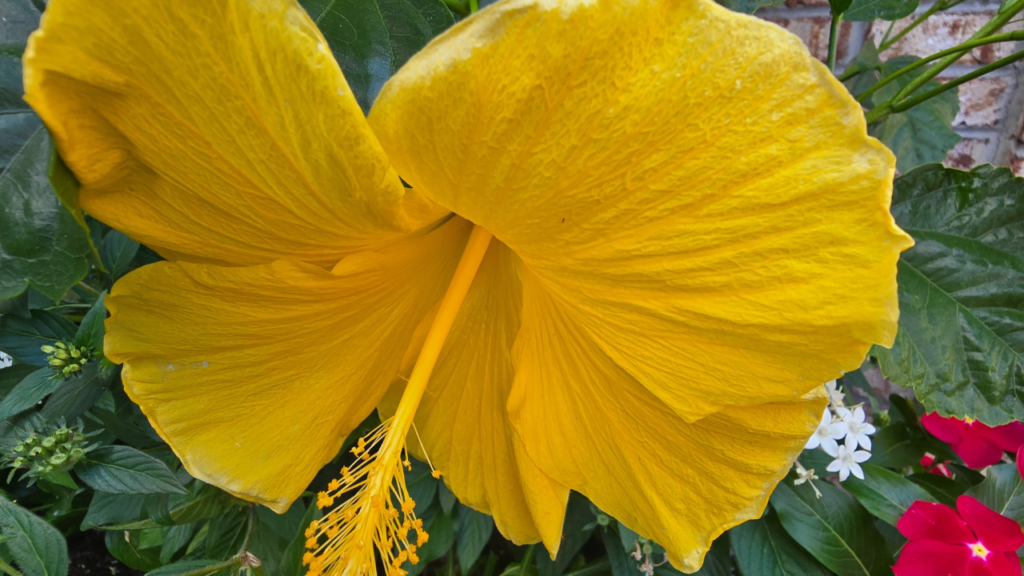
One of the best things about beach scavenger hunts is that you don’t need a lot of planning.
In fact, I think they’re more fun when they happen naturally.
I usually start by saying, “Let’s see what the beach has for us today.” From there, we create a simple list based on what’s around us instead of trying to follow a strict checklist.
You can come up with the list together or let your kids suggest things they’d like to find. Giving them a little ownership often makes them even more excited to start exploring.
Keep the rules simple:
- Look, don’t take unless it’s safe and allowed.
- Respect wildlife and natural habitats.
- Stay together and be aware of your surroundings.
- Focus on having fun rather than finishing first.
Don’t worry about finding every item on the list. The real goal isn’t completing a scavenger hunt. It’s slowing down, exploring together, and seeing where your curiosity leads you.
The beach is always changing, which means every scavenger hunt feels a little different. That’s part of what makes this activity so easy to enjoy again and again.
Why This Approach Works
- Takes less than a minute to set up.
- Encourages kids to use their imagination.
- Adapts naturally to any beach.
- Works for toddlers, older kids, and adults.
- Keeps the focus on exploring together instead of checking boxes.
What To Include In a Beach Scavenger Hunt
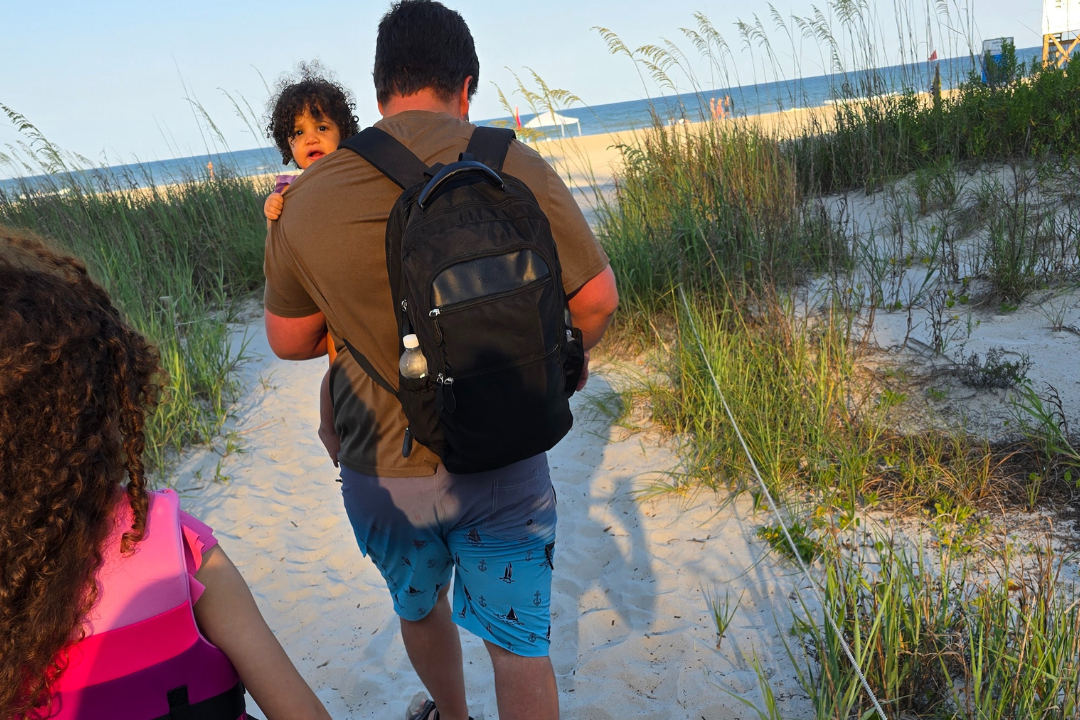
One of the things I love about beach scavenger hunts is that you don’t have to follow someone else’s list every time.
In fact, some of the best scavenger hunts happen when you create one based on what’s around you that day.
Try choosing items that encourage your kids to observe, compare, and explore instead of simply collecting objects. Open-ended prompts also work well because there isn’t always just one right answer.
Here are a few ideas to get you started:
- Find something smooth.
- Find something shaped like a heart.
- Find something white.
- Find something the waves touched.
- Find something rough.
- Find something that makes a sound.
- Find something moving.
- Find something shaped like a circle.
Mix and match different types of prompts to keep each scavenger hunt feeling fresh. Some can focus on colors or shapes, while others encourage kids to notice wildlife, textures, sounds, or signs of nature they may have overlooked.
One thing I’ve found is that the best scavenger hunts don’t end with a full checklist. They end with conversations. Ask your kids why they chose a particular object or what made something interesting enough to include. Those little moments of curiosity often become the most memorable part of the activity.
What Makes A Great Beach Scavenger Hunt?
- Keep prompts simple and age appropriate.
- Encourage observation instead of collecting whenever possible.
- Include a mix of colors, shapes, textures, sounds, and nature.
- Let your kids help create part of the list.
- Focus on exploring together instead of finishing first.
Making Scavenger Hunts Fun For Different Ages
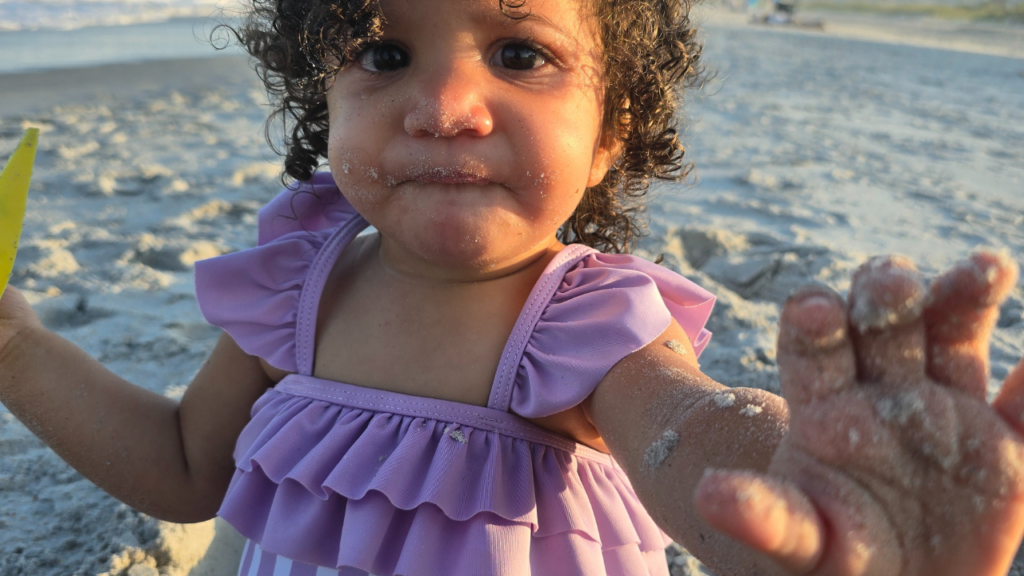
One of the reasons I recommend beach scavenger hunts so often is because they’re easy to adapt as your kids grow.
Instead of trying to find one activity that works for everyone, you can adjust the challenge so each person stays engaged while still sharing the same experience.
Here’s how I like to approach it:
Toddlers
Keep the hunt simple by focusing on colors, textures, and easy-to-spot objects.
For example, ask them to find:
- Something white
- Something smooth
- Something big
- Something small
At this age, the goal is exploration. They’re building sensory awareness, vocabulary, and fine motor skills as they safely touch, point to, and talk about what they discover.
Preschool And Elementary-Aged Kids
This is a great age to introduce a little more challenge.
Encourage them to look for:
- Different shell shapes
- Animal tracks
- Patterns in the sand
- Objects that match certain colors or letters
These hunts naturally strengthen observation skills, critical thinking, and problem-solving while keeping them active and curious.
Older Kids And Teens
Older kids often enjoy scavenger hunts that require more creativity and independence.
Challenge them to:
- Complete a photo scavenger hunt.
- Identify different shorebirds or marine life.
- Find unusual natural objects.
- Work together to solve team challenges.
Giving them a little more freedom keeps the activity feeling fun rather than something they’ve outgrown.
Adults
Don’t be surprised if you find yourself joining in too.
One of the things I enjoy most about beach scavenger hunts is that they encourage all of us to slow down and notice details we might otherwise miss. Before long, parents are comparing shells, spotting birds, and getting just as excited about an interesting discovery as the kids.
That’s one of the reasons these activities work so well. Everyone participates at their own level, but the experience stays shared.
Why It Works For Every Age
- Easy to adapt as your kids grow.
- Keeps everyone involved without making the activity too easy or too difficult.
- Supports age-appropriate learning through play.
- Encourages teamwork and conversation across generations.
- Creates shared memories instead of separate activities.
Make It Fun For The Whole Family
The best beach scavenger hunts are the ones where everyone participates. By adapting the activity to your family’s interests and pace, the scavenger hunt becomes less about finding items and more about spending quality time together.

How Do You Keep A Beach Scavenger Hunt Fun For The Whole Family?
Encourage everyone to join in, adapt the scavenger hunt to your family’s interests, and let conversations happen naturally as you explore the beach together.
One of the things I love most about beach scavenger hunts is that they don’t have to be just for kids.
Some of our favorite hunts have turned into slow walks along the shoreline where we’re talking, laughing, pointing out interesting discoveries, and simply enjoying being together. Before long, everyone is participating without even thinking about it.
One thing I’ve noticed is that walking side by side often makes conversations happen naturally. Kids point out things they’ve found, ask questions about the beach, and share ideas that might never come up if everyone were simply sitting in their beach chairs.
You can also change the scavenger hunt to match your family’s mood or the ages of your kids. For example, you could try:
- A photo scavenger hunt where everyone captures their favorite discoveries.
- A storytelling scavenger hunt where each item becomes part of a family story.
- A timed challenge to see what everyone can find in ten or fifteen minutes.
- A team scavenger hunt where younger and older family members work together.
The nice thing is that there isn’t a right or wrong way to play. Some days you’ll complete the entire list. Other days you’ll spend half an hour talking about one interesting shell or watching birds along the shoreline.
For me, that’s what makes these scavenger hunts so memorable. They give us a reason to slow down, explore together, and create the kinds of family moments we still talk about long after the beach trip is over.
Why The Whole Family Enjoys It
- Encourages meaningful conversations.
- Gives everyone a chance to participate.
- Creates memories instead of competition.
- Adapts easily to different ages and personalities.
- Helps turn an ordinary beach walk into quality family time.
How To Keep Beach Scavenger Hunts Safe And Eco-Friendly
The safest and most eco-friendly beach scavenger hunts encourage kids to observe, photograph, and appreciate nature instead of collecting or disturbing it.
How Can You Make A Beach Scavenger Hunt Safe And Eco-Friendly?
Encourage kids to look, point, photograph, and talk about what they find rather than collecting natural objects or disturbing wildlife.
One simple rule has made every beach scavenger hunt more enjoyable for my family:
Look, don’t take.
Instead of collecting everything we find, we prefer to:
- Point interesting things out.
- Take photos of special discoveries.
- Talk about why something caught our attention.
- Leave shells with living creatures, plants, and wildlife exactly where we found them.
One thing I appreciate about this approach is that it keeps the focus on the experience instead of the souvenirs. Kids still get excited when they discover something unique, but they also learn that not every treasure needs to come home with us.
It also makes the day a little easier. There’s nothing extra to carry, nothing to sort through later, and no disagreements over who gets to keep the “best” shell.
Perhaps most importantly, it helps teach respect for the places we’re visiting. By leaving the beach as we found it, we’re helping protect wildlife and making sure other families can enjoy those same discoveries.
Those lessons tend to stick because kids experience them firsthand rather than simply being told what to do.
Why This Approach Works
- Encourages respect for wildlife and natural habitats.
- Helps kids appreciate nature without disturbing it.
- Supports environmental awareness through real experiences.
- Keeps beach bags lighter and cleanup easier.
- Focuses on making memories instead of collecting souvenirs.
How Long Should a Beach Scavenger Hunt Last?
A beach scavenger hunt should last as long as your kids are engaged. Some hunts take five minutes, while others naturally turn into an hour of exploring.

There isn’t a perfect amount of time.
The best beach scavenger hunts follow your kids’ curiosity instead of the clock. Some days they’ll find a few interesting things and be ready to move on. Other days, one discovery leads to another, and before you know it, you’ve spent an hour exploring the shoreline together.
One thing I’ve learned is that it’s better to end the activity while everyone is still having fun than to keep going until it feels like a chore.
If your kids are still asking questions, pointing things out, and making new discoveries, let the adventure continue. If they’re ready to head back to building sandcastles or splashing in the waves, that’s okay too.
The goal isn’t to complete a scavenger hunt. It’s to make your beach day a little more engaging and create moments you’ll remember together.
Why Following Their Lead Works
- Keeps the activity fun instead of feeling like a task.
- Encourages curiosity at a natural pace.
- Makes it easy to fit into any beach day.
- Helps avoid frustration or boredom.
- Leaves room for spontaneous discoveries.
Not Sure What To Pack?
Planning beach water activities is much easier when you have the right gear with you. Whether you’re bringing toddlers, older kids, or a little of both, packing the right essentials helps everyone stay comfortable and enjoy more time in the water.
Take our free Family Beach Packing Quiz to receive a personalized packing list based on your family’s beach trip, the ages of your children, and the activities you plan to enjoy.
FAQ: Beach Scavenger Hunts for Families
What is a beach scavenger hunt?
A beach scavenger hunt is an activity where families look for specific items or features found naturally at the beach. The focus is on observation and exploration, not collecting objects to take home.
Do beach scavenger hunts require any supplies?
No. Beach scavenger hunts can be done without any supplies. Families can simply name items to look for or use their phones to take photos instead of writing things down.
Are beach scavenger hunts suitable for all ages?
Yes. Beach scavenger hunts work well for toddlers, children, teens, and adults. Each person can participate at their own level by looking for colors, shapes, patterns, or movement.
How long should a beach scavenger hunt last?
There’s no set time. Some hunts last just a few minutes, while others continue naturally as families walk along the shore. Following interest rather than the clock keeps the activity fun.
Can beach scavenger hunts be eco-friendly?
Absolutely. When families follow a look, don’t take rule, scavenger hunts become an eco-friendly way to enjoy the beach without harming nature or wildlife.
What are good scavenger hunt items for the beach?
Good items include things like something smooth, something round, something moving, something the waves touched, or something shaped like a heart. Open-ended prompts encourage creativity and observation.
How do parents keep scavenger hunts from feeling competitive?
Focus on noticing and sharing rather than winning. There’s no need for scores or prizes. The goal is connection, not competition.
Can adults enjoy beach scavenger hunts too?
Yes. Many adults find scavenger hunts help them slow down and notice details they might otherwise miss. It’s a shared experience that feels relaxed and inclusive.
Are beach scavenger hunts safe near the water?
They can be, with supervision. Staying aware of the waterline, watching waves, and choosing calm areas helps keep the activity safe, especially for younger children.
Why are beach scavenger hunts good for family bonding?
Scavenger hunts create shared goals, encourage conversation, and allow everyone to participate together. They turn the beach into a collaborative experience instead of separate activities.
Turn Every Beach Day Into An Adventure
One of the things I love most about beach scavenger hunts is that they remind us the best family activities don’t have to be expensive or complicated.
With a little curiosity and a willingness to explore, an ordinary walk along the shoreline can become an adventure filled with discoveries, laughter, and conversations you’ll remember long after the beach trip is over.
Whether your kids are searching for colorful shells, spotting shorebirds, taking photos, or working together to complete a family challenge, every scavenger hunt is an opportunity to slow down, connect, and experience the beach in a new way.
The next time you’re heading to the beach, leave a little room in your day for a scavenger hunt. You might be surprised by how much fun your family has simply noticing the amazing things that were there all along.
I hope these beach scavenger hunt ideas help your family create wonderful memories together and make your next beach day even more enjoyable.
Happy beach adventures!
Marlinda
Related Guides
If you’re looking for even more ways to make your next family beach trip unforgettable, these guides can help:
- 10 Fun Family Beach Games To Try This Summer
Keep everyone laughing with active games that are perfect for kids, parents, and family beach vacations. - Beach Activities For Families This Summer
Discover even more simple ways to enjoy quality time together at the beach. - Best Beach Games For Toddlers
Looking for activities designed with younger children in mind? These games are easy, engaging, and toddler-approved. - Simple Beach Activities Without Supplies
Enjoy the beach using nothing more than your imagination and what’s already around you. - How To Plan The Perfect Family Beach Day This Summer
Learn how to organize a beach day that feels relaxed, memorable, and fun for everyone. - Best Beach Gear For Families In 2026
Find the gear that helps make family beach trips more comfortable and enjoyable.