


Families who want to know how to find affordable beachfront rentals usually get the same advice: book early and compare a few sites. That helps, but it skips the questions that decide whether a family trip works. Can the stroller get from the car to the door? Is there a kitchen for a 6 p.m. toddler dinner? Does the one bedroom with a door actually close for naps?
A cheap rental that fails those tests costs more in the end, through restaurant meals, taxis, and a tired family that spends the afternoon in a parking lot. A pricier rental that passes them can cost less overall. This guide covers where a family can save, where cutting corners backfires with little kids, and how to compare listings with one repeatable check.
Decide what “beachfront” really needs to mean for your family
Start by listing what you want the beach to do for you. For a family with a baby or toddler, the main benefit of beachfront is usually logistics: a short, flat walk to the sand, easy trips back for naps, snacks, diaper changes and sunscreen reapplication. A view of the water is nice, but it is rarely the thing that makes the day easier.
Tweens and teens want something different. They tend to care about independence, wifi, and whether there is somewhere to go other than the sand. A rental two or three blocks from the water, near a boardwalk or shops, may suit them better than a quiet oceanfront unit.
Write down your family’s real requirements before you open a search page. A useful list has two columns:
- Must have: a walk to the beach that works with your stroller or your slowest walker, a kitchen, enough sleeping space with a door you can close, and safe access to any pool or water.
- Nice to have: a direct ocean view, a balcony, a private beach path, a hot tub.
Everything in the second column is where you can trade money back. Everything in the first is where cutting corners costs you. The rest of this guide uses that split.
Also decide what you will accept for the word itself. Listings use “beachfront,” “oceanfront,” “beach view,” “steps to the beach” and “beach access” loosely. Some mean the building sits on the sand. Others mean you can see a strip of water from the balcony, or that a public access path is somewhere nearby. Treat the word as a claim to verify, not a measurement.
When to go: shoulder-season and midweek dates that lower the nightly rate
Dates are usually the largest lever you have on price. In most beach towns, nightly rates are highest during peak summer weeks and school holidays, and lower in the weeks on either side. If your children are not yet in school, you have more flexibility than most families, and it is worth using.
Families with school-age kids have less room, but there are still options:
- Shoulder weeks. The weeks just before and after peak season often cost less. Check the local school calendars as well as your own, because a town’s busy weeks depend on where its visitors come from.
- Midweek stays. Many rentals price weekends higher, and some require Saturday-to-Saturday bookings in peak season. Where a host allows shorter or offset stays, a Sunday-to-Thursday trip can lower the total.
- Long weekends versus full weeks. A shorter stay at a better location can cost less overall than a full week somewhere that meets fewer of your must-haves.
Be realistic about weather in the shoulder season. Water can be cold, some beach restaurants and attractions close or cut their hours, and a lifeguard may not be on duty. Lifeguard hours matter a lot with small children, so look up the local schedule before you commit to dates. Our guide to beach safety for families covers what to check once you arrive.
Nap schedules affect dates too. If you can only travel in a short window, choose a rental that works around the nap, with blackout curtains or a room that can be darkened, instead of paying a premium just to land on a specific week.
Where to look: vacation rental sites, local property managers and booking direct
No single place has the lowest price every time, so use three kinds of sources and compare the same dates across them.
Large vacation rental platforms. These give you the widest selection and the most reviews. Use the filters seriously: bedrooms, kitchen, washer, crib, and whether the whole place is yours. Save listings to a shortlist as you go so you can compare them side by side later.
Local property managers. Most beach towns have one or more companies that manage dozens of rentals. Their sites often list properties that are not on the big platforms, and their staff know which buildings have elevators, which streets are steep, and which units are quiet. A phone call to one of these offices can get you more useful answers than an hour of scrolling.
Booking direct. If a listing has a website of its own or a phone number, you can sometimes book without the platform’s service fee. This is not guaranteed to be cheaper, and booking outside a platform means you lose its payment protections and dispute process. Read the rental agreement carefully, check the cancellation terms, and pay by a method that gives you recourse if something goes wrong.
Whichever route you use, compare the total price for the same dates, not the nightly rate. A low nightly rate with large added fees can end up above a higher rate with none.
Pick the neighborhood: the case for oceanview or a few blocks back
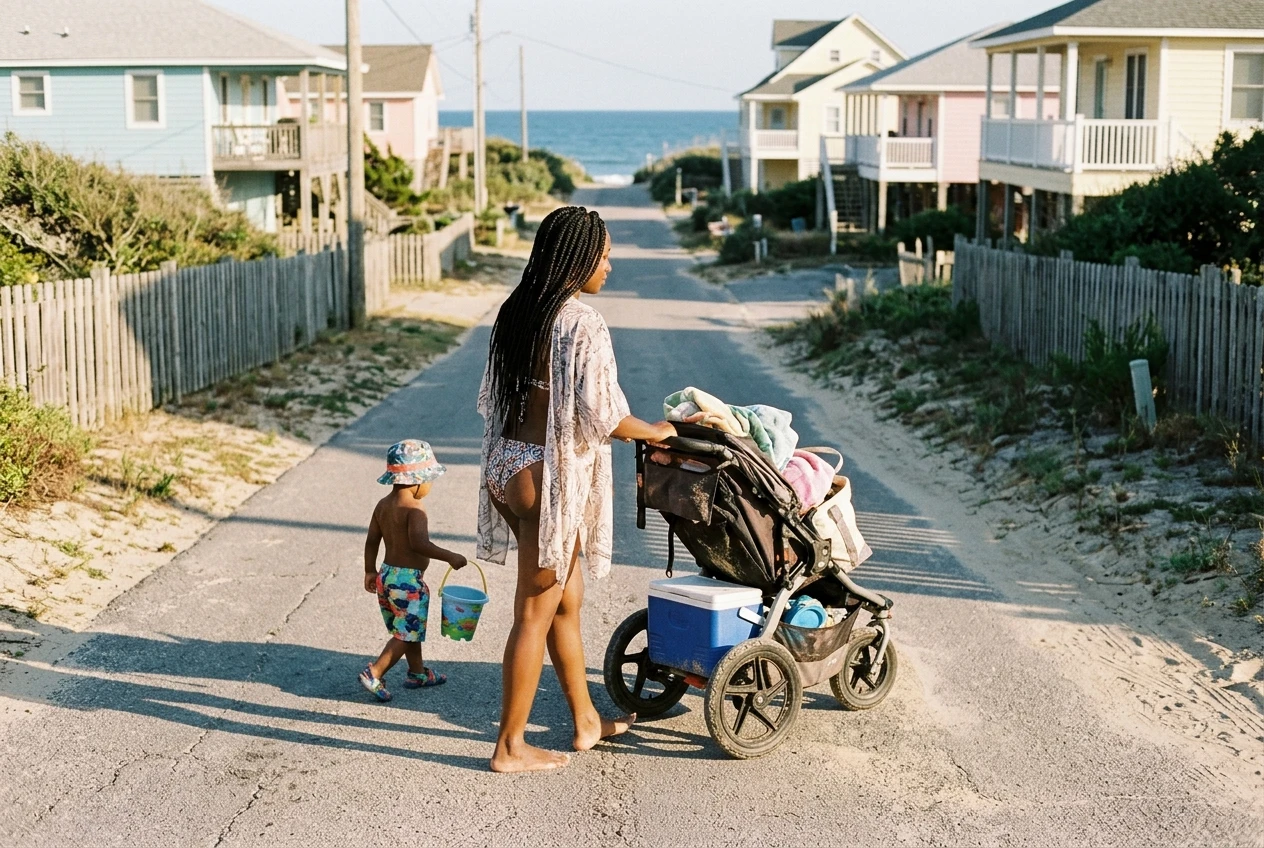
For many families, the best savings come from moving one or two rows back from the water. Properties directly on the sand carry a premium for location. A few blocks back, you often get more space or a better kitchen for the same money.
The question is whether the walk works for your family. A short walk is easy with a school-age child and hard with a toddler who will not hold your hand, a baby in a carrier, and a wagon full of gear. Before you decide, look at these things on a map:
- The route. Is there a crosswalk, a busy road to cross, or a hill? Street view shows sidewalks and the gradient better than the listing photos do.
- The distance in minutes. Estimate it at toddler pace, which is slower than adult pace, with the gear.
- The return trip. Walking back uphill with a sleeping child, wet towels and a cooler is the hard direction.
Oceanview is a middle option. A unit that sees the water from a balcony can cost less than one on the sand, and it lets a parent watch the beach while a child naps indoors. Check which floor the unit is on and what blocks the view, since listing photos are often taken from the best angle.
A few blocks back works well when the family is mostly active and the kids are old enough to walk and carry something. Directly on the sand is worth the extra cost when you have a baby, a toddler, or anyone who needs frequent breaks, because the convenience gets used on every single day of the trip.
Read the listing like a parent: stairs, kitchen, laundry, cribs and pool access
Listing descriptions are written to sell the view. Parents need to read for different details. Go through each shortlisted listing with this checklist.
Stairs and access
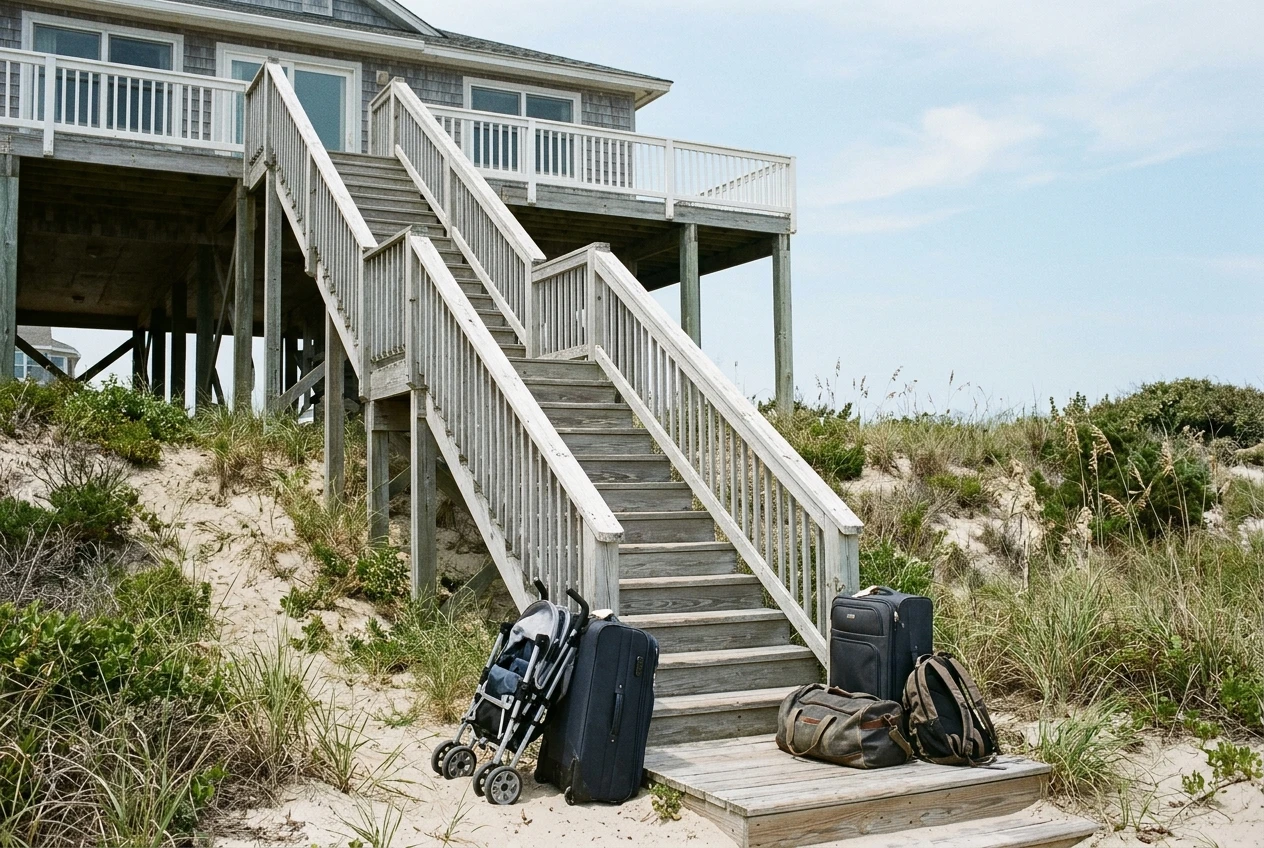
Count the steps from the parking space to the front door and from the front door to the bedrooms. Many beach rentals are raised on pilings, which means a long outdoor staircase, and some have several interior floors. A staircase is manageable with one child; it is hard with a stroller, a baby, luggage and groceries. Look for an elevator, a ground-floor unit, or a ramp, and ask if the listing does not say. Check for open railings or gaps on balconies and stairs that a toddler could slip through.
The kitchen
A real kitchen is one of the easiest ways for a family to save, because it lets you eat breakfast and lunch at the rental and avoid restaurant bills for the whole group. Look for a full-size refrigerator, a stove or at least a microwave, a coffee maker, and enough pots, plates and cutlery for your group. Photos often show it. If they do not, ask. A kitchenette with a mini fridge is workable for a weekend and frustrating for a week.
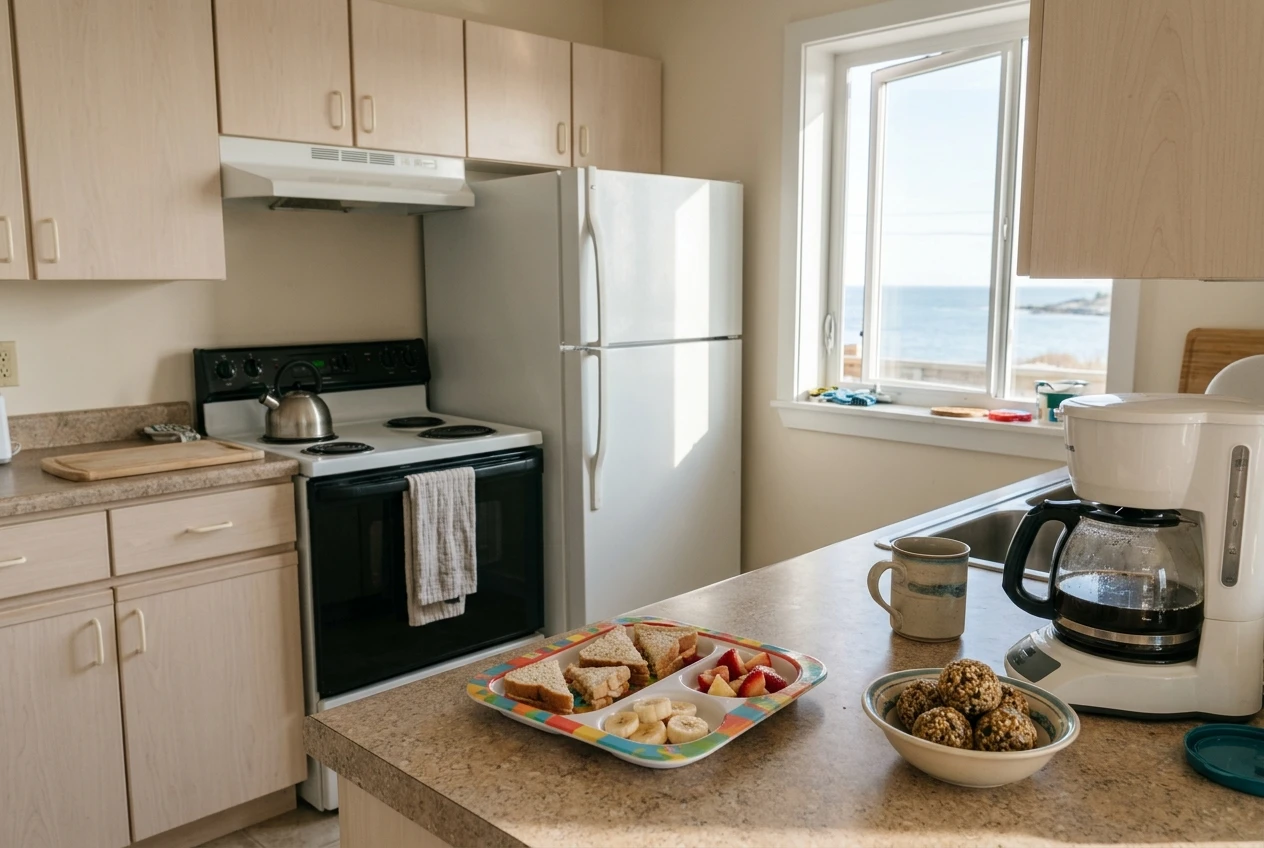
Easy snacks help keep a beach day running. Our no-bake beach energy bites can be made in your rental kitchen with a few pantry items.
Laundry
Sandy, sunscreen-stained and wet clothes pile up quickly, and babies go through outfits. A washer and dryer inside the unit means you can pack less, which can also save on checked-bag fees. Shared laundry rooms in the building are an acceptable second choice, and none at all is a cost to plan for.
Sleeping arrangements
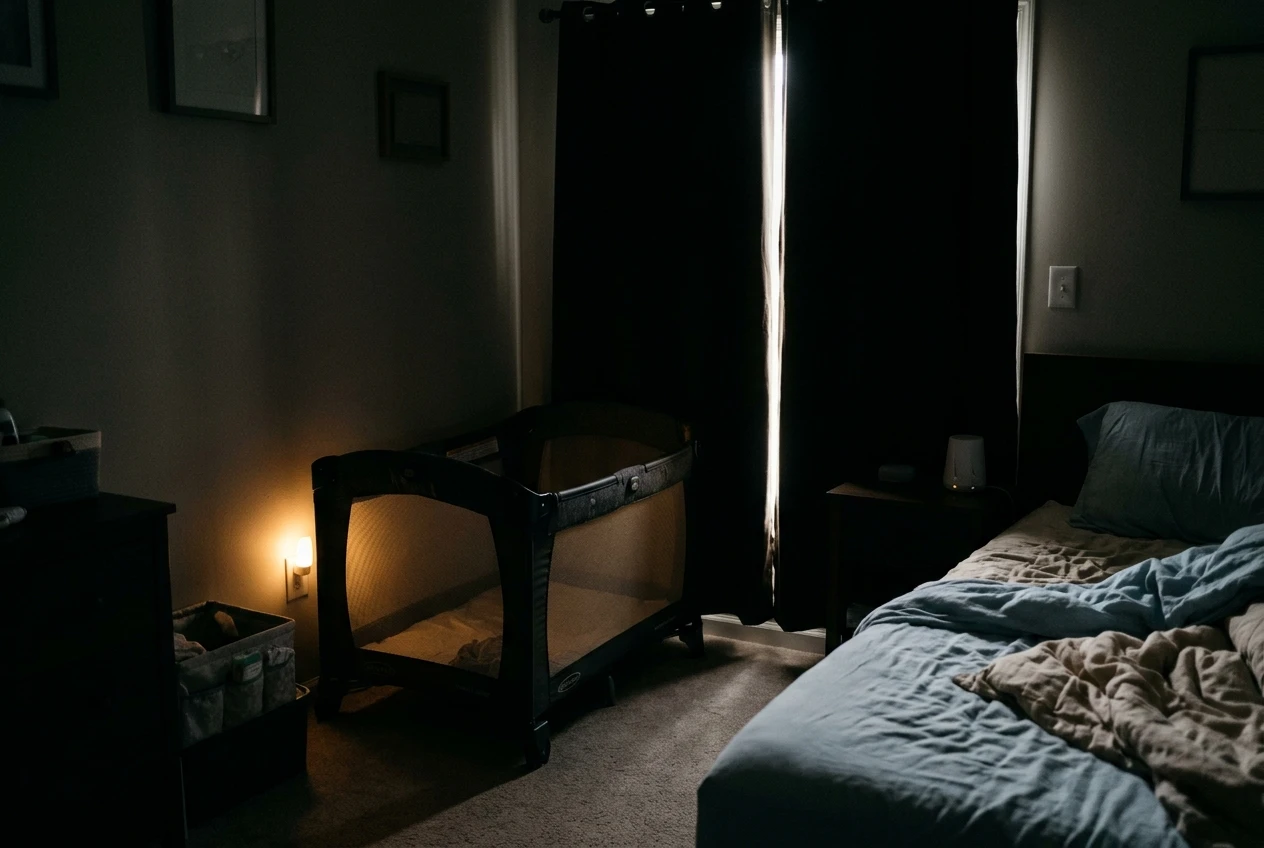
Count beds and bedrooms, but also look at how the rooms connect. A baby who naps at 1 p.m. needs a room away from the living area where everyone else is awake. Ask whether the rental provides a crib or travel crib, a high chair, and a gate for stairs, and whether those are free or charged. Bringing your own is a choice, not a requirement, but you need to know which it will be before you pack.
Pool and water access
If the property has a pool, check whether it is fenced, gated and self-latching, and whether it is shared or private. A pool is a big draw, but with toddlers it adds a hazard that needs constant supervision. If you do not want one, say so in your filters and your questions.
Spot the extra fees before you hit book: cleaning, resort and pet charges
The nightly rate is not what you pay. Most rentals add costs on top, and the amounts vary by platform and property. Look for these before you commit:
- Cleaning fee. A one-time charge per stay. It makes short stays proportionally more expensive and long stays proportionally cheaper.
- Resort, amenity or facility fee. Common at condo complexes and managed communities. Find out what it covers, such as pool access or parking.
- Service fee. Added by booking platforms.
- Taxes. Lodging taxes differ by location and may not show until checkout.
- Pet fees. If you are traveling with a dog, ask whether there is a one-time or nightly charge, and whether there are restrictions on the beach itself.
- Extras. Parking, beach chair or equipment rentals, linens, crib or high chair rentals, and late checkout.
- Security deposit. Not a cost if nothing is damaged, but it ties up money on your card, and with kids, accidents happen.
Open the full price breakdown on every listing before you compare it. Many sites show a total once you enter dates and guest numbers. Make sure the guest count includes your children, since some places charge extra per guest above a base number, and infants are treated differently from one property to the next. Do not assume.
Also read the cancellation policy. Young children get sick, and plans change. A flexible or partially refundable rate may be worth a higher price if it protects the whole payment.
Ask the host these questions to negotiate a better rate
Many hosts and property managers have some flexibility, especially outside peak weeks and especially for stays that fill a gap in their calendar. A polite message costs nothing. Keep it short, specific and friendly.
Questions that can lower your cost or improve the value:
- “Do you have a discount for a weekly or longer stay?” Some hosts have one built in. Others will make one on request.
- “I see the nights before and after my dates are open. Is there a better rate if I extend?” A booking that fills the calendar gap can be attractive to the host.
- “Is the cleaning fee flexible for a stay of this length?”
- “Are a crib, high chair and beach gear included, or do they cost extra?” If they are free, that saves you from renting or packing them.
- “Are there any off-peak or last-minute rates?” Properties with open dates close to arrival sometimes drop their price.
- “Can you tell me how many steps there are from the parking to the unit, and whether the pool is fenced?” These are not negotiation questions, but the answers affect whether the rental fits you.
Booking direct with a property manager gives you the most room to negotiate. On large platforms, hosts can sometimes offer a custom price through a message or special offer. Ask once, accept a no politely, and do not push for more than a host can give.
Build a budget check you can run on every listing you save
A repeatable check lets you compare unlike listings fairly. Use the same few steps for each one and write the answers in a note or spreadsheet.
Step 1: Total cost per night. Take the full checkout price, including rent, cleaning, service fees, resort fees and taxes. Divide it by the number of nights. Compare this number across listings, not the advertised rate.
Step 2: Food savings. Does the kitchen let you cook most breakfasts and some dinners? If so, the rental saves money beyond its price, and a place without a kitchen needs a higher food budget.
Step 3: Gear and transport costs. Add anything you will have to pay for that another listing includes: parking, crib rental, beach chairs, an extra car trip to reach the sand.
Step 4: Must-have score. Go through your must-have list and mark each item yes, no or unknown. Any “no” on a must-have is a reason to remove the listing, whatever the price. Any “unknown” is a question to send the host.
Step 5: Walk test. Estimate the toddler-pace walk to the beach and decide whether you would do it with the gear every day.
Step 6: Cancellation terms. Note the deadline and any penalty.
A listing that costs a little more per night but includes a kitchen, laundry, a crib and an easy walk often beats a cheaper one that needs extra spending or leaves you stressed. Rank your saved listings by total cost after the adjustments in steps 2 and 3, and then check which ones pass your must-haves.
Keep planning your family beach trip
Once you have narrowed your rental, two other pages on this site help with the rest of the trip. Read the Top Tips for Traveling With Kids to the Beach article for packing and day-to-day planning, and the 10 Essential Beach Safety Tips for Families article before you go.
A family beach trip planner that builds travel plans around your own family’s needs is on the way. Sign up to be told when it launches.