


There is something timeless about building a sandcastle. No screens. No rules. Just sand, water, imagination, and a whole lot of laughter. As a beach-loving family, sandcastle building has become one of our favorite beach activities. Not because we’re experts, but because sandcastles slow everyone down.
I’ve learned that the ultimate sandcastle is not about perfection or competition. It’s about working together, letting kids explore, and embracing the mess. Over the years, with kids of different ages and stages, I’ve picked up simple techniques that actually work for families. Nothing fancy. Nothing stressful. Just methods that turn frustration into fun.
This guide will walk you through how to build a sandcastle that stands, keeps kids engaged, and creates memories you’ll talk about long after the sand has washed away.
Build A Sandcastle In 5 Simple Steps
If you’re in a rush, this simple guide will show you the easy instructions on How To Contruct A Sandcastle.
Easy Description Of How To Construct A Sandcastle
Quick Start Guide
- Find Damp Sand
Work close to the shoreline where the sand is moist but not soaked. - Pack The Sand Firmly
Fill a bucket with damp sand and press it down tightly. Flip it over and lift the bucket straight up. - Build A Strong Base First
Create wide, compacted mounds before adding height. A solid base prevents collapse. - Stack And Shape
Add more packed sand on top and gently carve towers, walls, or steps using your hands or simple tools. - Add Details Last
Use shells, sticks, or small scoops to carve doors, windows, and decorations.
Tip: If the sand crumbles, add a little water and pack it tighter.
Why Sandcastles Are the Perfect Family Beach Activity
Sandcastle building checks every box for a great family beach activity. It’s free, creative, and inclusive. Babies can watch and touch the sand. Toddlers can dig and dump it. Older kids can design and decorate. Parents get to sit, participate, and actually enjoy the moment.
Unlike activities that require constant supervision or equipment, sandcastles encourage teamwork and imagination. Everyone has a role, and no one has to be “good” at it for it to be fun.
Some of our best beach memories came from castles that collapsed halfway through and turned into laughter instead of disappointment.
What Skill Relates To Building A Sand Castle?
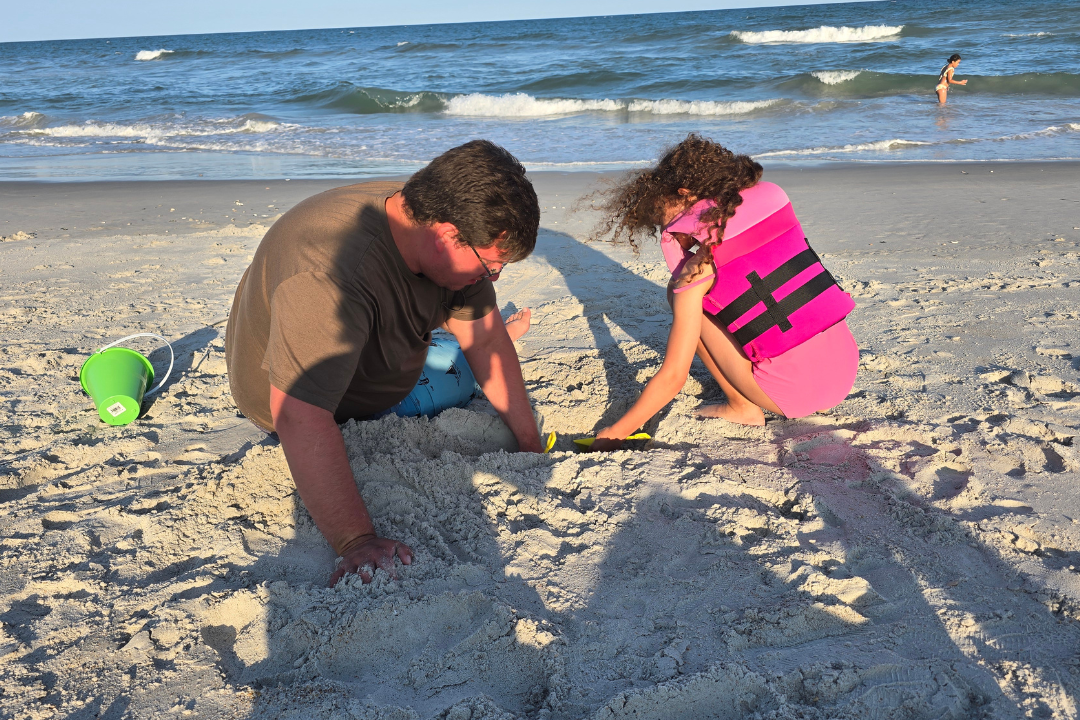
Although building a sandcastle is for fun, it also develops and uses several key skills so its also a great way to build some skills. Building a sandcastle improves skills like:
- Fine Motor Skills
Shaping towers, packing sand, and carving details strengthen hand coordination and finger control. - Problem Solving
You must test sand moisture, adjust structure size, and reinforce weak spots to keep it from collapsing. - Spatial Awareness
Understanding height, balance, and base support helps create stable designs. - Planning And Design Thinking
Successful sandcastles require a basic plan. Builders think about layout, symmetry, and structure before adding details. - Patience And Focus
Sandcastle building requires time and repetition, especially when structures fail and need rebuilding. - Creativity
Designing walls, moats, towers, and decorations encourages imaginative thinking.
In short, sandcastle building combines coordination, engineering basics, creativity, and persistence in one hands-on activity.
The Secret Starts With the Right Sand
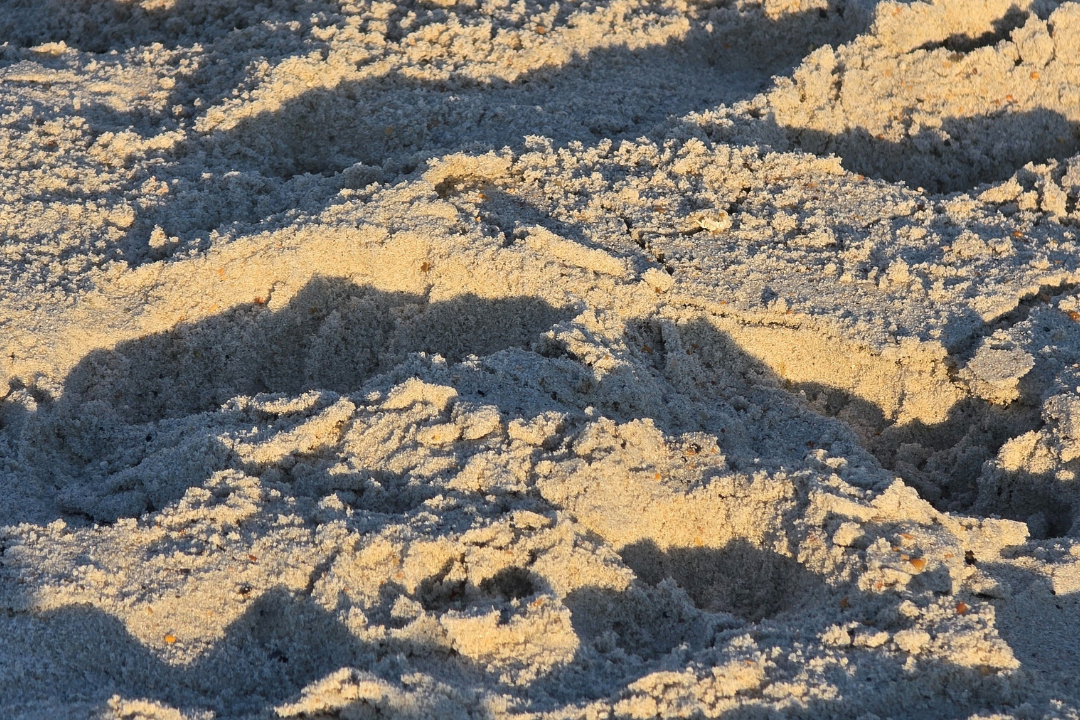
This is the most important step, and the one people overlook the most.
Not all sand is good sandcastle sand.
The best sand is:
- Wet but not dripping
- Found closer to the waterline
- Firm enough to pack, but not muddy
Dry sand will crumble no matter how hard you try. Sand that’s too wet will slump and melt. When kids get frustrated, it’s almost always because they’re working with the wrong sand.
I always tell kids, “Let’s go find the good sand first.” That small step sets everyone up for success.
Choose the Right Spot Before You Start
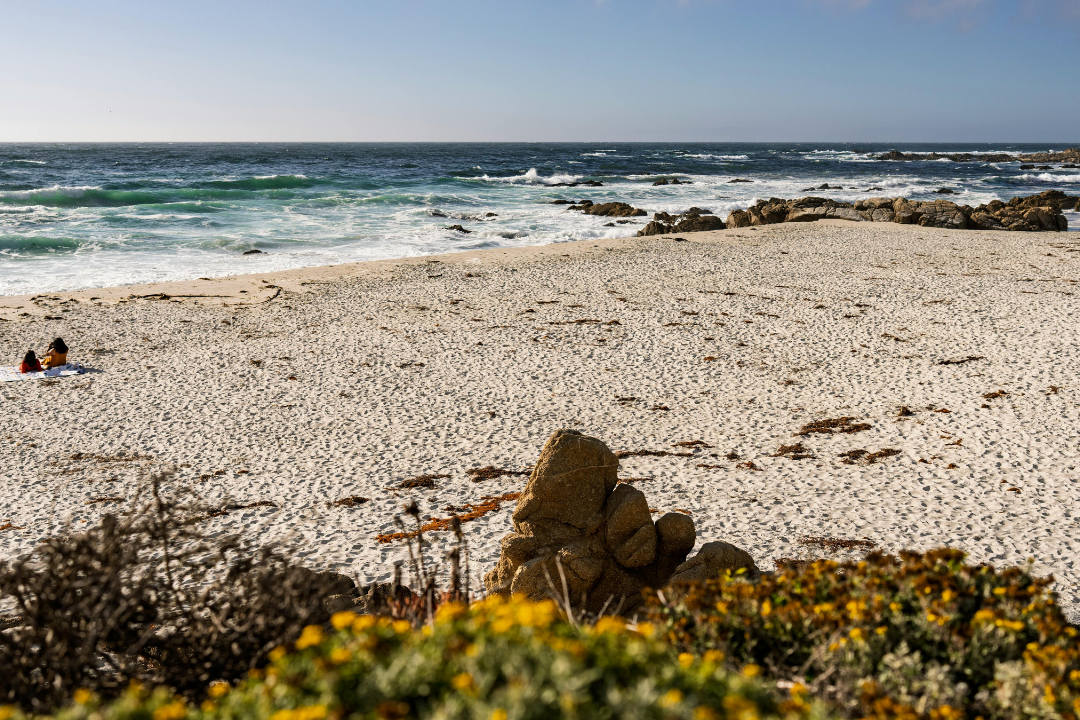
Location matters more than you think.
You want:
- Enough distance from the waves
- Close enough to refill water easily
- A flat area where kids can move around safely
I’ve learned this the hard way. Build too close to the water, and waves undo all your hard work. Build too far away, and kids lose energy running back and forth with water.
Finding that sweet spot helps castles last longer and keeps kids engaged instead of discouraged.
Packing the Sand Is the Real Skill
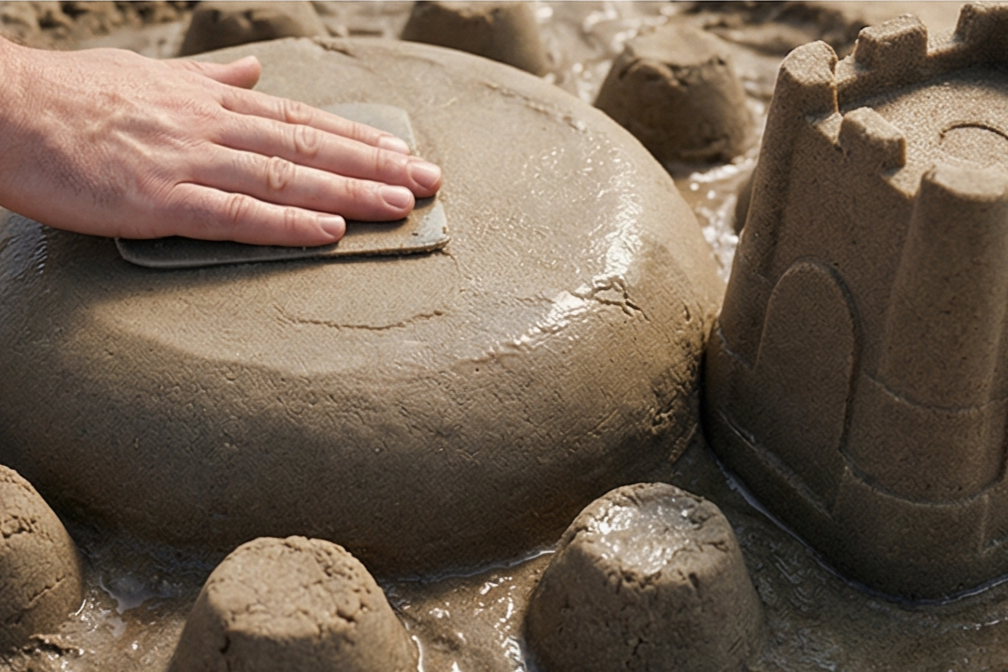
Here’s the truth: great sandcastles aren’t sculpted, they’re packed.
Loose sand won’t hold. Packed sand becomes strong.
The technique is simple:
- Scoop sand into a bucket
- Press it down firmly
- Add small amounts of water if needed
- Pack again
I show kids how to press sand like they’re making a snowball. Once they get it, everything changes. Towers stand taller. Walls stay solid. Confidence goes up fast.
What Are Some Of The Most Optimal Tools For Building A Sandcastle?
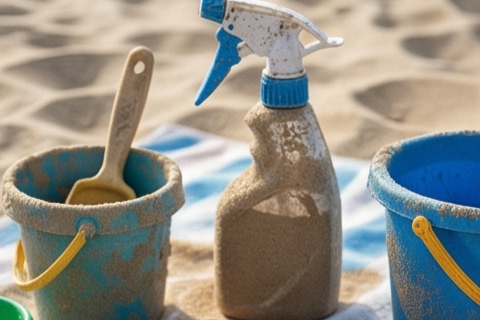
If you are wondering what are some of the most optimal tools for building a sandcastle, the good news is you do not need an expensive kit. A few well-chosen tools will help you build strong structures and detailed designs without frustration.
Below are the tools that make the biggest difference.
Buckets For Strong Towers And Structure
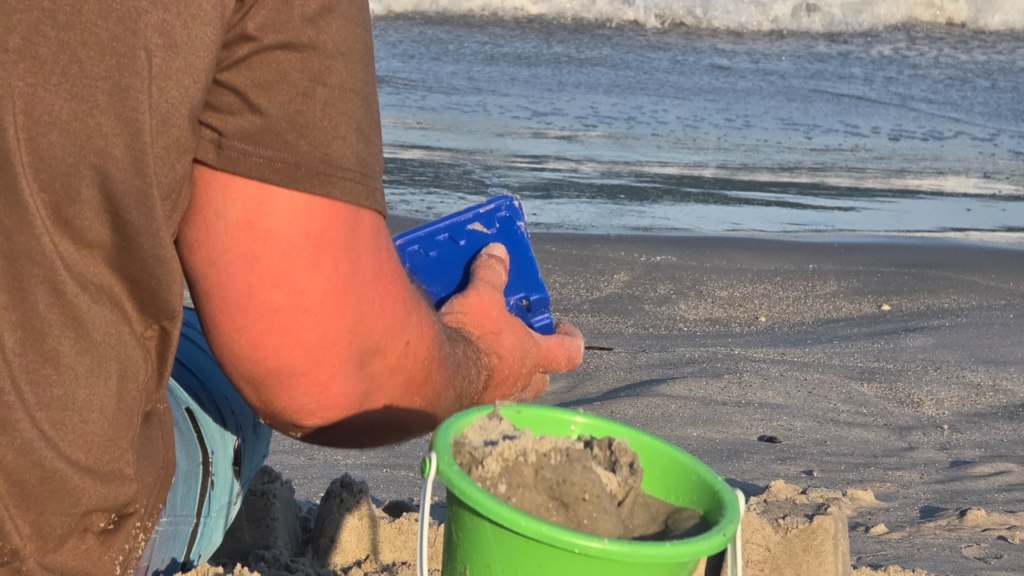
Buckets are the foundation of almost every successful sandcastle.
They allow you to:
- Pack damp sand tightly
- Create stable towers
- Stack layers for height
Using different bucket sizes adds dimension quickly. A sturdy, thick plastic bucket works better than thin ones that flex and distort the shape.
Click the button below to see some of our recommendations.
Shovels For Digging And Foundation
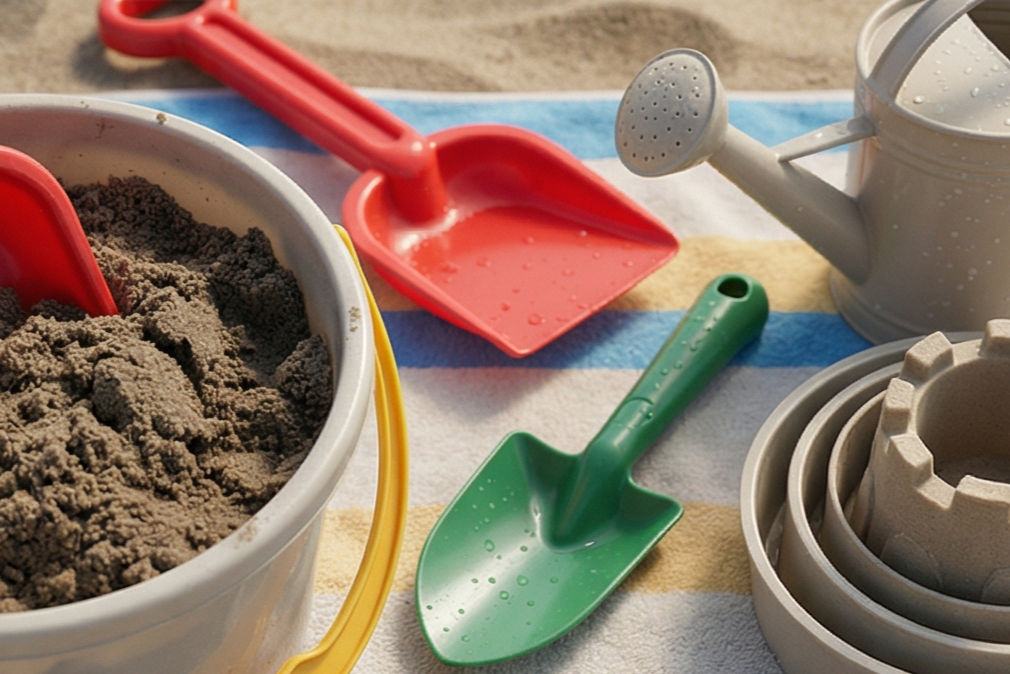
A good shovel helps you gather damp sand and build a wide, compact base. The base is what keeps the castle from collapsing.
Medium-sized shovels are ideal because they:
- Move sand efficiently
- Allow better packing
- Work for both kids and adults
Carving Tools For Details
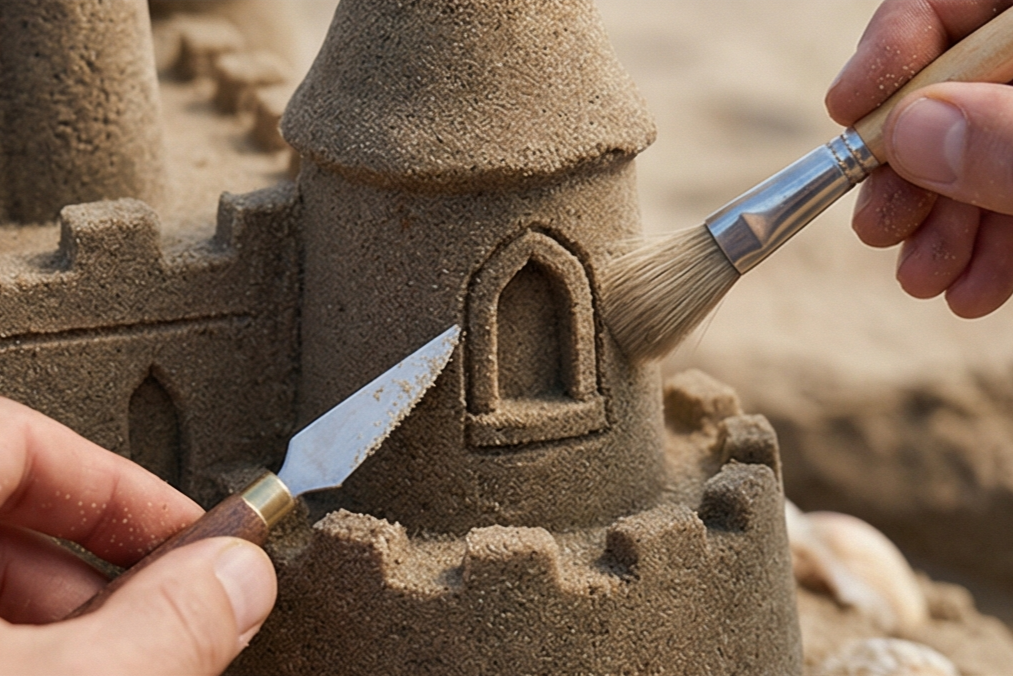
For doors, windows, steps, and textures, smaller tools work best.
Simple options include:
- Old kitchen spoons
- Sand scoops
- Butter knives with rounded edges
- Small spatulas
These tools allow controlled carving without damaging the structure. But if you’re looking for more technical tools, click the button below.
Natural Tools For Texture And Decoration
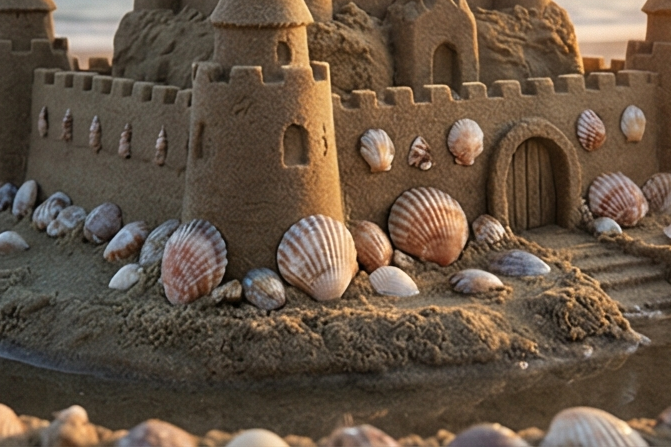
Sometimes the most optimal tools are already on the beach.
For eample, shells, sticks, and small cups can:
- Add texture
- Press patterns into walls
- Outline moats and pathways
These tools cost nothing and encourage creativity.
When To Consider A Sandcastle Kit
If your family builds sandcastles frequently, a compact sandcastle kit with sculpting tools and stacking molds can be worth it. Look for sets that focus on structure and carving tools rather than novelty shapes.
Avoid oversized kits with too many specialty molds that rarely get used.
Water Is the Glue That Holds It All Together
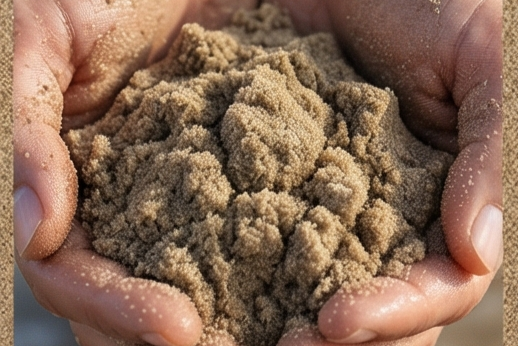
Sand and water work together. Water is what binds the sand.
We always keep:
- One bucket just for water
- A designated “water helper” (kids love this role)
The trick is using small amounts of water often, not flooding the sand. Too much water weakens the structure. Just enough makes it strong.
Teaching kids to add water slowly helps them learn patience and problem-solving without even realizing it.
Build Wide Before You Build Tall
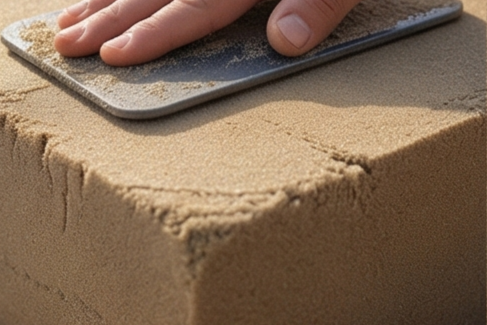
Tall castles look impressive, but they fall fast without support.
A wide base keeps everything standing.
I encourage kids to:
- Start with big base towers
- Connect them with packed sand walls
- Build outward before upward
Once the base is solid, you can add height. This simple order prevents a lot of frustration and keeps castles standing longer.
Let Kids Lead the Design
This part matters more than technique.
Resist the urge to take over.
I’ve learned that kids enjoy sandcastle building most when they feel ownership. Some days the castle is a mountain. Some days it’s a village. Some days it’s a “sand pancake” with shells on top.
When kids lead, they stay engaged longer and feel proud of what they’ve created, even if it looks nothing like the original plan.
All of it counts.
Expect Collapses and Laugh Through Them
Sandcastles fall. That’s not failure. That’s part of the experience.
- Walls collapse.
- Towers crack.
- Waves sneak in with the tide
Instead of fixing everything immediately, we pause, laugh, and rebuild together. Kids learn resilience without a lecture. They learn that it’s okay when things don’t last.
Some of the best moments come right after a collapse.
Turn It Into a Team Effort
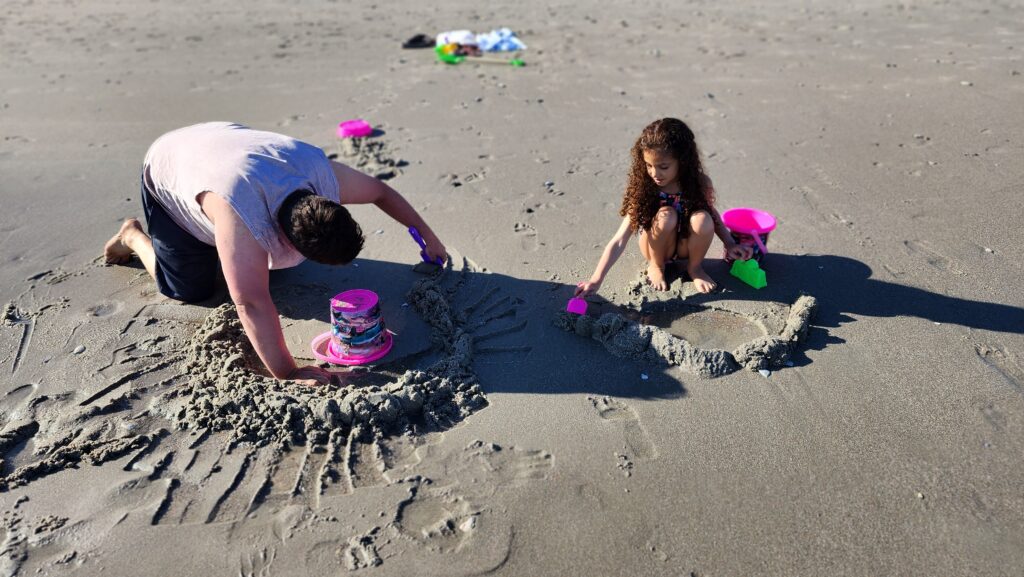
Despite us starting off building our own separate sandcastles, we always find ourselves working together in the end.
We usually assign roles:
- One person packs sand
- One person brings water
- One person decorates
- One person supervises (that’s often me, sitting comfortably)
Babies watch and touch sand. Toddlers dig holes. Older kids design. Everyone contributes at their level.
This makes sandcastle building feel inclusive instead of competitive.
Take Photos Before the Tide Does
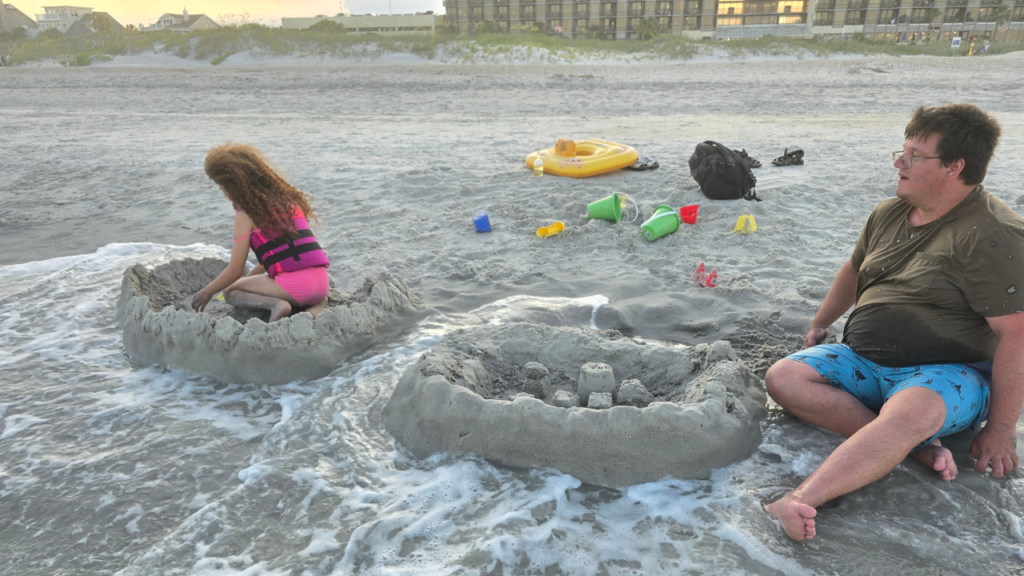
Sandcastles are temporary, and that’s okay.
Before you leave, take photos. Not for perfection, but for memory. Sandy hands. Concentrated faces. Proud smiles.
These photos end up meaning more than polished vacation shots. They capture effort, creativity, and togetherness.
Why Sandcastles Matter More Than You Realize
Sandcastle building teaches kids more than we give it credit for. It builds:
- Patience
- Problem-solving
- Creativity
- Teamwork
- Emotional resilience
And it gives families something even more valuable: shared time without distraction.
In a world that moves fast, sandcastles ask us to slow down.
FAQ: Building Sandcastles With Kids
What kind of sand works best for building sandcastles?
Wet sand works best, especially sand found closer to the waterline. It packs together easily and holds its shape better than dry sand. If the sand won’t stick, it usually means it’s too dry or too wet.
How do you make sandcastles stay standing longer?
The key is packing the sand tightly and building a wide base before adding height. Using buckets to pack sand firmly and adding small amounts of water helps create stronger structures that last longer.
Do we need special tools to build a good sandcastle?
No. Simple tools work best, and many families already have them. Buckets, small shovels, spoons, sticks, and shells are more than enough to build creative and sturdy sandcastles.
Where should we build our sandcastle on the beach?
Choose a spot above the wave line but close enough to the water for easy refills. This prevents waves from washing away your work and reduces the effort of carrying water back and forth.
How much water should we use when building sandcastles?
Water should be used in small amounts. Too little water makes sand crumble, and too much makes it slump. Adding a little water at a time while packing sand helps create strong walls and towers.
Why do sandcastles collapse so easily?
Sandcastles often collapse because the sand wasn’t packed tightly, the base was too narrow, or the sand was too dry. Collapses are normal and part of the fun. Rebuilding together is part of the experience.
How can younger kids help with sandcastle building?
Younger kids can scoop sand, carry water, decorate with shells, or dig around the castle. Every role matters, and letting kids participate at their level keeps them engaged and proud of the final result.
How do you keep sandcastle building fun and stress-free?
Let kids lead, keep expectations relaxed, and focus on the process instead of the outcome. Sandcastles don’t need to be perfect to be meaningful. Laugh through collapses and celebrate creativity.
How long does it take to build a sandcastle with kids?
There’s no set time. Some castles take minutes, others evolve over an hour or more. Follow your kids’ energy levels and let the activity flow naturally instead of rushing it.
What should we do with the sandcastle when it’s time to leave?
Take photos and say goodbye. Sandcastles are temporary, and that’s part of the lesson. The memory lasts longer than the structure, and kids often enjoy watching the tide return it to the beach.
Why Is Building Sandcastles Suitable For An 18 Month Old?
Building sandcastles supports sensory development, fine motor skills, and early problem solving. Toddlers strengthen hand coordination by scooping, patting, and filling buckets. It also teaches simple cause and effect when sand falls or holds its shape. The activity can be adjusted to their level, making it safe and developmentally appropriate.
Does A Newborn Human Already Know How To Build A Sandcastle?
No, a newborn does not have the motor skills, coordination, or cognitive development needed to build a sandcastle. Newborns are still developing basic movement control and sensory awareness. Sand play becomes appropriate later, typically once a baby can sit independently and safely interact with their environment.
The Ultimate Sandcastle Is Built Together
The ultimate sandcastle isn’t the tallest or most detailed one on the beach. It’s the one built with laughter, teamwork, and sandy hands.
With the right sand, simple tools, and a relaxed mindset, any family can build something special. The structure may not last, but the memory will.
So grab a bucket, find the good sand, and start building. The beach has a way of reminding us that the best things are often simple, temporary, and shared.
Looking for more family-friendly beach activities and ideas?
Visit the Fun Shores Ahead hub to explore creative beach play, gear tips, and easy ways to make the most of your time by the water.
This is very cool. I never thought I’d ever be reading a how to article about building sandcastles. It was a fun read. The closest I ever got to building a sand castle is creating lakes with islands in the middle of them. My enginuity is quite limited. 🙆
Anyway, I will check out more of your website because it is most enjoyable.
MAC
Hey MAC,
Thanks for reading! I’m glad you enjoyed this article and learned something new at the same time 🙂
As long as you are having fun building something, that’s what counts!
Keep doing what you’re doing and enjoying,
Marlinda