

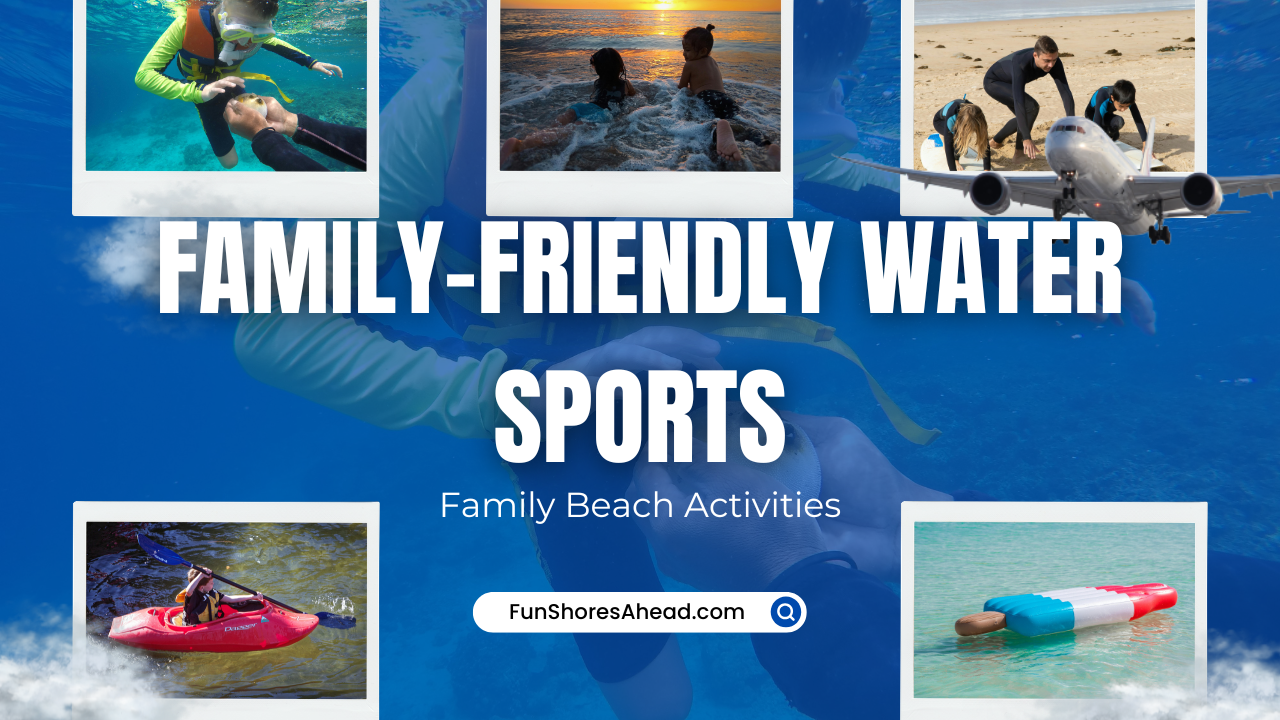

Beach water activities for kids are one of the best ways to turn an ordinary beach day into an unforgettable family adventure. Whether your kids love splashing in the waves, discovering marine life, or trying something new, the right activities keep everyone active, engaged, and making memories together.
Over the years, I’ve found that the best beach days aren’t the ones packed with complicated plans. They’re the ones where we naturally move from one simple activity to the next, laughing, exploring, and enjoying the water at our own pace. As a mom with both a toddler and an older child, I’ve learned that the best beach water activities are the ones everyone can enjoy, even if they’re participating in different ways.
One thing I love about water activities is that they build confidence without feeling intimidating. Whether it’s catching a small wave on a boogie board, floating together in calm water, or searching for tiny fish while snorkeling, every new experience becomes another opportunity to learn, play, and grow.
These beach water activities for kids are easy to adapt for different ages and experience levels, making them perfect for families looking to add a little more fun, movement, and adventure to their next beach vacation.
TL;DR: Beach Water Activities For Kids To Try This Summer
Beach water activities for kids are a fun way to keep the whole family active while making the most of your time at the beach. From boogie boarding and snorkeling to paddleboarding, water treasure hunts, and simple splash games, these activities encourage confidence in the water, physical activity, and quality family time. Whether you’re visiting with toddlers, older kids, or a mix of ages, there’s a beach water activity that can help turn an ordinary beach day into a memorable family adventure.
Summarize With AI
If you’re looking for even more beach activities for families, check out our complete guide featuring simple ideas that keep everyone engaged throughout the day.
Best Beach Water Activities For Kids
- Paddleboarding
- Kayaking
- Boogie Boarding
- Body Surfing
- Snorkeling
- Water Treasure Hunt
- Water Relay Races
- Beach Ball Games
- Floating Together
- Water Frisbee
Beach Water Activities for Kids At A Glance
| Activity | Best For | Skill Level | Best Ages |
|---|---|---|---|
| Paddleboarding | Calm water | Beginner | Older kids |
| Kayaking | Exploring | Beginner | Older kids |
| Boogie Boarding | Wave fun | Beginner | Most ages |
| Body Surfing | Playing in waves | Beginner | Older kids |
| Snorkeling | Marine life | Beginner | Older kids |
| Water Treasure Hunt | Family play | Easy | All ages |
| Water Relay Races | Active families | Easy | All ages |
| Beach Ball Games | Everyone | Easy | All ages |
| Floating Together | Relaxing | Easy | All ages |
| Water Frisbee | Coordination | Easy | Older kids |
Paddleboarding (With Kids)
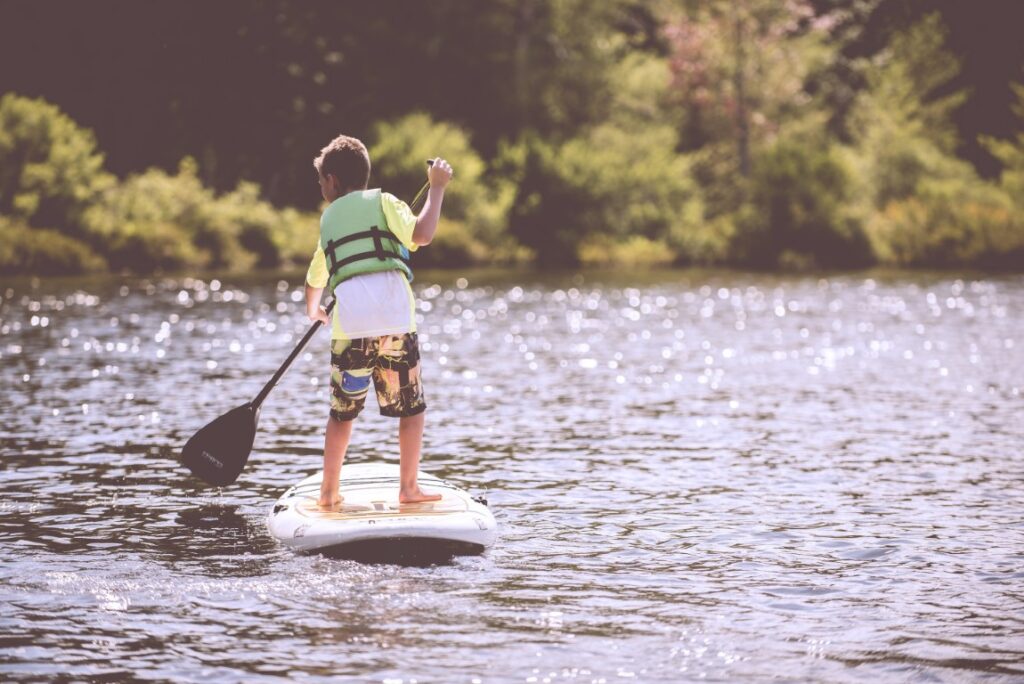
Paddleboarding with kids is a beginner-friendly activity best done in calm, shallow water using a stable board and life jackets. Younger children can sit while a parent paddles, while older kids can kneel or stand, helping them build balance and confidence at a comfortable pace.
Is Paddleboarding Good For Kids At The Beach?
Yes, paddleboarding can be a fun family activity for older kids when conditions are calm and everyone wears a properly fitted life jacket.
Paddleboarding with kids is a calm, beginner-friendly water activity that works best in flat, shallow water like bays, lagoons, or quiet beach areas. Instead of treating it as a balancing challenge, it can be approached as a shared ride, where younger kids sit or kneel on the board while a parent paddles. With a stable, wide board and properly fitted life jackets, it becomes a safe and manageable way to explore the water together.
When we tried it, I had my child sit right in front of me while I paddled slowly through calm water. The pace made a big difference because there was no pressure to stand or “get it right.” It felt more like floating and exploring than learning a skill. That relaxed start helped them enjoy the experience without hesitation.
For older kids, paddleboarding can gradually become more hands-on. They can begin by kneeling on the board in shallow water, then work up to standing as they feel more balanced. Giving them that progression keeps it fun instead of frustrating and helps build real confidence over time.
The most important factor is choosing the right conditions. Look for glassy or lightly rippled water and avoid windy days or areas with strong waves. Staying close to shore and starting in shallow water gives you more control and makes it easier to guide your child as needed.
It is also a naturally slower activity, which can be a nice change of pace during a busy beach day. Kids get to take in their surroundings, watch the water, and feel like they are part of something a little different without being overwhelmed.
Highlights
- Beginner-friendly in calm, flat water
- Works as a shared ride with younger kids
- Helps build balance and water confidence
- Can progress from sitting to kneeling to standing
- Slower pace makes it relaxing and manageable
Kayaking Along The Shore
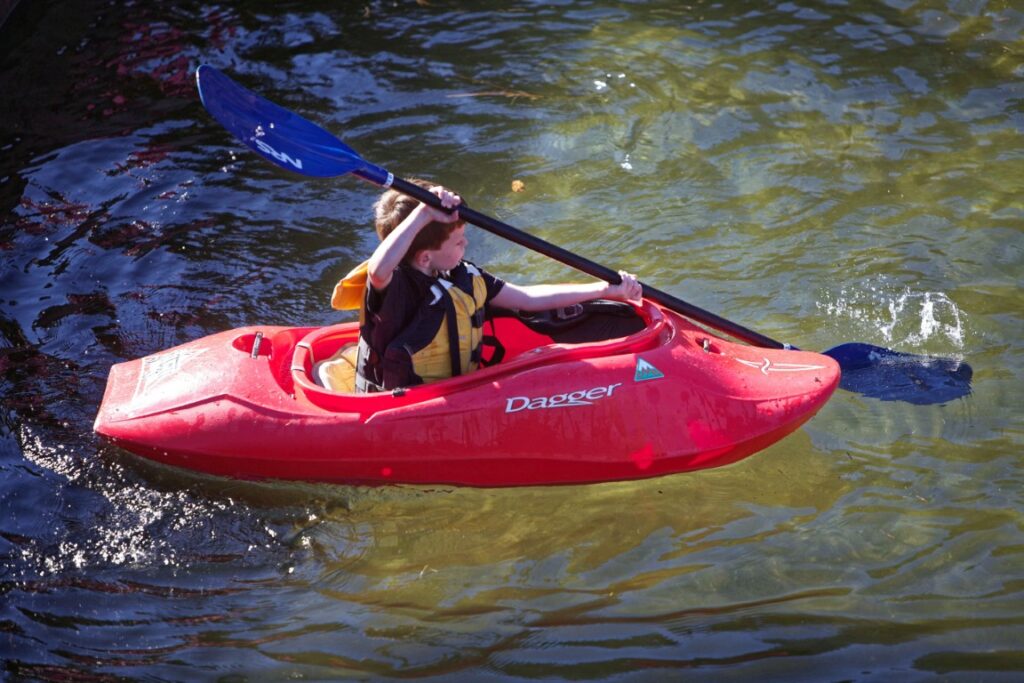
Kayaking along the shoreline is a family-friendly activity that works best in calm, nearshore water using a stable or tandem kayak and life jackets. Younger kids can ride along while older kids help paddle, allowing families to explore safely while staying close to shore.
Can Kids Go Kayaking At The Beach?
Yes. Tandem kayaks allow younger children to ride with an adult, making kayaking a safe and enjoyable way to explore calm coastal waters together.
Kayaking along the shoreline is a beginner-friendly way for families to explore the water without going far from shore. In calm conditions, tandem kayaks work especially well because younger kids can sit and enjoy the ride while older kids help paddle. With properly fitted life jackets and a stable kayak, it becomes a safe and engaging activity that still feels like a real adventure.
When we tried it, staying close to the shoreline made all the difference. There was no pressure to go far, and that kept the experience relaxed. My child enjoyed having a role, even if it was just helping paddle a little or watching the water as we moved along. It felt more like exploring together than just being in the water.
What stands out about kayaking is how it naturally keeps kids focused. Instead of drifting between activities, they have something to do and a direction to follow. That sense of purpose helps them stay engaged longer and makes the experience feel different from a typical beach day.
For the best experience, choose calm water with minimal waves and little boat traffic. Early mornings or protected areas tend to be the easiest for beginners. Staying parallel to the shore instead of heading straight out adds an extra layer of comfort while still giving you that sense of movement and exploration.
It is also an activity that adapts well to different ages. Younger kids can relax and take it all in, while older kids can take on more responsibility with paddling. That balance makes it a great option for families with mixed age groups.
Who Is This Beach Water Activity Best For?
- Families who enjoy exploring together
- Younger children riding with an adult
- Older kids looking for a relaxing adventure
- Beach vacations with calm bays or inlets
Highlights
- Beginner-friendly in calm, nearshore water
- Tandem kayaks allow shared participation
- Keeps kids engaged with a clear purpose
- Can stay parallel to shore for added safety
- Works well for families with mixed ages
Boogie Boarding
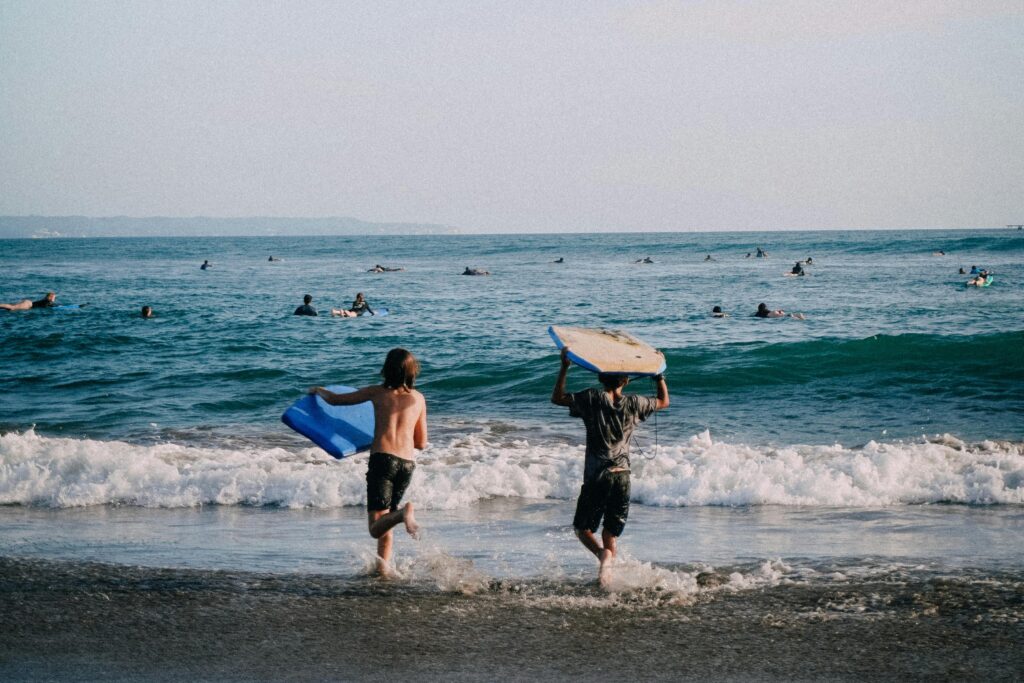
Boogie boarding is a beginner-friendly beach activity for kids that can be done in shallow, knee-deep water using small waves. It helps children safely experience the ocean, build confidence, and stay active while parents remain close for supervision and support.
Is Boogie Boarding A Good Beach Activity For Kids?
Yes. Boogie boarding is one of the easiest ways for kids to build confidence in the waves while enjoying an active day at the beach.
Boogie boarding is a beginner-friendly beach activity for kids because it requires minimal skill and can be done safely in shallow, knee-deep water. Using small, gentle waves, children can learn how the ocean moves without being overwhelmed. A soft-top board with a wrist leash keeps things simple and secure while allowing kids to stay close to shore.
When we first tried it, I stayed right beside my child and held the board steady as the waves came in. Starting with smaller, rolling waves made it feel more like play than learning. Within a few tries, they were catching waves on their own, and that confidence shift happened quickly. It turned into one of those activities they kept going back to without any encouragement.
From a parent’s perspective, this is one of the easiest water activities to manage. You can stay within arm’s reach the entire time, adjust based on wave size, and guide them as needed. It is also a great way to burn energy in a natural way, which helps the rest of the beach day feel smoother and more relaxed.
For the best experience, look for calm beach areas with smaller, consistent waves rather than strong surf. Choose a board that matches your child’s size, and always have them ride waves facing the shore. It also helps to give them space away from crowded areas so they can focus and build confidence safely.
For younger children, keeping both hands on the board while lying flat works best. Older kids may start experimenting with positioning and balance as they get more comfortable. The goal is not perfect technique. It is helping them feel safe, capable, and excited to be in the water.
Who Is This Beach Water Activity Best For?
- Kids who love playing in the waves
- First-time wave riders
- Active elementary-aged children
- Families looking for an exciting beach activity
Highlights
- Beginner-friendly and easy to learn
- Best in knee-deep water with small waves
- Helps kids build real ocean confidence
- Keeps children active without overwhelming them
- Requires simple gear like a soft-top board and leash
Who Is This Beach Water Activity Best For?
- Confident swimmers
- Older kids and teens
- Families who enjoy active beach days
- Kids ready to experience the waves without extra equipment
Body Surfing (No Board Needed)
Body surfing is a simple beach activity where kids ride small waves toward shore using their bodies, without any equipment. It works best in shallow water with gentle waves, helping children build confidence while staying active and allowing parents to participate alongside them.
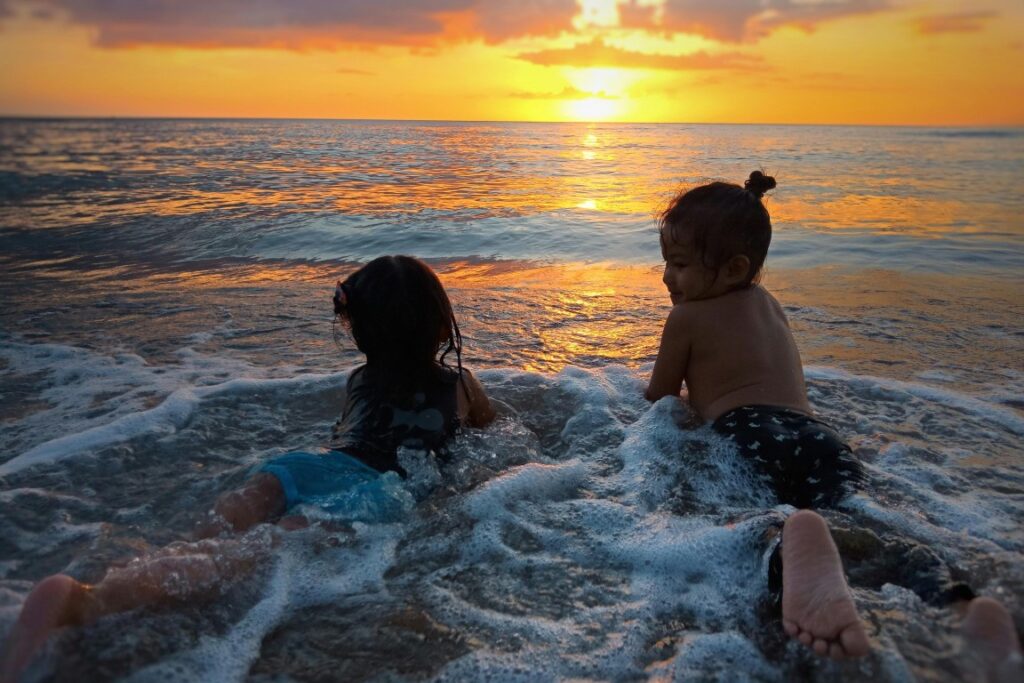
Can Kids Learn To Body Surf At The Beach?
Yes. With gentle waves and close adult supervision, body surfing is a fun way for kids to experience the ocean without needing special equipment.
Body surfing is a simple, no-equipment beach activity where kids use their bodies to ride small waves toward the shore. It works best in shallow, waist- to chest-deep water with gentle, rolling waves, making it an easy and accessible way for families to enjoy the ocean together. With close supervision and the right conditions, it becomes a fun and safe introduction to wave play.
This is something we naturally end up doing every time we go to the beach. It usually starts with jumping over waves, then turns into trying to ride them back in. The kids figure it out in their own way, and before long it becomes a game without needing much direction.
For younger kids, staying in shallow water and focusing on smaller waves keeps things manageable and fun. Holding their hands or guiding them as waves come in can help build confidence. Older kids can move slightly deeper and start timing waves to ride them farther, which adds a bit more challenge as they get comfortable.
A few simple tips make a big difference. Encourage kids to face the shore, watch incoming waves, and avoid diving headfirst into shallow water. Choosing areas with soft sand and fewer people also helps keep the experience safer and more enjoyable.
What makes body surfing stand out is how easy it is to join in. You are right there in the water with your kids, laughing, timing waves, and sharing the experience instead of watching from the side.
Who Is This Beach Water Activity Best For?
- Curious kids who enjoy marine life
- Families visiting beaches with clear water
- Older children comfortable in the water
- First-time snorkelers with adult supervision
Highlights
- Beginner-friendly with no equipment required
- Works best in shallow water with small, rolling waves
- Helps build confidence with wave timing and movement
- Easy to adapt for younger and older kids
- Encourages shared, active play with parents
Snorkeling In Shallow Water
Snorkeling in shallow water is a beginner-friendly activity that allows kids to explore marine life near the shoreline using a mask in calm, clear conditions. It encourages curiosity and observation while keeping children safely close to shore with minimal equipment.
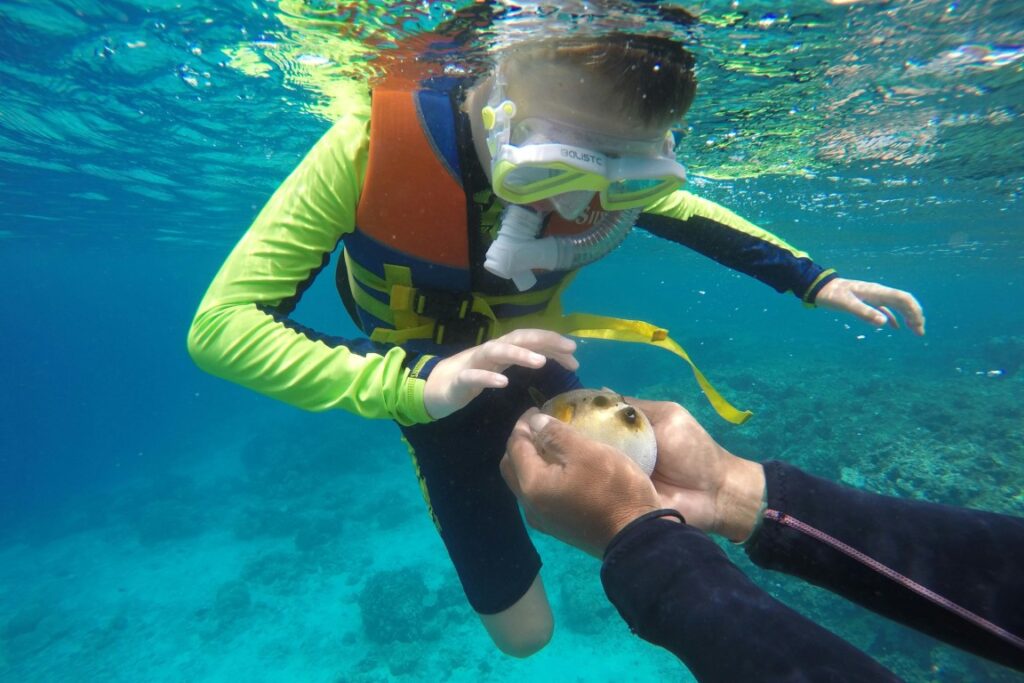
Is Snorkeling Safe For Kids At The Beach?
Yes, when practiced in calm, shallow water with properly fitted snorkeling gear and close adult supervision.
Snorkeling in shallow water is a simple, beginner-friendly way for kids to explore marine life without needing to go into deep water. In calm conditions, children can use a properly fitted mask to look just below the surface near the shoreline, where they may spot fish, shells, and other small sea life. With supervision and gentle water, it becomes a safe and engaging introduction to underwater exploration.
When we first tried it, I expected it to be quick, but it turned into one of the most focused activities of the day. My child slowed down, stayed in one spot, and became completely absorbed in what was beneath the surface. It felt less like play and more like discovery, which made it surprisingly calming.
This is a great option for kids who enjoy observing and taking their time. Instead of constant movement, they are encouraged to look closely and notice details they might otherwise miss. That shift can turn a busy beach day into something more relaxed and intentional.
For the best experience, choose clear, calm water with good visibility and minimal waves. Early in the day or during low tide often works best. Water shoes can help protect little feet, and staying in shallow areas keeps everything within your comfort zone.
You also do not need much gear to get started. A well-fitting mask is usually enough for beginners, and some kids may prefer to skip the snorkel at first and simply lift their head when needed. Keeping it simple helps them feel comfortable and confident right away.
Who Is This Beach Water Activity Best For?
- Toddlers with close adult supervision
- Preschool and elementary-aged kids
- Families looking for a creative water game
- Kids who enjoy searching and discovering new things
Highlights
- Beginner-friendly in shallow, clear water
- Encourages curiosity and close observation
- Requires minimal gear to get started
- Works best in calm conditions with good visibility
- Creates a slower, more focused beach experience
Treasure Hunts In Or By The Water
Treasure hunts in or near the water are a simple beach activity where kids search for shells, stones, or unique items along the shoreline. The wave-washed edge keeps discoveries fresh, making it an engaging, low-effort way to encourage exploration while staying close to shore.
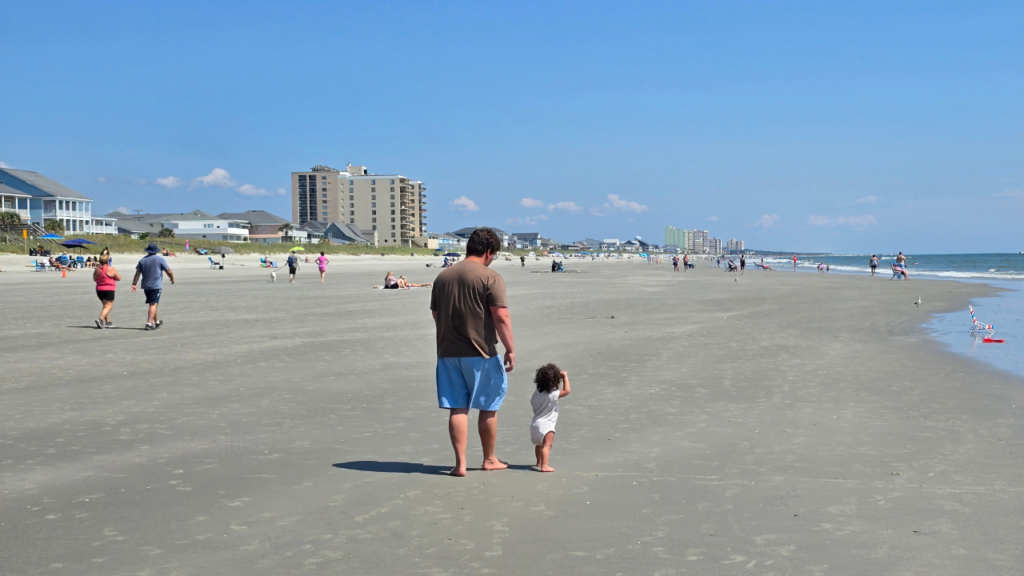
How Do You Play A Water Treasure Hunt At The Beach?
Place floating or shallow-water toys in a designated area and challenge kids to safely find each item while exploring the water together.
Treasure hunts in or near the water are a simple, no-prep beach activity where kids search for items like shells, smooth stones, or unique shapes along the shoreline. The shallow water’s edge is ideal because waves constantly bring in new finds, making it feel like a fresh discovery each time. With gentle conditions and close supervision, it becomes a calm and engaging way to explore the beach.
What works especially well for us is keeping it flexible and building the challenge as we go. I might say, “Find three different shells,” or “Look for something smooth, something tiny, and something shaped differently.” That small sense of purpose changes everything. The kids slow down, stay focused, and get genuinely excited about what they find.
The shoreline is perfect for this because it is always changing. As waves wash in and out, new items appear, which keeps kids curious without needing to move far. Younger kids can stay right at the water’s edge where it feels manageable, while older kids may explore a bit farther along the shore.
You can also extend the activity without overcomplicating it. Kids can bring their finds back to your spot, compare what they discovered, or create a small “treasure pile” to look through together. It keeps the activity going naturally without needing to reset or introduce something new.
For the best experience, choose a safe, clean stretch of beach and remind kids not to pick up sharp objects or disturb living creatures. Water shoes can help protect little feet, especially in areas with shells or rocks.
Who Is This Beach Water Activity Best For?
- Siblings and mixed-age families
- Active kids who enjoy friendly competition
- Family reunions and group beach trips
- Kids who love running, splashing, and teamwork
Highlights
- Simple, no-prep activity using natural beach items
- Works best along the shoreline where waves bring new finds
- Encourages curiosity and focused exploration
- Easy to adapt with simple challenges for different ages
- Creates calm, shared moments during the beach day
If your family enjoys searching for hidden treasures, you’ll also love our best beach scavenger hunt ideas for kids, which turn an ordinary beach walk into an exciting adventure.
Beach Relay Races In The Water
Beach relay races in shallow water are a simple, high-energy activity where kids complete short challenges like running to a point and back or passing items. They require no equipment, are easy to adapt for different ages, and keep children active while staying safely close to shore.
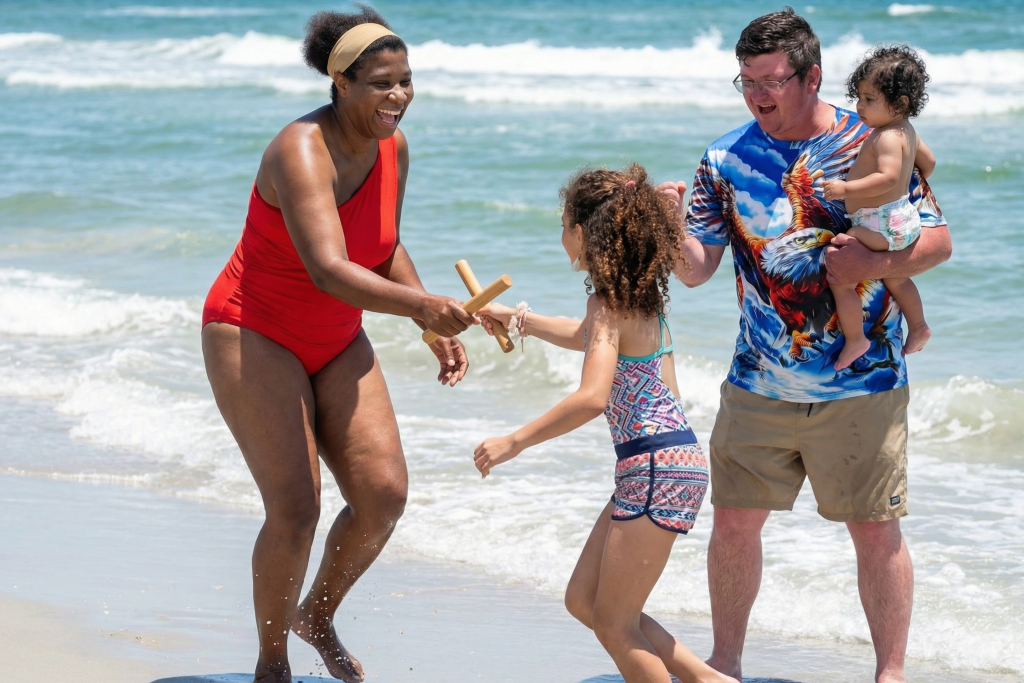
How Do You Organize Water Relay Races At The Beach?
Create simple relay challenges using buckets, cups, or sponges, and let family members work together to complete each race in shallow water.
Beach relay races in shallow water are a fun, high-energy way to keep kids engaged while adding a bit of structure to beach play. Simple challenges like running to a marker and back, passing an item, or working in teams can turn the shoreline into an interactive game. Keeping everything in ankle- to knee-deep water makes it safer and easier for all ages to participate.
This is one of our go-to activities when the energy level starts climbing. Instead of letting things get chaotic, giving kids a clear game to focus on changes everything. They know what they are doing, they get excited about turns, and it naturally brings everyone together.
What makes relay races work so well is how easy they are to adjust. Younger kids can do shorter distances or simpler tasks, while older kids can add challenges like balancing an item or racing in teams. That flexibility keeps everyone involved without anyone feeling left out.
For the best experience, choose a flat, open stretch of beach with gentle waves and good footing. Set clear start and finish points, and keep races short so kids stay interested. Staying in shallow water also makes it easier to supervise and step in if needed.
It is also a great way to break up the day. After relaxing or slower activities, a quick round of relay races brings the energy back in a fun, controlled way without needing any extra gear.
Who Is This Beach Water Activity Best For?
- Siblings and mixed-age families
- Active kids who enjoy friendly competition
- Family reunions and group beach trips
- Kids who love running, splashing, and teamwork
Highlights
- High-energy activity in shallow, safe water
- No equipment needed to get started
- Easy to adjust for different ages and abilities
- Encourages teamwork and friendly competition
- Great for breaking up slower beach moments
If your kids still have plenty of energy after playing in the water, try some of our favorite fun family beach games that are perfect for the sand.
Beachball Games
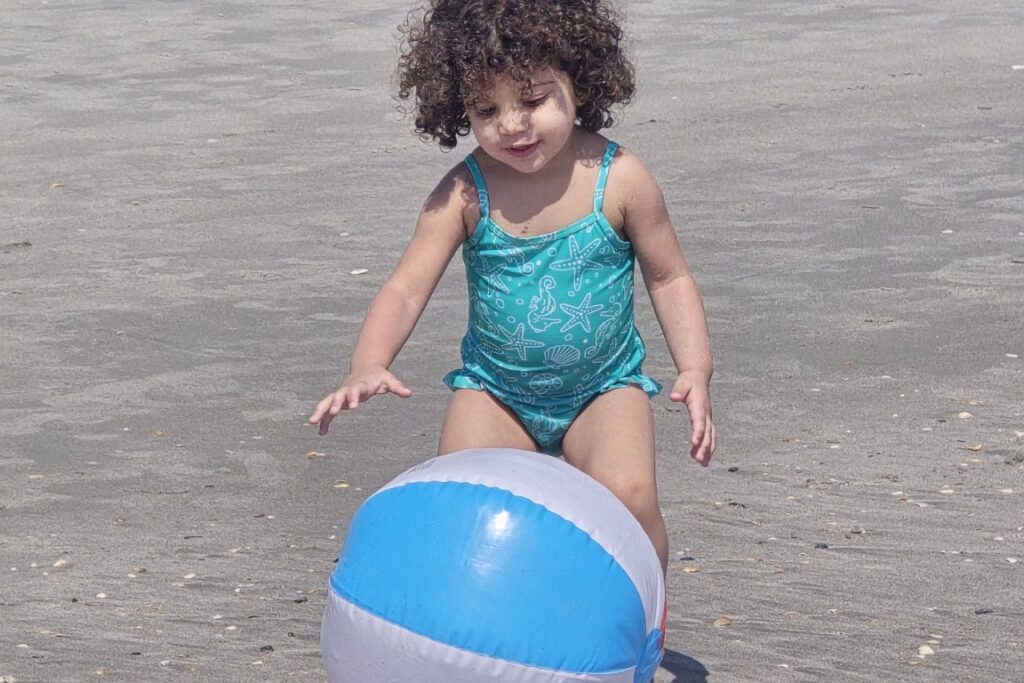
Beach ball games are a simple way to keep kids active in and around the water while building coordination, teamwork, and confidence through fun family play.
What Are Some Fun Beach Ball Games To Play In The Water?
Try simple games like keeping the ball in the air, gentle toss-and-catch, passing the ball in a circle, or seeing how many consecutive hits your family can complete without letting it touch the water.
One of the things I love about beach ball games is that almost everyone can join in, regardless of age or skill level. They’re easy to learn, require very little setup, and naturally encourage everyone to get moving together.
Depending on your family’s ages, you can keep the games simple or add a little friendly competition. Some fun ideas include:
- Keep the beach ball in the air as long as possible.
- Toss and catch while standing in shallow water.
- Pass the ball around a circle without dropping it.
- Count how many passes your family can complete before the ball touches the water.
Because beach balls are lightweight and move unpredictably in the breeze, every game feels a little different. The laughter usually starts when someone dives for the ball or the wind decides to become an extra player.
Beyond being fun, these games help develop hand-eye coordination, balance, reaction time, and gross motor skills while encouraging communication and teamwork. They’re also a great way to build confidence in shallow water as kids move, splash, and play alongside the rest of the family.
Safety Tip: Play in calm, shallow water where everyone can comfortably stand, and always keep younger children within arm’s reach.
Who Is This Beach Water Activity Best For?
- Toddlers with adult assistance
- Preschool and elementary-aged kids
- Families with children of different ages
- Anyone looking for a simple activity with minimal equipment
Why Kids Love It
- Easy to learn and fun for the whole family.
- Builds hand-eye coordination and gross motor skills.
- Encourages teamwork and communication.
- Keeps everyone active without feeling overly competitive.
- Creates lots of laughter and memorable family moments.
Floating Together
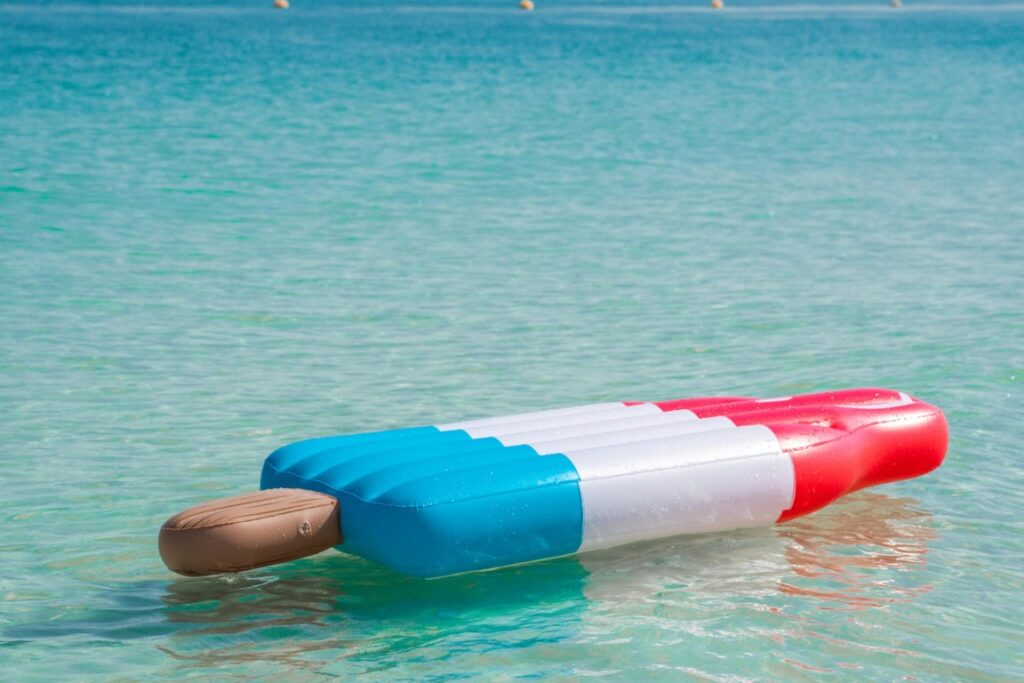
Floating and drifting is a simple beach activity where kids relax in shallow, calm water using inflatables or gentle waves. It requires minimal effort, is easy to supervise, and provides a safe way for families to slow down and enjoy the ocean together.
Is Floating A Good Water Activity For Kids?
Yes. Floating together in calm, shallow water helps younger children build comfort and confidence while enjoying relaxed family time.
Floating and drifting in the ocean is one of the simplest ways for families to enjoy the water together, especially on calm beach days. Using inflatables or simply letting the waves carry you in shallow areas, kids can relax while staying close to shore. With proper supervision and gentle conditions, it becomes a safe, low-effort activity that works for all ages.
Some of our best beach moments have come from doing exactly this. No rushing, no trying to manage anything, just floating side by side and letting the water move around us. It gave my child a chance to relax while still being in the water, and it gave me a moment to slow down too.
This kind of activity works especially well when kids start to get tired from more active play. Instead of pushing for one more game or activity, floating gives everyone a reset without leaving the water. It keeps the experience enjoyable rather than overwhelming.
For the best experience, choose calm water with small, gentle waves and avoid areas with strong currents. Staying in shallow water where you can stand makes it easier to guide and supervise. Inflatable floats designed for kids can add comfort, but even simple drifting without gear can be just as enjoyable.
It is also one of the easiest activities to adapt. Younger kids can stay close or be held while floating, while older kids may enjoy drifting independently within a safe range. The goal is not structure. It is creating space to relax and enjoy the moment together.
Who Is This Beach Water Activity Best For?
- Babies and toddlers with adult assistance
- Younger children building water confidence
- Families looking for a calm break between activities
- Parents wanting a relaxing way to enjoy the water together
Highlights
- Beginner-friendly and relaxing for all ages
- Works best in calm, shallow water
- Minimal effort with high enjoyment
- Great for recharging during beach play
- Easy to supervise while staying close
Water Frisbee
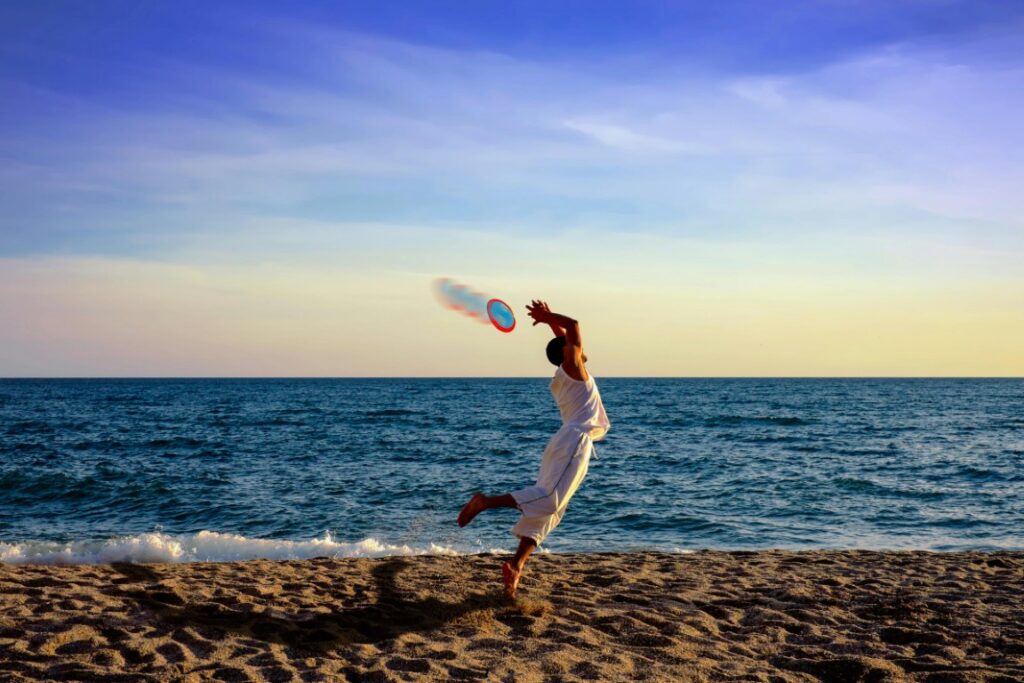
Water frisbee or catch is a simple beach activity where kids toss a soft ball or frisbee in shallow water, using gentle waves to add challenge. It requires no setup, keeps children active, and can be easily adjusted for different ages and skill levels.
Can You Play Frisbee In The Water At The Beach?
Yes. Playing frisbee in shallow water adds an extra challenge while helping kids improve coordination, teamwork, and balance.
Water frisbee or catch is a simple, low-setup beach activity where kids toss a soft ball or frisbee while standing in shallow water. The movement of the waves adds a fun challenge, requiring kids to adjust their timing and balance, which keeps them engaged without needing structured rules. It works best in calm, knee-deep water where everyone can stand comfortably.
We usually play this in shallow areas or tide pools so the kids can focus on the game instead of worrying about staying afloat. That small adjustment makes a big difference. Once they feel steady, they get more into the rhythm of throwing and catching, especially with the waves changing things just enough to keep it interesting.
What makes this activity stand out is how naturally it brings everyone together. Younger kids can stay closer with shorter, easier throws, while older kids can step back and add more challenge. It is easy to adjust without stopping the flow of the game.
For the best experience, use a soft, lightweight ball or a flexible frisbee that is easy to grip when wet. Choose calm conditions with gentle waves and good footing, and keep enough space between players to avoid collisions. Staying in shallow water helps maintain balance and keeps everything safe and manageable.
It is one of those activities that does not need explaining. You start playing, and it just builds into its own rhythm, with plenty of laughs along the way.
Who Is This Beach Water Activity Best For?
- Older kids and teens
- Families who enjoy tossing games
- Kids developing coordination and teamwork
- Beachgoers looking for a simple activity with minimal equipment
Highlights
- Simple, no-setup activity using a ball or frisbee
- Works best in shallow, calm water
- Keeps kids active with a fun wave-based challenge
- Easy to adjust for different ages and abilities
- Encourages group play and shared interaction
Visiting with little ones? Explore our favorite beach games for toddlers for simple activities designed specifically for younger kids.
Things To Know Before Trying Beach Water Activities
A little planning goes a long way when it comes to enjoying beach water activities with kids. Choosing activities that match your family’s experience level and paying attention to changing beach conditions can help everyone have a safer, more enjoyable day in the water.
Here are a few things I always keep in mind before we get started:
- Match the activity to your child’s comfort level. Some kids are ready to ride small waves on a boogie board, while others are happiest splashing in shallow water. Let confidence grow naturally instead of rushing new experiences.
- Check the water conditions before heading in. Strong waves, rip currents, and changing tides can quickly affect which activities are safe. If conditions don’t look right, choose a calmer activity or enjoy time on the sand instead.
- Use the right safety equipment. Properly fitted life jackets are essential for activities like kayaking and paddleboarding, especially for younger children or less experienced swimmers.
- Stay close to younger children. Even in shallow water, toddlers and young kids should always remain within arm’s reach of a responsible adult.
- Take breaks throughout the day. Swimming and playing in the water can be surprisingly tiring. Plan time to rest, hydrate, reapply sunscreen, and enjoy a snack before heading back into the water.
- Respect the beach and its wildlife. Give marine life plenty of space, avoid disturbing natural habitats, and leave the beach as you found it so other families can enjoy it too.
Every family enjoys the beach differently, and that’s perfectly okay. The goal isn’t to try every activity in one trip. It’s to find the ones your family enjoys most and create the kind of beach days you’ll look forward to again and again.
Not Sure What To Pack?
Planning beach water activities is much easier when you have the right gear with you. Whether you’re bringing toddlers, older kids, or a little of both, packing the right essentials helps everyone stay comfortable and enjoy more time in the water.
Take our free Family Beach Packing Quiz to receive a personalized packing list based on your family’s beach trip, the ages of your children, and the activities you plan to enjoy.
Frequently Asked Questions (FAQ): Family-Friendly Beach Water Activities
What are the best beach water activities for kids?
Some of the best beach water activities for kids include boogie boarding, paddleboarding, kayaking, snorkeling, beach ball games, floating in calm water, water treasure hunts, relay races, body surfing, and water frisbee. The best choice depends on your child’s age, confidence in the water, and the beach conditions.
Are beach water activities safe for young children?
Yes, many beach water activities are suitable for young children when they’re closely supervised. Simple activities like floating, beach ball games, and water treasure hunts in shallow water are great options for toddlers and preschoolers. Always stay within arm’s reach of younger children and choose calm conditions.
Do you need special equipment for beach water activities?
Not always. Many beach water activities only require items you may already have, such as a beach ball or frisbee. Activities like paddleboarding, kayaking, snorkeling, and boogie boarding do require equipment, but many beach destinations offer affordable rentals.
Which beach water activities are best for beginners?
Beach ball games, floating together, water treasure hunts, and boogie boarding on small waves are all excellent choices for beginners. These activities help kids become more comfortable in the water while building confidence at their own pace.
How can I keep my kids safe during beach water activities?
Choose activities that match your child’s swimming ability, check the surf and weather conditions before entering the water, use properly fitted life jackets when appropriate, and always supervise children closely. Taking regular breaks for water, sunscreen, and snacks also helps everyone stay comfortable throughout the day.
What age is appropriate for beach water activities?
Beach water activities can be enjoyed by children of almost any age with the right level of supervision. Toddlers often enjoy floating, splash games, and water treasure hunts, while older kids may be ready for activities like kayaking, paddleboarding, snorkeling, or boogie boarding.
Are beach water activities good for child development?
Yes. Many beach water activities naturally help children develop balance, coordination, gross motor skills, confidence, teamwork, problem-solving, and communication while encouraging an appreciation for the ocean and outdoor play.
How long should beach water activities last?
There’s no perfect amount of time. Some activities may last just 15 or 20 minutes, while others can become the highlight of your beach day. Follow your child’s energy level, take frequent breaks, and focus on having fun rather than fitting everything into one trip.
Make Every Beach Day An Adventure
A great beach day with kids does not come from packing your schedule with activities. It comes from having a handful of simple ideas you can lean on when the moment calls for it.
Some days your kids will want to run straight into the waves and stay there for hours. Other times, they need a little direction, a slower moment, or a change of pace. That is where these activities really shine. You can shift from high-energy play to calm exploration and back again without overthinking it.
What I have found over time is that the best beach days are not the ones where everything goes perfectly. They are the ones where you stay flexible, follow your kids’ energy, and have just enough structure to keep things flowing. A quick game, a short paddle, a quiet treasure hunt, or even just floating together can completely reset the tone of the day.
You do not need to do all of these activities. You just need a few that feel right for your family.
And once you have those go-to options, the beach starts to feel easier. Less stressful. More enjoyable.
If you like having a simple plan in place before you head out, I put together something that can help.
Download The Ultimate Family Beach Trip Planner + Packing Checklist and take the guesswork out of your next trip. It walks you through what to bring, how to plan your day, and how to keep things running smoothly without overpacking or overplanning.
Get The Free Planner by clicking the button below and make your next beach day feel a whole lot easier.
Related Guides
Then finish with your standard Related Guides section:
Hi Marlinda,
This was such a refreshing read. I really like how you kept everything simple and realistic instead of overcomplicating things. As a parent, that part about not needing to “pack the day” with activities really resonated with me. Sometimes just having a few easy options makes a huge difference.
I also appreciated how you included both calm and more active ideas because it feels very doable, especially for families with kids of different ages. The treasure hunt and floating ideas are things I never really thought of as “activities,” but they make so much sense.
One thing I’m curious about, though: how do you usually handle days when the water conditions aren’t great (like strong waves or wind)? Do you have go-to backup activities that still keep kids engaged near the beach?
Hi Daniella,
Thank you so much for this thoughtful comment. I’m really glad the approach resonated with you, especially keeping things simple and not feeling like you have to “pack the day.” That alone can take so much pressure off.
That is such a great question too, because beach conditions are not always ideal. On days with strong waves or wind, I usually shift the focus from the water to the shoreline and sand. Kids still get the full beach experience, just in a different way.
Some of our go-to backups are sandcastle building, digging games, and turning it into a little construction project. Treasure hunts work especially well on those days, along with simple exploring like looking for shells or spotting small sea life. If the wind allows, flying a kite can also turn a rough beach day into something really fun.
We also lean into flexible plans. Sometimes it becomes a split day where we enjoy the beach for a bit, then take a break for something nearby before coming back.
This is actually something I’ll be expanding on more because it comes up so often for families. I’ll be putting together a guide focused on what to do at the beach when conditions are not ideal so you still get a great experience.
Look forward to sharing more soon,
Marlinda
Such a variety of activities for everyone to take part in! My family and I do many of these activities at our family cottage, but trying some of these on “vacation” would have a different feel. Like with snorkeling, what you find under the surface will be different than at home. I am looking forward to trying some of these the next time we take a family beach vacation.
I like how you have each activity laid out, with highlights that summarize the activity. And the point you make at the beginning, not to cram everything in one day. Something each day adds to the fun of just splashing around at the beach. This article has given me “food for thought” when planning our next getaway!
Hi Pauline,
Thank you so much for this thoughtful comment. I love that you mentioned how the same activities can feel completely different when you are on vacation. That change of scenery really does add a new layer of excitement, especially with things like snorkeling where every location brings something new to discover.
I am glad the layout and highlights were helpful too. Sometimes just having a simple way to scan ideas makes planning feel a lot less overwhelming. And you are absolutely right about not trying to do everything in one day. Spacing things out keeps the experience fun and gives everyone time to actually enjoy being at the beach.
If you are planning to try snorkeling on your next trip, I recommend taking a look at my guide on Best Beaches For Toddlers And Young Children. It highlights spots with calmer, clearer water, which can make that first snorkeling experience much more enjoyable for the whole family.
I hope your next beach getaway is full of those fun new discoveries and relaxed moments together,
Marlinda
I’m always looking for some extra activity to do at the beach, but still want to keep it calm and relaxing, not feel like work or working out. Great layout of 10 good options, from simple and easy to prepare for (hello beach frisbee and treasure hunting), to a little more complicated and forethought (never even considered body surfing and shallow snorkeling). Going to check out these options and make sure to find maximum fun on my next visit to the beach. Ii like the simple helpful hints and will be trying to go mid-morning next time.
Hi John,
I really appreciate this comment because you captured the balance perfectly. Wanting a little more to do at the beach without turning it into work is exactly the sweet spot most families are aiming for.
I am glad the mix of simple and slightly more involved activities stood out to you. Things like frisbee and treasure hunts are easy wins, and then adding something like body surfing or shallow snorkeling can bring a whole new layer of fun without overcomplicating the day.
Mid-morning is a great choice too. The energy is usually just right, and you can enjoy the water before the peak crowds and heat set in.
If you are looking to keep that relaxed vibe, I also recommend checking out my article on How To Plan The Perfect Family Beach Day This Summer. It goes deeper into pacing your day so you get the most enjoyment without feeling rushed.
Hope your next beach trip is exactly what you are looking for, easy, fun, and stress-free!
~ Marlinda
Thank you for sharing this. My kids will be happy to try new water sports. We experienced banana boating and snorkeling together, and they really enjoyed it.
Hi Peter,
Thank you for sharing! It sounds like your family already has some great water adventures under your belt. Banana boating and snorkeling are such different experiences too, so I love that your kids enjoyed both.
One of my favorite things about trying water activities as a family is discovering what each child gravitates toward. Some kids want the excitement and speed, while others would happily spend their time exploring underwater and looking for fish and marine life. Trying a few different activities can make a beach vacation even more memorable and might even help them discover a new favorite.
I hope this list gives your family a few more ideas to try on your next beach trip. And if your kids are ready to branch out beyond water sports, I have a guide to my Top 10 Family Friendly Beach Activities that has even more ways to enjoy a beach day together, including activities you can mix in between time in the water.
Thanks again for stopping by and sharing your family’s experience, Peter. I hope you will come back to Fun Shores Ahead when you are looking for inspiration for your next family beach adventure!