

If you are shopping for the best beach tents for families with toddlers, you will find hundreds of listings that look nearly identical. The useful differences are not in the photos. They come down to how the tent opens when you are holding a child, how much shade it gives at nap time, and whether your family and its gear fit inside once the sand starts blowing.
This comparison sorts beach tents into the three types families most often choose: pop-up tents, cabana-style instant tents, and sun shelters with a sewn-in floor. It does not rank individual products. It tells you which type suits which family, so you can narrow the field before you read a single review.
Why a beach tent matters more once you have a toddler
An adult can sit on a towel in the sun, move when it gets too hot, and walk to the car for a break. A baby or toddler cannot do any of that for themselves. Shade becomes the thing the whole day is organized around.
Pediatric guidance generally advises keeping babies under six months out of direct sun, which makes shade a requirement for infants and not a luxury. For older toddlers, shade gives skin a rest from sunscreen, gives an overheated child a place to cool down, and gives you somewhere for a nap that does not involve a hot car.
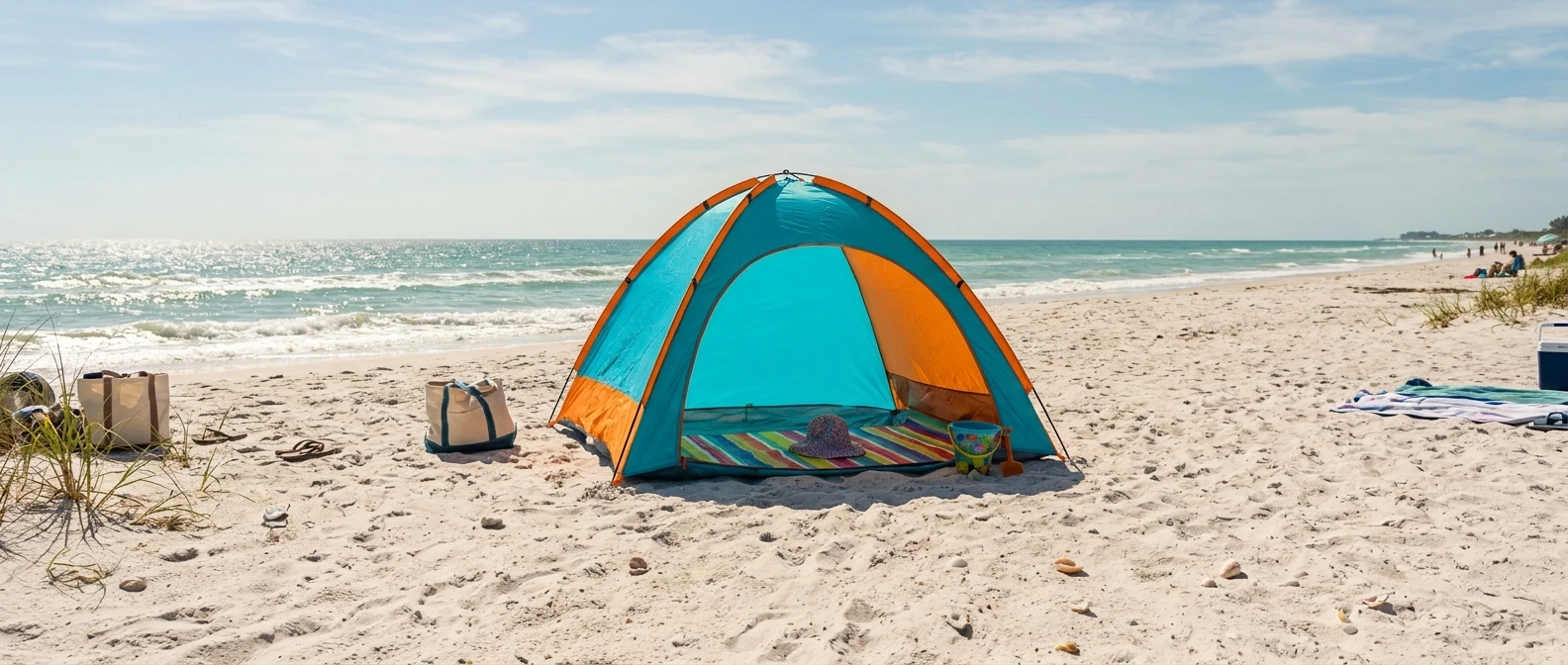
A tent also gives a toddler a home base. Small children wander, and a visible, colorful shelter gives them a landmark to return to and gives you one fixed place to look for them. Snacks, spare clothes, and the sunscreen all stay in one spot. Many families find that the beach day gets calmer once there is a defined place to be.
A tent does not replace supervision. A child asleep in a tent is still a child near water and wind, so the shelter should sit where you can see it and the water at the same time.
How to compare beach tents: setup, UV protection and family capacity
Three questions cover almost everything that matters for a family with young children.
1. Can you set it up with one free hand? Realistically, you will often be carrying a toddler, a bag, or a cranky baby while you open the tent. A tent that needs two adults and a diagram is a poor match, however good the shade. Look at how many steps the setup has, whether it needs stakes, and whether anything has to be assembled from loose parts.
2. Does it give real shade and UV protection at nap time? Nap time is when the sun is often highest, and a sleeping child cannot shift out of the light. You want fabric with a UPF rating, a canopy that covers the whole sleeping area, and enough ventilation that the shade does not turn into a hot box.
3. Is there room for the family and the gear? A tent that fits two adults on paper may fit one adult, one baby, and nothing else in practice. Count the people, the cooler, the bags, and the toys, and then decide how much of that has to be under cover.
Wind is a fourth factor that runs through all three. A tent that opens easily and gives good shade is not useful if it lifts off the sand in a breeze, so anchoring comes up for every type below.
Pop-up tents: fastest to open, hardest to fold
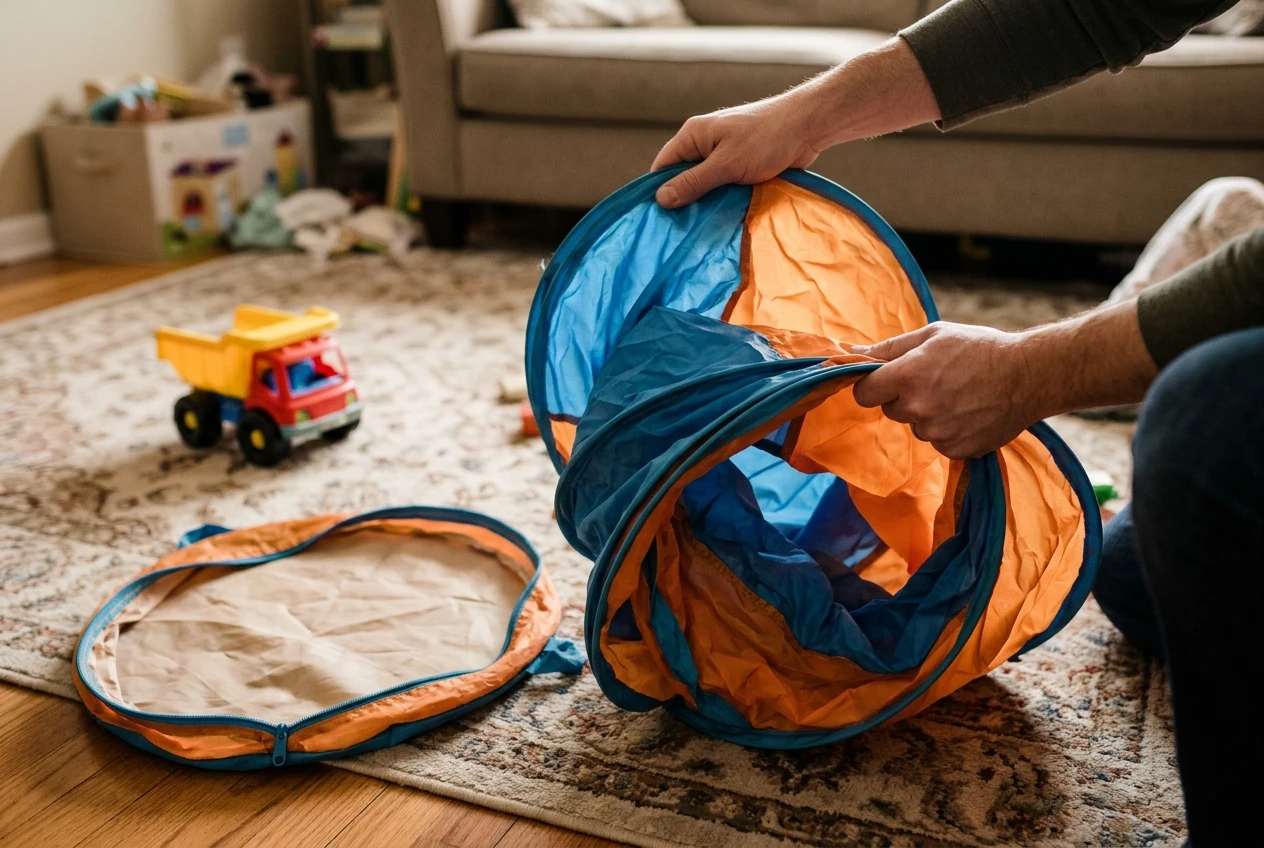
Pop-up tents use a flexible spring frame that expands the moment you release it from its carry bag. Setup is the fastest of any type: you take it out, let go, and it opens. That makes pop-ups the easiest to manage with one free hand, and they are the type most often chosen by parents of babies who want shade within a minute of reaching the sand.
The weak point is folding. Most pop-ups collapse by twisting the frame into a smaller loop, and the technique is not obvious the first time. Plan to practice it in the yard or living room before the trip, and you will not be wrestling a frame on a windy beach with a toddler pulling at your leg.
Shade and UV: Most pop-ups are compact, with a roof and sides that cover a small area. That works well for a baby sleeping on a mat. It works less well when the sun moves and the shade shifts away from the sleeping spot, so check how the tent sits relative to the sun when you place it.
Space: Expect room for a baby or small toddler plus one adult sitting or lying down. Bags often end up outside. Families with two or three kids will outgrow this type quickly.
Wind: Pop-ups are light, and a light tent catches wind easily. Look for stake loops and sand pockets, and weigh down the corners before putting a child inside.
Best for: A parent with an infant or a single toddler who wants the quickest possible shade and does not need much room for gear.
Cabana-style and instant tents: more room, more wind to think about
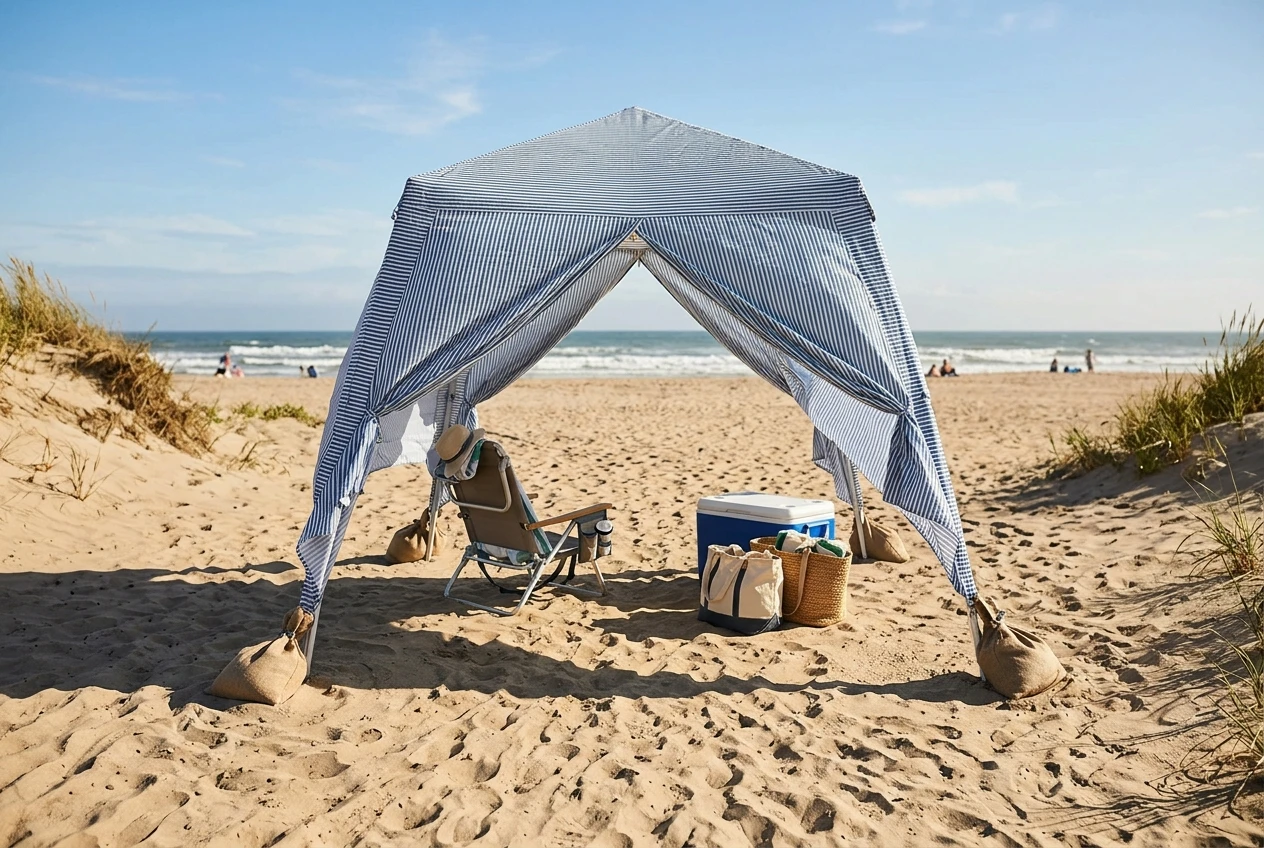
Cabana-style tents have a taller canopy, often with a frame of poles and a roof that is open at the front or has a large entry. Instant versions open with a pull or push mechanism, so you do not assemble loose poles. They are the choice for families who want to sit up inside the shade, not lie down in it.
The extra size is the main advantage. An adult can sit comfortably, a toddler can move around, and a cooler and a bag can fit under the roof. For a family with two children or a child and a tween, this type usually offers the most useful room per trip to the car.
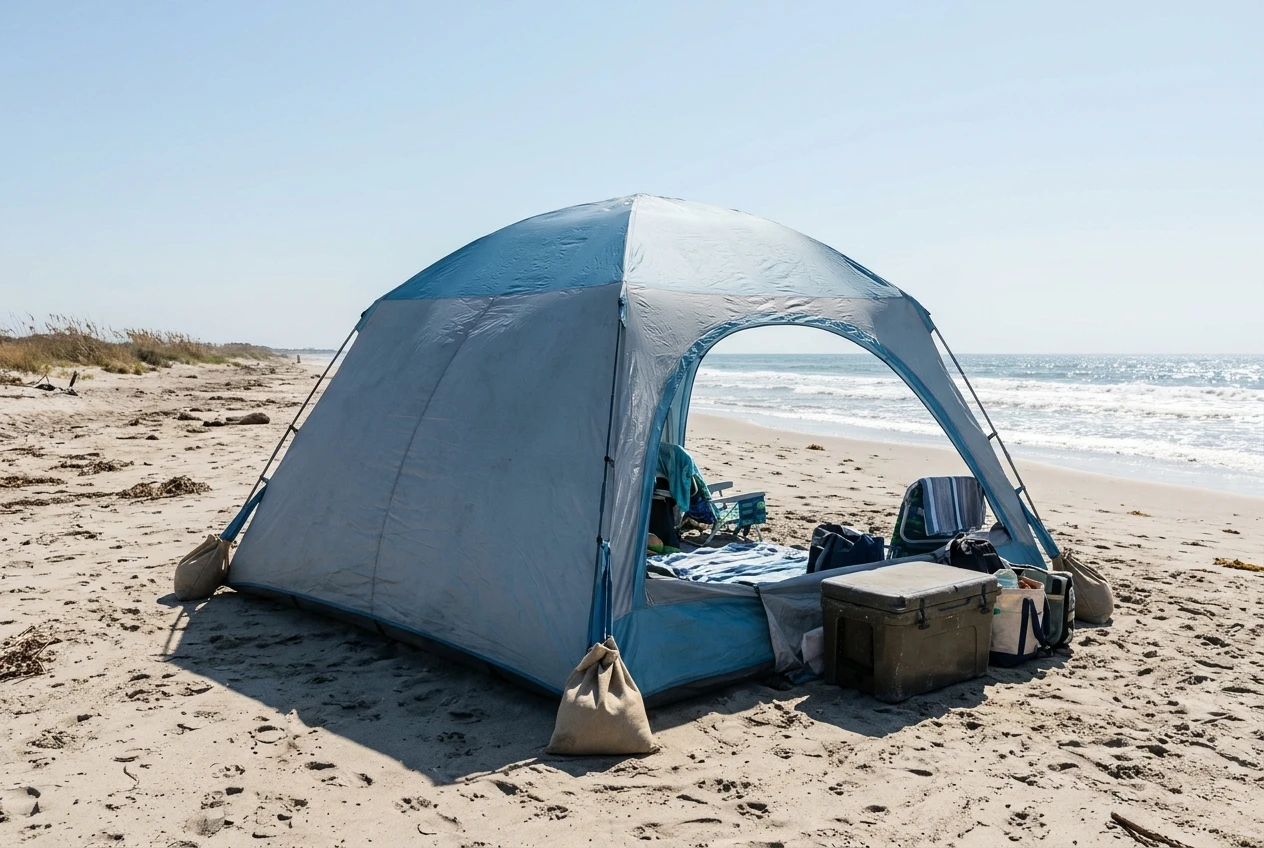
The cost of that room is wind. A larger canopy is a larger surface for gusts to push against, so anchoring matters more than with a small pop-up. Stakes alone often do not hold well in loose, dry sand, so sandbags, sand pockets, or heavy gear placed over the legs make a real difference.
Setup with one free hand: Instant models are workable with one hand for the opening step, but the size and weight of the carry bag can make the walk to the sand harder with a toddler in your arms. If you have to carry the tent, a child, and a bag, this type is more demanding than a pop-up.
Shade and UV: The large roof gives the most generous shade of the three types, which helps when the sun moves across the sky during a long nap. Check how much of the sides is covered, because an open front can let low afternoon sun reach the sleeping area.
Best for: Families with more than one child, or those who want to stay at the beach for several hours with seating, snacks, and a nap in the same place.
Tents with sewn-in floors and sand pockets: best for naps and crawlers
Sun shelters with a floor are built like a small tent. The floor is sewn to the walls, and the edges often have flaps called sand pockets that you fill with sand to hold the shelter down. Many also have mesh windows for airflow.
The floor is what makes this type useful for babies. A crawling baby can move around on a surface that is not directly on the sand, which keeps most sand off hands and toys. A baby napping on a mat inside is protected on more sides, and the walls help block wind-blown sand.
Sand pockets also solve part of the anchoring problem. They use the sand already on the beach as the weight, so you do not rely on stakes that may not hold.
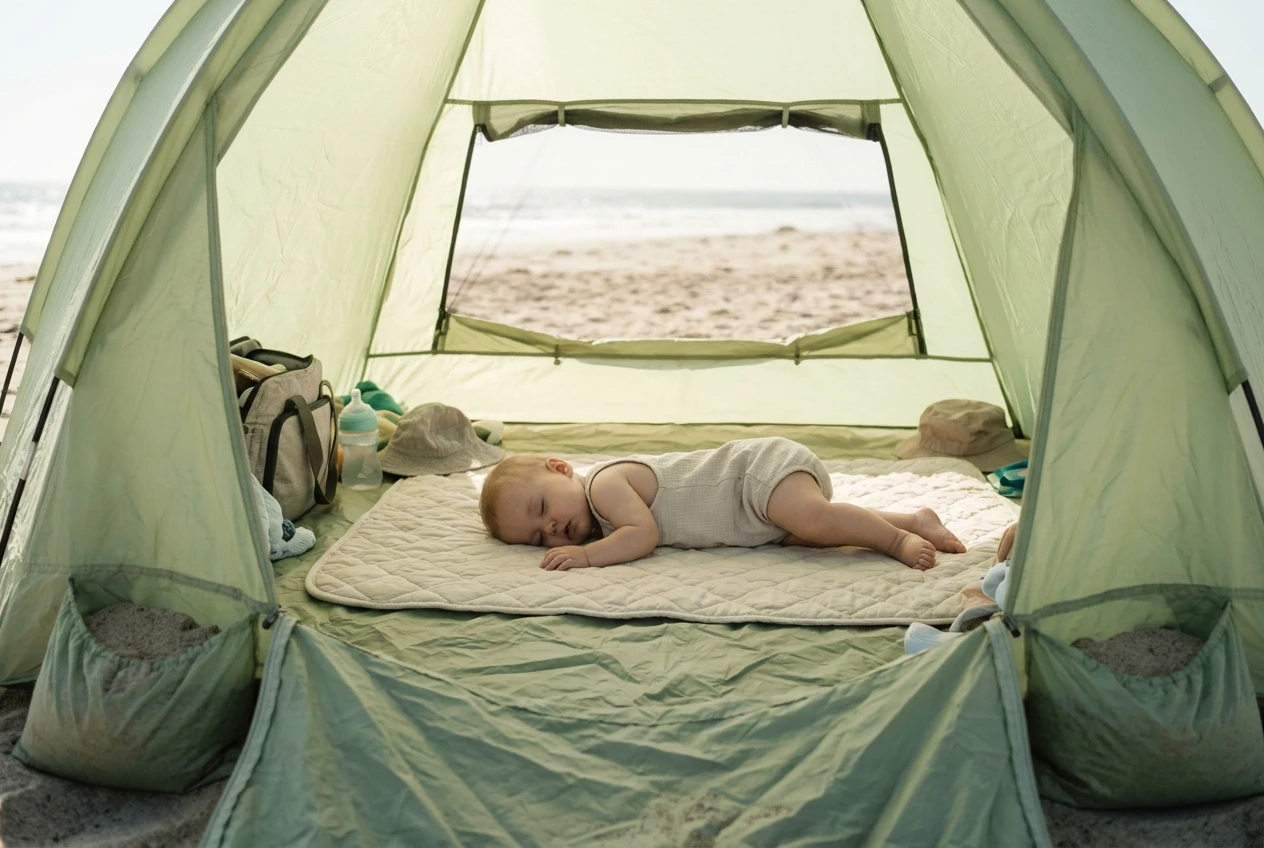
There are a few things to watch for:
- Heat. A tent with walls and a floor can warm up. Ventilation is not optional here, so look for mesh windows and a door that can stay open.
- Sand tracked inside. Once children go in and out, sand comes with them. Shaking out the floor at the end of the day is part of the routine.
- Setup and fold. These tents are often a pop-up frame or a pole frame, so the same setup and fold considerations apply. Check which style it is.
Best for: Babies who nap at the beach, crawlers, and parents who want a more contained space.
Side-by-side comparison table of the top picks
This table compares the three types, not individual products. The ratings are relative to each other and describe typical designs, so check any specific tent against the label.
Pop-up tent Cabana-style / instant tent Sun shelter with floor and sand pockets Setup with one free hand Easiest Moderate, heavier to carry Moderate, depends on frame style Folding Hardest to learn Usually straightforward Depends on frame style Shade for naps Good for one sleeper, shade can shift Largest shaded area Good, with more side coverage Room for family and gear Small Largest Medium Wind behavior Light, lifts easily Large surface, needs strong anchoring Sand pockets help hold it down Sand control for crawlers Limited Limited Best Heat risk Lower, mostly open Lower, mostly open Higher if not ventilated Best for Infant or single toddler, quick shade Two or more kids, long beach days Napping babies, crawlers
What to check for on the label: UPF rating, ventilation and anchoring
Product descriptions are often vague, so the label and specifications do most of the work. Three details are worth checking before you buy.
UPF rating
UPF measures how much ultraviolet radiation a fabric lets through. UPF 50+ is the highest category on most labels, and it is what you should look for on a tent that will shade a child. A tent with no stated UPF rating may still give shade, but you will not know how much UV passes through the fabric.
Shade lowers UV exposure but does not remove it. Sand and water reflect some UV light, so a child in shade can still receive some. Hats, protective clothing, and sunscreen suited to the child’s age still apply.
Ventilation
Look for mesh panels, open sides, or a door that can be left open. A closed shelter with no airflow can get hot, and a sleeping baby cannot tell you they are uncomfortable. Check on a napping child often and feel their skin and neck for signs of overheating.
Anchoring
Check what the tent includes for holding itself down. Useful features include:
- Sand pockets along the edges
- Stake loops at the corners
- Guy lines for larger tents
- Stakes that suit sand, since short stakes often slip out
If a listing mentions none of these, plan to bring your own weights, such as filled bags.
Which tent fits your family: infant, toddler or toddler plus tween
A family with an infant
An infant spends most of the day lying down, and the main goals are consistent shade and protection from wind-blown sand. A pop-up gives you shade fast, and a sun shelter with a floor gives more cover and a cleaner surface for a mat. If your baby naps at the beach, ventilation matters most. Choose the type based on how long you plan to stay.
A family with a toddler
Toddlers move constantly, and they need a tent that is easy to get in and out of. A larger doorway and a floor that is easy to shake clean help. A sun shelter with a floor suits a toddler who plays in the shade, and a cabana-style tent suits a toddler who wants to wander between the tent and the water with you.
A family with a toddler and a tween
A tween brings more gear and more people, and wants some independence, such as reading in the shade or sitting out a game. A cabana-style tent gives enough room for everyone to sit together. If the toddler naps, a second small pop-up nearby can give them a quiet spot while older children stay active in the larger tent. Whether one large tent or two smaller ones makes sense depends on your group, your car space, and how many people will carry gear.
Setup, anchoring and pack-down tips from real beach days
These tips apply to all three types and are general practice, so adjust them to your tent’s instructions.
- Practice at home first. Open and fold the tent in the yard before the trip. The fold is where most frustration happens, and it goes better when you are not tired and sandy.
- Face the opening away from the wind. Set the tent so the back or a closed side takes the wind. That keeps gusts out of the opening and reduces how hard the tent has to be held down.
- Anchor before you load it. Put weight on the corners, fill the sand pockets, and set stakes before putting gear or a child inside.
- Put gear on the windward side. Heavy bags and coolers add weight where the wind pushes hardest.
- Place the tent where you can see the water. If a child naps inside, you should be able to see both the tent and the shoreline without walking.
- Check the shade through the day. The sun moves, so a spot that was fully shaded at ten may not be at one. Turn or move the tent when the shade shifts off the sleeping area.
- Shake out before folding. Remove sand from the floor and the frame before packing, which makes the tent easier to fold and keeps sand out of your car.
- Let it dry before storing. Pack a damp tent in a bag only if you will open it again soon, since moisture left in the fabric can cause odors and mildew.
Finish your beach day gear list
A tent covers the shade, but a beach day with a toddler still needs snacks, sun protection, and a plan for the day. For the rest of your gear list, read Beach Bag Essentials For Moms And Dads, and use the family beach day plan to organize the hours around nap time and the sun.
If you want a beach plan built around your children’s ages and your family’s needs, try the Fun Shores Ahead family trip planner. It puts shade, naps, and gear into a plan that fits your trip.