



There’s nothing sweeter than watching your baby experience the beach for the very first time. The soft breeze, the sound of the waves, the new textures, it’s a whole sensory world they’ve never seen before. But as magical as that moment is, it also comes with a lot of preparation. Babies don’t travel light, and the beach introduces sun, sand, heat, saltwater, and unpredictability all at once.
Having taken two babies to the beach, years apart and with totally different personalities, I can tell you this: your first beach trip with a baby can be peaceful, joyful, and even relaxing when you know what to expect. The key is preparation, realistic expectations, and building in plenty of breaks. Here’s everything parents need to know to make baby’s first beach trip safe, comfortable, and full of sweet memories.
Disclaimer: This content is for informational purposes only. Always prioritize your baby’s safety and follow guidance from your pediatrician or medical professional. You are responsible for supervising your child at all times, especially near water.
Choose the Right Time of Day
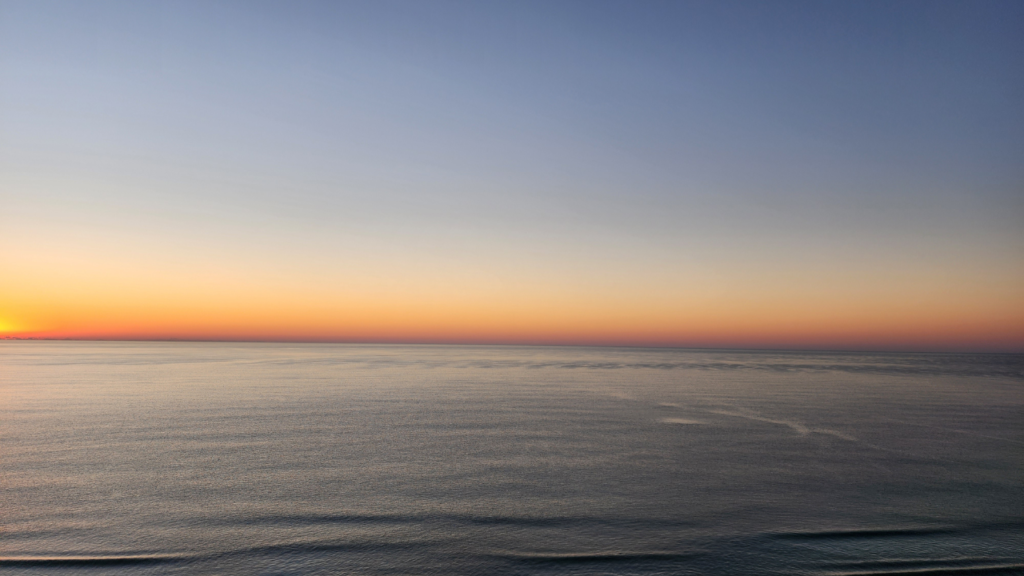
Babies don’t do well in peak sun or peak heat. For a first beach trip, aim for early morning or late afternoon when the sun is softer and temperatures are gentler.
Best times for baby beach visits:
- 8am–11am
- 4pm–7pm
These windows give you natural shade, calmer crowds, and a happier baby. My daughters both thrived during evening beach trips, they were well-rested, easygoing, and more curious than cranky.
Create a Shaded Sanctuary for Your Baby
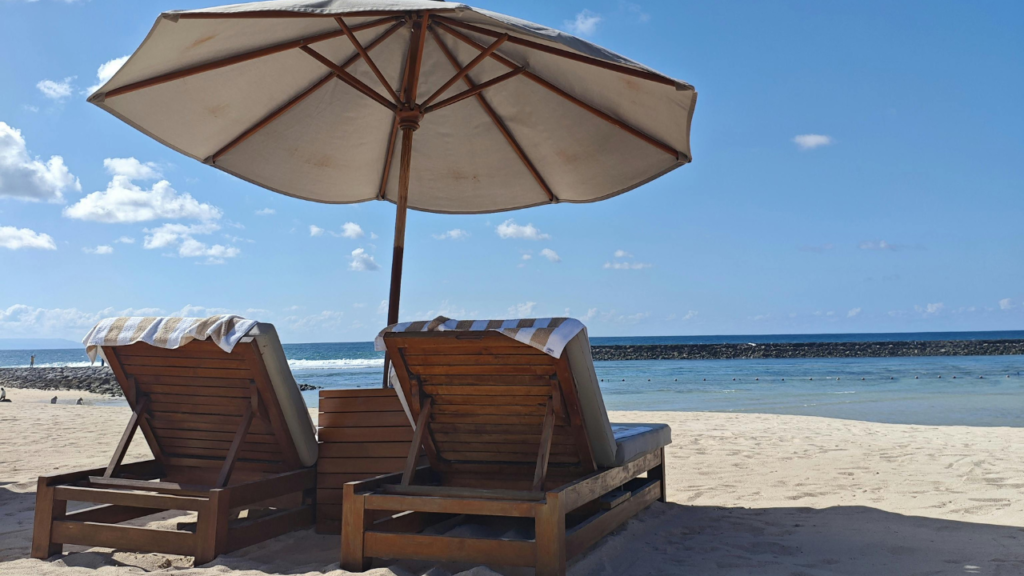
Shade is non-negotiable. Babies can’t regulate heat the way older kids can, and even brief sun exposure can be overwhelming.
Great shade options include:
- A baby-safe pop-up tent
- A large umbrella or canopy
- A beach cabana with ventilation
- A stroller with an extended canopy as backup
With both of my girls, the pop-up tent was our best friend. It created a safe, familiar-feeling space away from the stimulation of the wider beach. Inside, you can breastfeed, bottle-feed, change diapers, or just let your baby rest out of the sun.
Protect Baby’s Skin, Even in the Shade
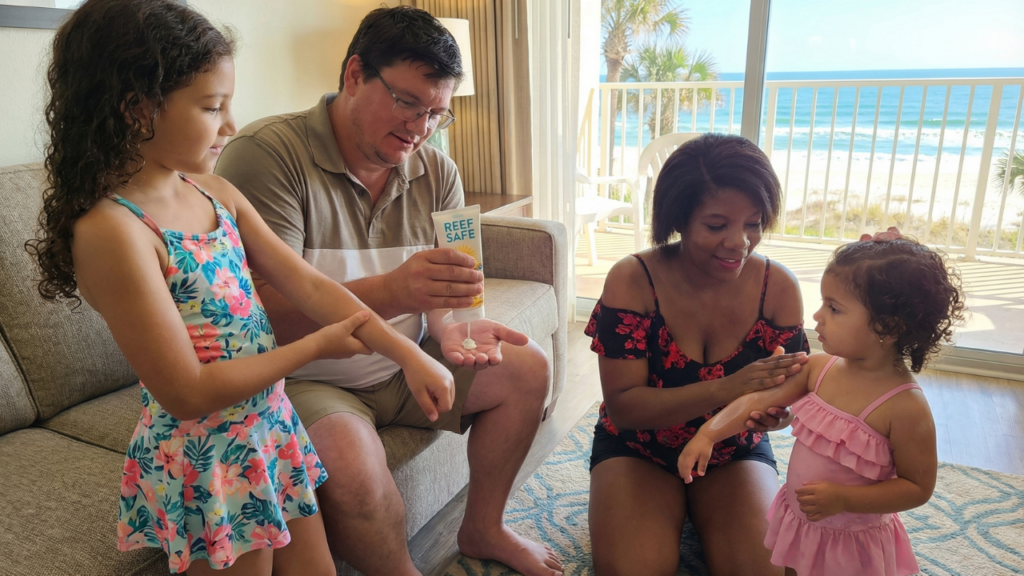
Before six months, babies rely on physical protection because sunscreen isn’t recommended. After six months, you can add baby-safe sunscreen, but shade still matters most.
Baby sun protection must-haves:
- A wide-brim hat that stays on
- Lightweight UPF clothing
- Shade tent or canopy
- Baby-safe mineral sunscreen (for 6 months+)
- A breathable muslin blanket for light coverage
Both of my girls had different levels of sun sensitivity, but one thing stayed the same: shade was our first line of defense, always.
Introduce the Sand Slowly
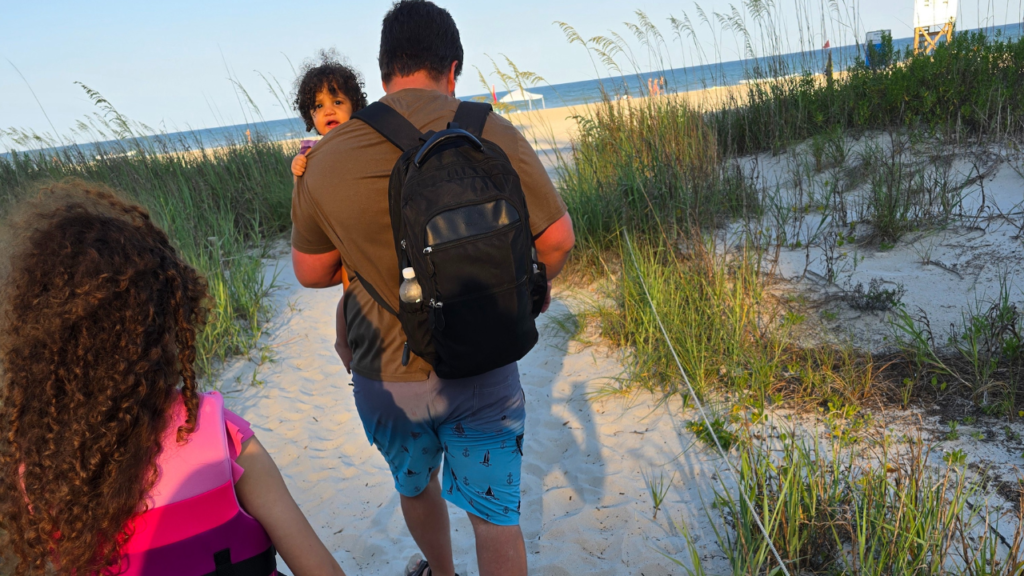
Babies react to sand in… creative ways. Some love it instantly. Some stare at it suspiciously. Some go straight for the “let me eat this” stage.
Start slow:
- Let them touch it with just their toes or fingers
- Place a mat or blanket down as a “safe zone”
- Keep wipes handy for sandy hands
My oldest loved sand immediately. My youngest had a lot to say about it before she accepted it. Both reactions were equally adorable and equally messy.
Keep Baby Cool and Hydrated
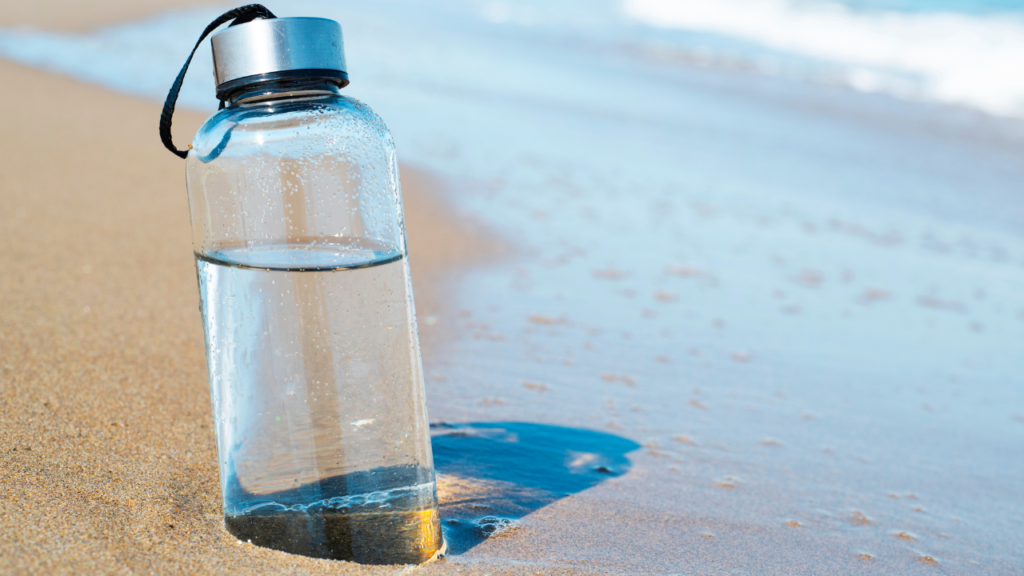
Heat can sneak up quickly, especially with babies. Watch for signs like flushed cheeks, fussiness, or sweating.
To keep baby cool:
- Offer frequent breastmilk, formula, or small sips of water (if age-appropriate)
- Use a handheld fan inside the tent
- Keep a cool, damp cloth nearby
- Dress baby in lightweight cotton or UPF fabric
Cooling breaks keep the day peaceful and prevent overheating.
Bring a Beach-Ready Diaper Bag
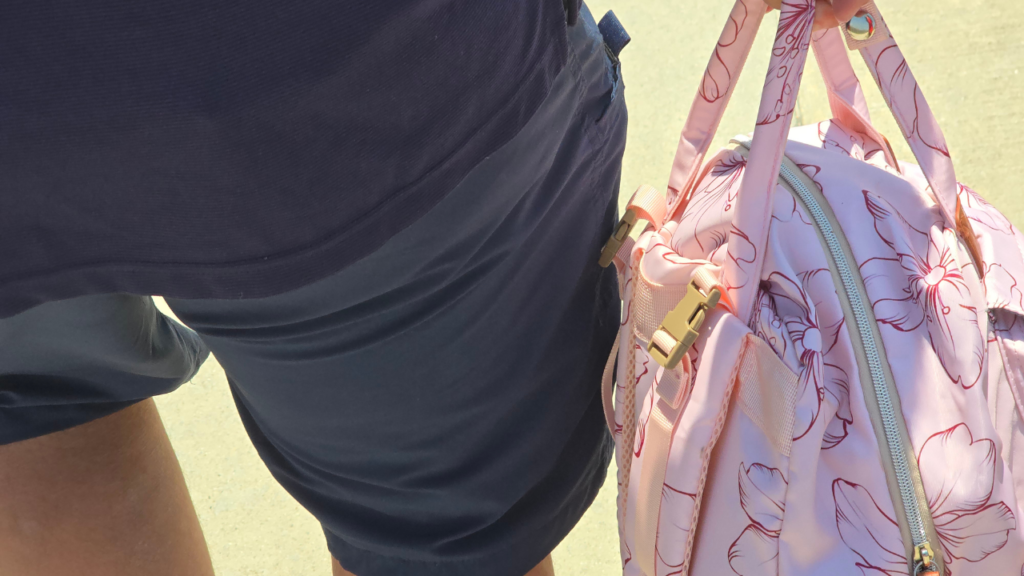
Baby necessities don’t stop just because you’re on the sand. In fact, they multiply.
Pack:
- Diapers
- Swim diapers (for water play only)
- Wipes
- Disposable bag for dirty diapers
- Change of clothes (bring two)
- Pacifier or soothing item
- Bottles, breastmilk, or formula
- A soft towel
Sand + babies = a lot of unexpected cleanup. Being overprepared works in your favor here.
Plan for Short Sessions
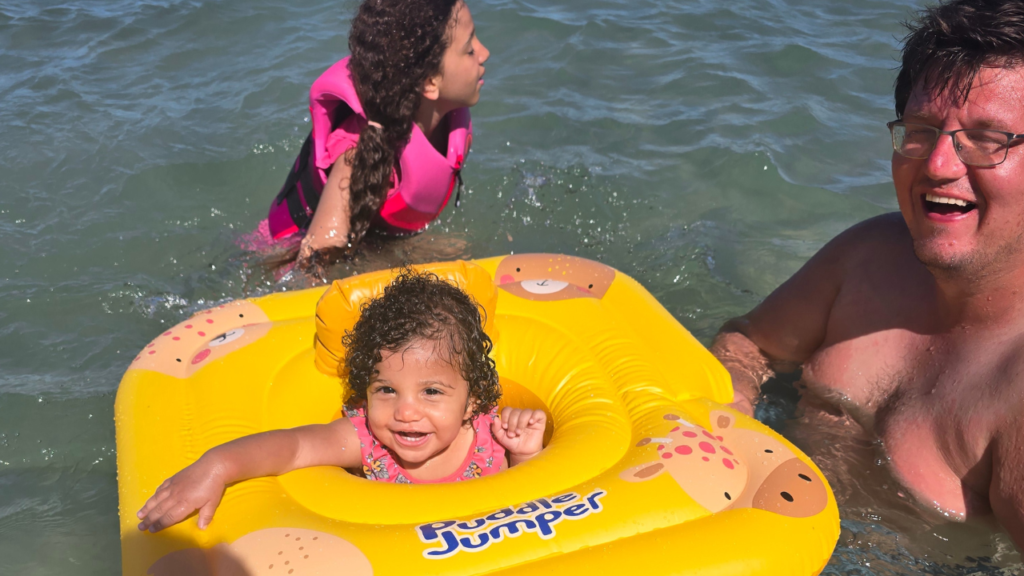
Baby’s first beach trip is not an all-day event. It’s more like a “taste of the beach.”
Most babies do well with:
- 45 minutes to 2 hours max
- Plenty of breaks
- One flexible nap opportunity
When my girls were babies, every beach trip looked different. Some days they napped peacefully to the sound of waves. Other days, we packed up early and that was okay. Flexibility is your friend.
Let Baby Enjoy the Water Safely
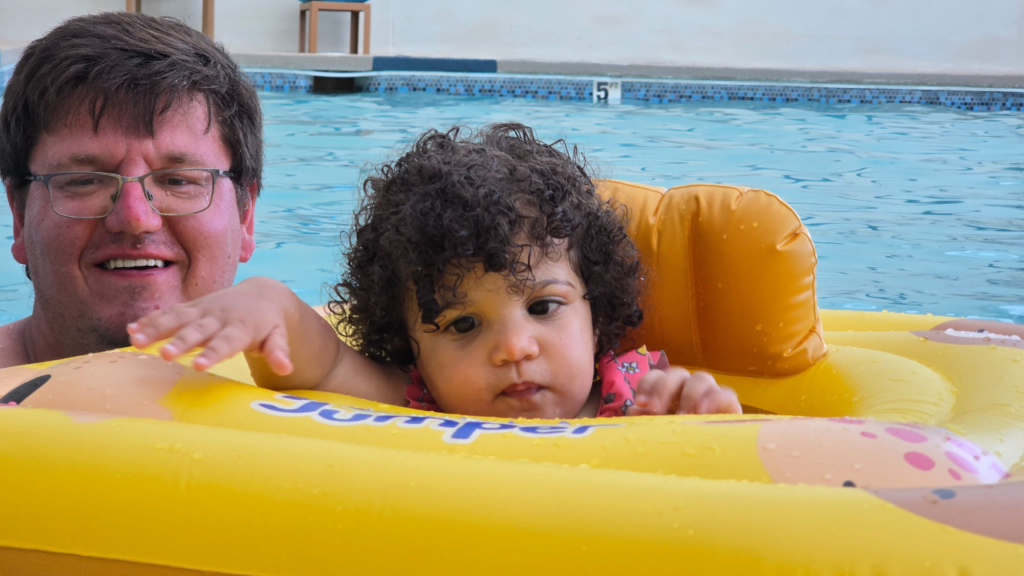
Babies love water, but the ocean introduces movement, temperature changes, and unpredictability.
Tips for safe water introduction:
- Hold your baby securely at all times
- Start at the shoreline with gentle puddles
- Watch the waves carefully
- Keep sessions short
- Only use swim diapers when baby is actually in the water
My babies both loved dipping their toes in the shallow water while I held them close. These moments became some of my favorite early beach memories.
Capture the Sweet Moments But Stay Present
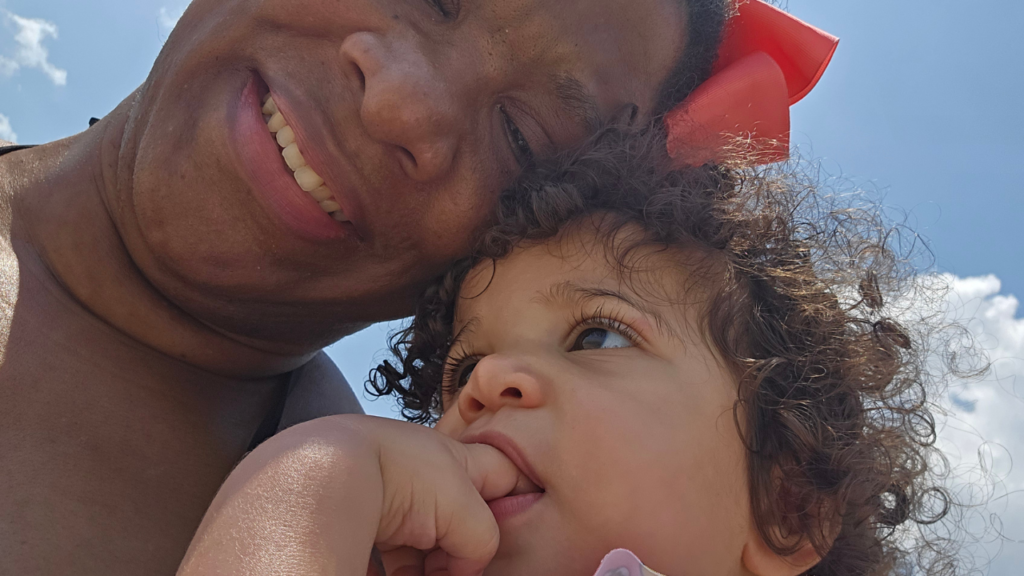
Baby’s first beach trip is a core memory for both you and your child. Yes, take the pictures. Take the videos. Document the curls blowing in the wind and that first tiny-foot-in-the-sand moment.
But also savor it:
- Smell the salty air
- Enjoy the snuggles in the shade
- Watch your baby react to the world
These are the moments that become family stories later.
Related Articles
- Managing Naptime and Breaks at the Beach With Young Children
Learn how to support your baby’s rhythm at the beach with gentle routines, shade strategies, and realistic expectations. - 10 Essentials for Your Family Beach Trip Packing Checklist
A helpful guide to the must-have items every parent should bring for a smooth beach day with babies and young kids. - How To Pack the Perfect Beach Bag for a Day With Little Ones
Stay organized with a parent-approved system that makes beach days easier and keeps everything you need at your fingertips. - How To Keep Kids Safe While Enjoying the Beach
Safety tips for babies, toddlers, and older kids so you can enjoy the shoreline with confidence and peace of mind. - How To Protect Your Family From the Sun at the Beach
A complete guide to sun protection routines, baby-safe approaches, and eco-friendly sunscreen recommendations. - Beach-Friendly Snacks and Meals for Toddlers and Kids
Parent-tested snack ideas that keep babies, toddlers, and older kids happy, fed, and cool throughout beach days. - Best Beach Toys and Activities for Kids Aged 1–5
Explore simple, engaging toy ideas that support sensory play and early learning during your little one’s beach adventures.
FAQ: Baby’s First Beach Trip: What Parents Need To Know
What’s the best age to take a baby to the beach for the first time?
There’s no exact “right” age, but many parents feel most comfortable starting around 2–3 months for short visits, and after 6 months for longer outings when sunscreen can be used safely. Both of my girls visited the beach early, and the key to a peaceful experience was timing, early mornings, plenty of shade, and keeping the visit short.
How long should a baby stay at the beach?
Babies do best with 45 minutes to 2 hours depending on the weather and their temperament. Baby’s first trip should be a “sample,” not a full-day adventure. My girls always lasted longer when we followed their cues and built in shaded rest time.
What kind of sunscreen is safe for babies?
Babies under six months should rely on shade and UPF clothing. After six months, choose a mineral sunscreen with zinc oxide or titanium dioxide. Apply generously and reapply often. Both of my girls had sensitive skin, and mineral formulas were the calmest on them.
How do I keep my baby cool at the beach?
Use layered shade protection: a pop-up tent, umbrella, stroller canopy, or all three. Dress your baby in breathable cotton or UPF fabric, offer frequent milk or water (if age-appropriate), and bring a handheld fan. A soft, cool cloth is also great for gentle temperature resets. If in doubt, go indoors where its typically cooler in the a/c or shade depending on the part of the world you’re in.
Should babies touch sand on their first beach trip?
Absolutely, but let it be gradual. Some babies laugh. Some stare. Some try to eat it. Start with toes or fingers and go from there. My oldest dove in like she’d found her natural habitat, while my youngest needed a blanket “safe zone” first.
Can babies go in the ocean?
Yes, with caution and full supervision. Hold your baby securely, stay at the shoreline, keep water sessions short, and watch the waves. The goal is gentle introduction, not swimming. When both of my girls were little, the shallow edge became our favorite place to connect.
What should I pack for a baby’s first beach trip?
Bring shade, diapers, wipes, extra outfits, a towel, bottles or breastmilk, comfort items, baby-safe sunscreen (6 months+), and a large sheet or blanket. Babies require more “just in case” items, and packing well saves you from stress later.
How do I handle naps on the beach with a baby?
Create a shaded, cool, comfortable space and follow your baby’s cues. Many babies nap beautifully to the sound of waves, mine did! But don’t force it. If naps don’t happen, aim for quiet rest time instead.
What should a baby wear to the beach?
A UPF onesie or lightweight outfit, a sun hat, soft booties (hot sand is real), and layers you can adjust. Bring a spare outfit or two, babies always find creative ways to get messy.
What if my baby gets overwhelmed at the beach?
This is normal. The beach is a sensory explosion. Take your baby to the shade, offer a cuddle, a pacifier, a bottle, or quiet time in the tent. With both of my girls, breaks were the magic solution, especially during their first beach experiences. When in doubt, go indoors where its cool.
Conclusion: Savor the Sweetness of This First Beach Day
Your baby’s first beach trip isn’t just another outing, it’s one of those heart-stealing moments of early parenthood that stays with you for years. The soft curls blowing in the warm breeze, the puzzled look at their first handful of sand, the little toes dipping into the shoreline for the very first time… these moments are powerful. They remind you how magical the world is through your baby’s eyes.
And while the preparation may feel like packing for a cross-country journey, all that effort pays off the moment your baby settles into your arms under the umbrella, wide-eyed and curious. With shade, comfort, hydration, and realistic expectations, you can create a beach day that feels peaceful, gentle, and filled with joy. Your baby won’t remember this trip, but you will. And that memory becomes part of your family’s story.
Take it slow. Take pictures. Take deep breaths. And most of all, take in the sweetness of watching your little one discover the shore for the very first time.
Ready to Plan More Joyful, Confident Beach Days With Your Little One?
Explore more guides that help your family travel with ease, stay safe, and make every beach moment meaningful.